
Japan Experts Urge Preparations for ‘Compound Disasters’; 1 Year Since Torrential Rains Hit Quake-Battered Peninsula
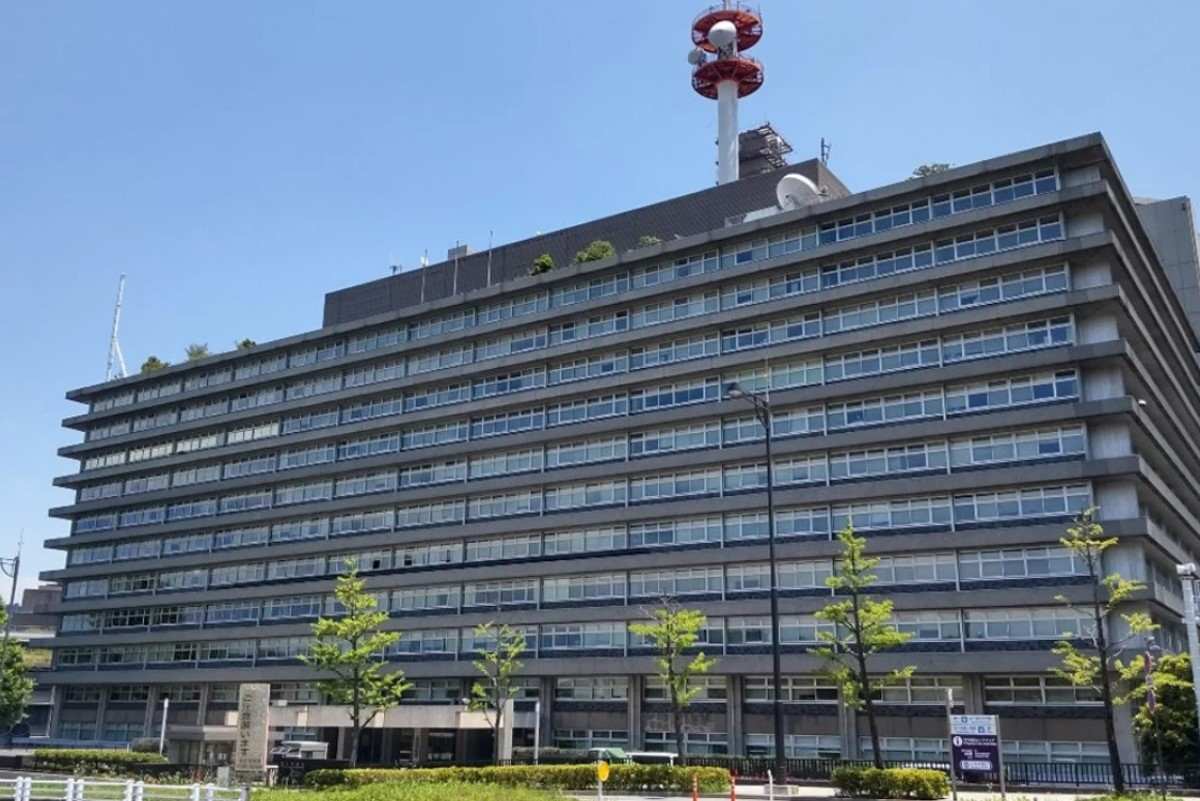
The Land, Infrastructure, Transport and Tourism Ministry in Chiyoda Ward, Tokyo.
16:56 JST, September 21, 2025
TOKYO/WAJIMA, Ishikawa — Sunday marked one year since torrential rains devastated areas that had already been battered by the 2024 Noto Peninsula Earthquake.
The Land, Infrastructure, Transport and Tourism Ministry has compiled a set of recommendations to address the lack of coordination and preparedness among relevant organizations for the “compound disasters” caused by the combination of earthquakes and heavy rains. However, many municipalities lack specific countermeasures for such incidents in their local disaster prevention plans.
Creating a system to prepare for compound disasters is an urgent task.
Recommendations
According to the Ishikawa prefectural government, as of Friday, 643 people had died in the prefecture due to the earthquake and 19 from the torrential rains.
“The earthquake and heavy rain destroyed our memories and future livelihood,” lamented Kazuo Sakamoto, 76, of the Futegawa district in Wajima, Ishikawa Prefecture.
His two-story wooden house was damaged by the earthquake that occurred on New Year’s Day last year. He was preparing to rebuild his house while living in a temporary shelter in September last year when torrential rains caused by a linear precipitation zone hit the area.
Tsukada River, which runs through the area, overran its banks and several houses were buried in the mud, resulting in the deaths of four people, including a junior high school student.
Sakamoto’s land was almost submerged and he gave up on rebuilding his house. “I was terrified,” he said.
According to a survey by the land ministry, large amounts of earth and fallen trees had accumulated in the upper reaches of the river due to landslides caused by the earthquake. Heavy rains swept this debris away all at once, causing it to get caught on a bridge downstream and raise the floodwaters.
The ministry examined the situation in the Noto Peninsula and defined a compound disaster as a “phenomenon in which damage caused by a disaster is increased by the occurrence of a subsequent disaster while the effects of the first disaster still remain.”
Now, the risk of flooding is increasing, as heavy rain in which 50mm or more falls within an hour is occurring with 50% more frequency than 40 years ago.
In June, the ministry released a 50-page set of recommendations by experts in river engineering, meteorology and other fields. The recommendations call for establishing a method to evaluate safety levels, developing technology to recognize impending disasters and crises, and releasing estimates of damage caused by the outflow of sediment and fallen trees, among other measures.
The recommendations also focus on collaboration with private companies and research institutions that have expertise. The ministry encourages municipalities to create hazard maps and provides them with related information and technical assistance.
Regional differences
Some municipalities have already taken concrete action. The Wajima municipal government is examining the situation after it was unable to use an evacuation center damaged by the earthquake during the torrential rains and it struggled to confirm the safety of residents.
“We felt that our assumptions were insufficient. We want to reflect the results of our examination in our regional disaster prevention plan,” said Yasuhiro Maekawa, chief of the city’s disaster prevention and countermeasures department.
The city of Kushiro, Hokkaido — where a 20.3-meter-high tsunami is expected to be generated by a possible Japan Trench / Chishima Trench earthquake — concluded an agreement in May with the Center for Natural Hazards Research of Hokkaido University in Sapporo.
They will cooperate in research on compound disasters unique to cold regions such as ice floes pushed toward the shore by tsunami and necessary countermeasures, as well as the training of disaster-prevention personnel and activities to raise awareness.
“We don’t have academic knowledge of compound disasters. We hope to establish a system of cooperation in which we can ask for advice,” a municipal government official said. The city also anticipates a combination of volcanic eruptions and heavy snowfall.
Takashi Koi, a specially appointed associate professor at the center, said, “We want to share the challenges facing the city and use them to develop the city’s regional disaster prevention plan.”
The Edogawa Ward Office in Tokyo now stores three days of drinking water, diapers and other supplies at its evacuation centers, three times as much as before, in anticipation of road disruptions like those seen after the Noto Peninsula Earthquake.
In 2012, the ward office included a “compound disaster section” in its regional disaster prevention plan, as 70% of the ward’s area is at sea level. The plan estimates the damage that could occur if levees or flood gates were destroyed by an earthquake directly beneath Tokyo and a huge typhoon hits the area.
To encourage evacuations from a wide area in the event of such an emergency, a lodging subsidy of ¥3,000 per night will also be provided for residents.
The town of Kannami, Shizuoka Prefecture, which is expected to be severely damaged by a Nankai Trough earthquake, conducted a disaster preparation drill on the presumption that torrential rains would hit the town six hours after the earthquake. Oita Prefecture will add compound disasters to its damage estimates in the future.
In contrast, the town of Kuroshio, Kochi Prefecture, does not have a compound disaster scenario, although it is expected to be hit by a 34-meter-high tsunami, the largest in Japan. The town has not included any specific countermeasures for such disasters in its regional disaster prevention plan.
“We’re too busy dealing with countermeasures for earthquakes and tsunami to deal with measures for compound disasters,” a city official said.
According to Itsuki Nakabayashi, a professor emeritus at Tokyo Metropolitan University specializing in urban disaster prevention studies: “Many municipalities have failed to include compound disaster scenarios in their regional plans because they don’t know how to deal with such disasters.
“The central government needs to show them concrete countermeasures, such as how to prevent temporary shelters from being inundated.”






Most Read
Popular articles in the past 24 hours
-
Power Outage Forces About 980 Passengers in Yokohama to Walk to T...
-

Masako Ikeda, Voice of Maetel in ‘Galaxy Express 999,' Dies at 87
-

Japan Defense Agency to Develop AI Intelligence Analysis System f...
-

Government to Establish ‘Command Center’ for Developing Nuclear P...
-

Oil Reserve Releases: G7 Members Unite against Growing Threat
-

Milano Cortina 2026: Japan’s Momoka Muraoka Takes Silver in...
-

Paw Patrol: Larry Marks 15 Years at 10 Downing Street
-

Moai Statue Shows Lasting Bond Between Miyagi Pref. Town, Easter ...
Popular articles in the past week
-

Japan Figure Skating Legend Yuzuru Hanyu Is Proud Disaster Surviv...
-
Govt to Utilize ODA for Ensuring Economic Security; Securing Ener...
-
15 Measles Patients Confirmed in Tokyo in Past 6 Days; 1 May Have...
-
Massive Sewer Pipe Found Jutting Out of Highway in Osaka
-
Japan Govt to Tighten Requirements to Receive Permanent Residency...
-

Beckoning Cats Get Makeover to Fit Modern Lifestyles with Sleek D...
-
JR Tokai Breaks Ground on Yamanashi Maglev Station; Will Be Part ...
-

Japan's 2nd Round of U.S. Investments May Be Worth Over $100 Bill...
Popular articles in the past month
-

Producer Behind Pop Group XG Arrested for Cocaine Possession
-

Japan PM Takaichi’s Cabinet Resigns en Masse
-

Man Infected with Measles Reportedly Dined at Restaurant in Tokyo...
-

Videos Plagiarized, Reposted with False Subtitles Claiming ‘Ryuky...
-
Japan Figure Skating Legend Yuzuru Hanyu Is Proud Disaster Surviv...
-

iPS Treatments Pass Key Milestone, but Broader Applications Far f...
-

Sanae Takaichi Elected Prime Minister of Japan; Keeps All Cabinet...
-

Nepal Bus Crash Kills 19 People, Injures 25 Including One Japanes...
Top Articles in Society
-
Producer Behind Pop Group XG Arrested for Cocaine Possession
-
Man Infected with Measles Reportedly Dined at Restaurant in Tokyo Station
-
15 Measles Patients Confirmed in Tokyo in Past 6 Days; 1 May Have Come into Contact with Many in Shibuya
-

Bus Carrying 40 Passengers Catches Fire on Chuo Expressway; All Evacuate Safely
-

Ibaraki Pref.’s 1st Foreign Bus Driver Hired in Tsukuba
JN ACCESS RANKING
-
Producer Behind Pop Group XG Arrested for Cocaine Possession
-
Japan PM Takaichi’s Cabinet Resigns en Masse
-
Man Infected with Measles Reportedly Dined at Restaurant in Tokyo Station
-
Videos Plagiarized, Reposted with False Subtitles Claiming ‘Ryukyu Belongs to China’; Anti-China False Information Also Posted in Japan
-
Japan Figure Skating Legend Yuzuru Hanyu Is Proud Disaster Survivor and Gold Medalist, Vows to Continue Support Efforts