
Many damaged sections of Ishikawa Pref. highways still closed; Personnel, Equipment Brought in by Sea, Land
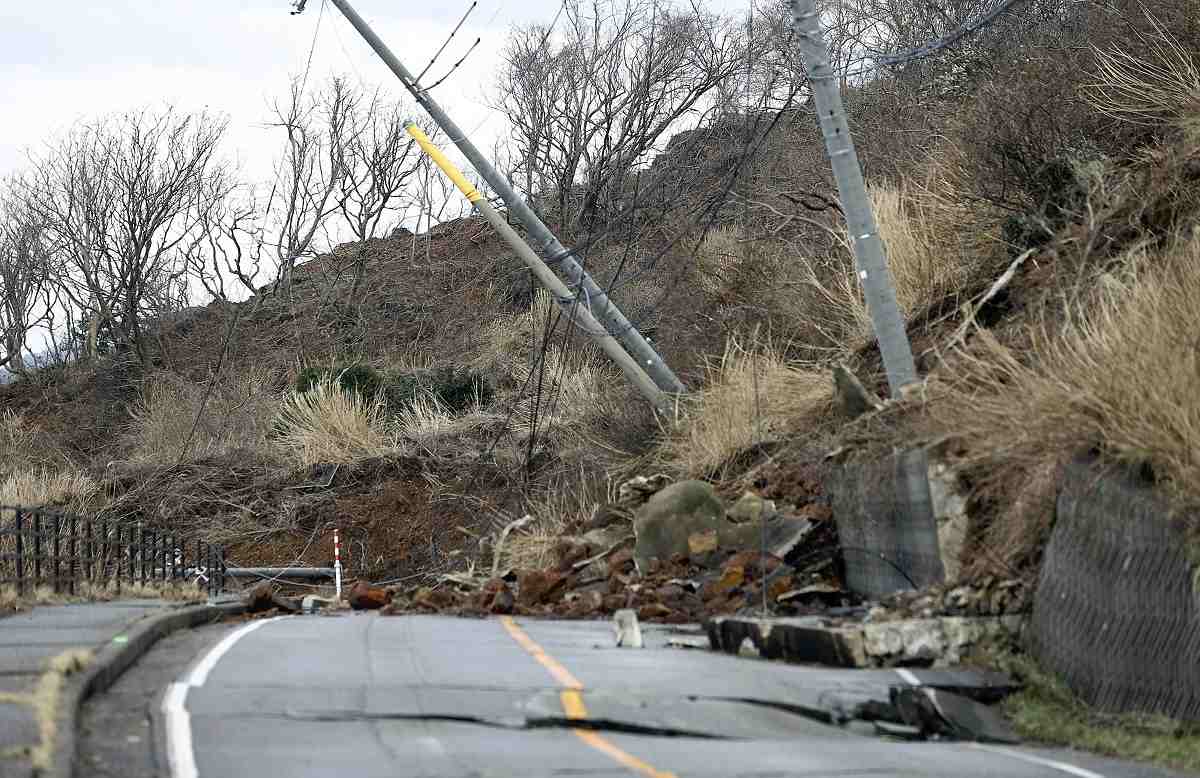
A landslide blocking a section of National Highway Route 249 at a location in the city of Wajima, Ishikawa Prefecture, is seen on Jan. 28.
17:49 JST, February 3, 2024
Sixty-two sections of national and prefectural highways in Ishikawa Prefecture that were severely damaged by the Noto Peninsula Earthquake remain closed as of Friday. A little over 30% of the sections closed by the quake have been reopened within the first month, according to Land, Infrastructure, Transport and Tourism Ministry officials.
The officials said that emergency restoration work alone will require more than three months for some sections of National Highway Route 249, a major artery that runs along the coast of the Noto Peninsula.
The ministry is hurrying to restore infrastructure in the prefecture by securing routes to bring in supplies and equipment by land and sea.
According to the ministry, on Jan. 5, when the approximate extent of damage to the roads became known, a total of 93 sections were closed, including 25 sections of Route 249, one section of Route 359 in the city of Kanazawa and 67 sections of prefectural highways.
As of Friday, nine sections of Route 249, the same section of Route 359, and 52 sections of prefectural highways remained closed to traffic, which means that only about 30% of the sections have been restored.
Although there are still many sections that remain cut off to traffic, the areas that are passable are expanding due to progress in restoration works.
Route 249 was hit hard by the earthquake as several tunnels along the coastline collapsed and landslides covered the road in several places. It is expected to take three months or more to remove the debris blocking the roads and tunnels.
In light of this situation, parties concerned, including the transport ministry, have worked to restore trunk roads in inland areas where damage has been relatively light, and have worked to make several prefectural highways that connect to Route 249 open to traffic. They have also created routes to affected areas from the sea. Personnel and equipment have been sent to affected areas from such routes, and are working to restore essential services, including running water, as quickly as possible.
In addition, there are some areas where emergency restoration alone is not sufficient to ensure safe travel, so it has been decided to begin construction of new roads. Transport minister Tetsuo Saito has indicated that full restoration of the road network is expected to take several years.
As for the Noetsu Expressway that runs through the peninsula, 10 sections were closed due to the earthquake, but now only one section remains closed, and it is expected to fully reopen by mid-March.





Most Read
Popular articles in the past 24 hours
-

Man Accused of Making Woman Drink 32 Shots of Tequila, Resulting ...
-
Japanese Shipping Giants Halt Strait of Hormuz Transit as Iran Co...
-

U.S. Launches Attacks on Iran: Avoid Escalation of Conflict by An...
-
Japan Police Told to Boost Security, Vigilance Around U.S., Israe...
-

Japan Shares and Yen Fall, Jgbs Rise as Iran Strikes Continue
-

Takaichi: Japan Striving to Ensure Safety of Japanese Nationals; ...
-
Japan Traditional Puppet Performance Held at Onsen Resort in Shiz...
-
Sawtooth Roof Factory Stands as Monument to Ashikaga Textile Hist...
Popular articles in the past week
-

Nepal Bus Crash Kills 19 People, Injures 25 Including One Japanes...
-
Milano Cortina 2026: Japanese Gold Medalist Figure Skater Miura S...
-
Tokyo Spends Big on Children, Wins Over Parents
-

McDonald's Japan Raises Prices; Big Mac to Cost ¥500, Double Chee...
-

Japan’s Miura, Kihara Announce Withdrawal from Figure Skating Wor...
-

Exhibition Featuring Yoshiharu Tsuge’s Manga World Underway in Ch...
-

Yokohama to Test Out Renewable-Powered Offshore Floating Data Cen...
-
BOJ Keeping Eye on Economy and Takaichi's ‘Proactive Fiscal Polic...
Popular articles in the past month
-

Producer Behind Pop Group XG Arrested for Cocaine Possession
-

Japan PM Takaichi’s Cabinet Resigns en Masse
-

Man Infected with Measles Reportedly Dined at Restaurant in Tokyo...
-

Israeli Ambassador to Japan Speaks about Japan’s Role in the Reco...
-

Videos Plagiarized, Reposted with False Subtitles Claiming ‘Ryuky...
-

Man Infected with Measles May Have Come in Contact with Many Peop...
-

Prudential Life Insurance Plans to Fully Compensate for Damages C...
-

Woman with Measles Visited Hospital in Tokyo Multiple Times Befor...
Top Articles in Society
-
Producer Behind Pop Group XG Arrested for Cocaine Possession
-
Man Infected with Measles Reportedly Dined at Restaurant in Tokyo Station
-
Man Infected with Measles May Have Come in Contact with Many People in Tokyo, Went to Store, Restaurant Around When Symptoms Emerged
-
Woman with Measles Visited Hospital in Tokyo Multiple Times Before Being Diagnosed with Disease
-

Bus Carrying 40 Passengers Catches Fire on Chuo Expressway; All Evacuate Safely
JN ACCESS RANKING
-
Producer Behind Pop Group XG Arrested for Cocaine Possession
-
Japan PM Takaichi’s Cabinet Resigns en Masse
-
Man Infected with Measles Reportedly Dined at Restaurant in Tokyo Station
-
Israeli Ambassador to Japan Speaks about Japan’s Role in the Reconstruction of Gaza
-
Videos Plagiarized, Reposted with False Subtitles Claiming ‘Ryukyu Belongs to China’; Anti-China False Information Also Posted in Japan