
Yamanote Line Marks 100th Year of Operation as Loop Train in Nov., Grows as Tokyo’s Lifeline with Eye on Future
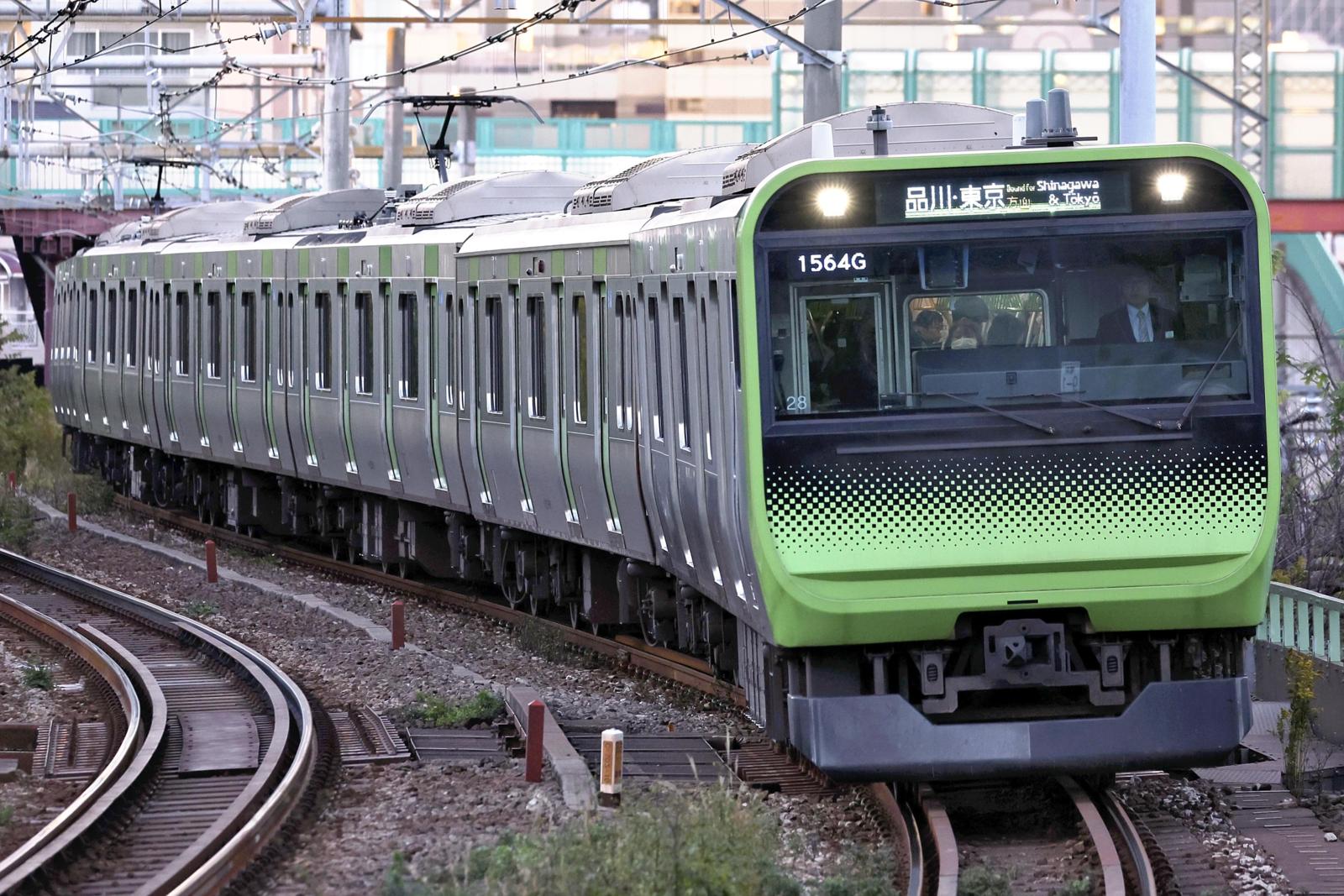
An E235 series train, which has been in operation since 2015. This photo was taken in Shinagawa Ward, Tokyo, on Nov. 3
13:36 JST, November 17, 2025
The Yamanote Line in November marked 100 years of operations as a loop line.
Regarded as the “aorta of the Tokyo metropolitan area,” the line connects major terminal stations including Tokyo, Shinjuku and Ueno, carrying around 1 million passengers each day.
The line, which consists of 30 stations in a 34.5-kilometer loop, serves as the lifeline of central Tokyo, and its history mirrors the capital’s development.
The origins of the Yamanote Line date to the Meiji era (1868-1912). In 1885, its predecessor, Nippon Railway’s Shinagawa Line, opened between Shinagawa and Akabane stations, with Shibuya and Shinjuku stations also commencing operations.
You may also like to read
Yamanote Line to Mark 100th Anniversary of Loop Line Operations; After a Century, Line Continues to DevelopIts main purpose was facilitating the transport of raw silk and coal for export from Gunma and Ibaraki prefectures to the Port of Yokohama. As much of the route traversed higher ground in the area, the name “Yamanote Line,” meaning “hillside line,” was adopted in 1901.
Full-fledged passenger service expanded during the Taisho era (1912-26) and early in the Showa era (1926-89).
As areas such as present-day Chiyoda and Bunkyo wards became overpopulated, residential areas spread into the suburbs, making the line a vital commuting route for workers and students.
With the development of private railways proceeding in tandem, connecting the Yamanote Line to their terminal stations led the line to grow into a core commuter train route in central Tokyo.
Elevated track, circular operation
Although the opening of Tokyo and Kanda stations made the operational section almost circular, there was no connection between Ueno and Kanda stations — located in densely populated areas. To address this, the government proceeded with the construction of elevated tracks.
The section between Shimbashi and Tokyo stations was built with bricks, while the section between Tokyo and Ueno stations was constructed with reinforced concrete.
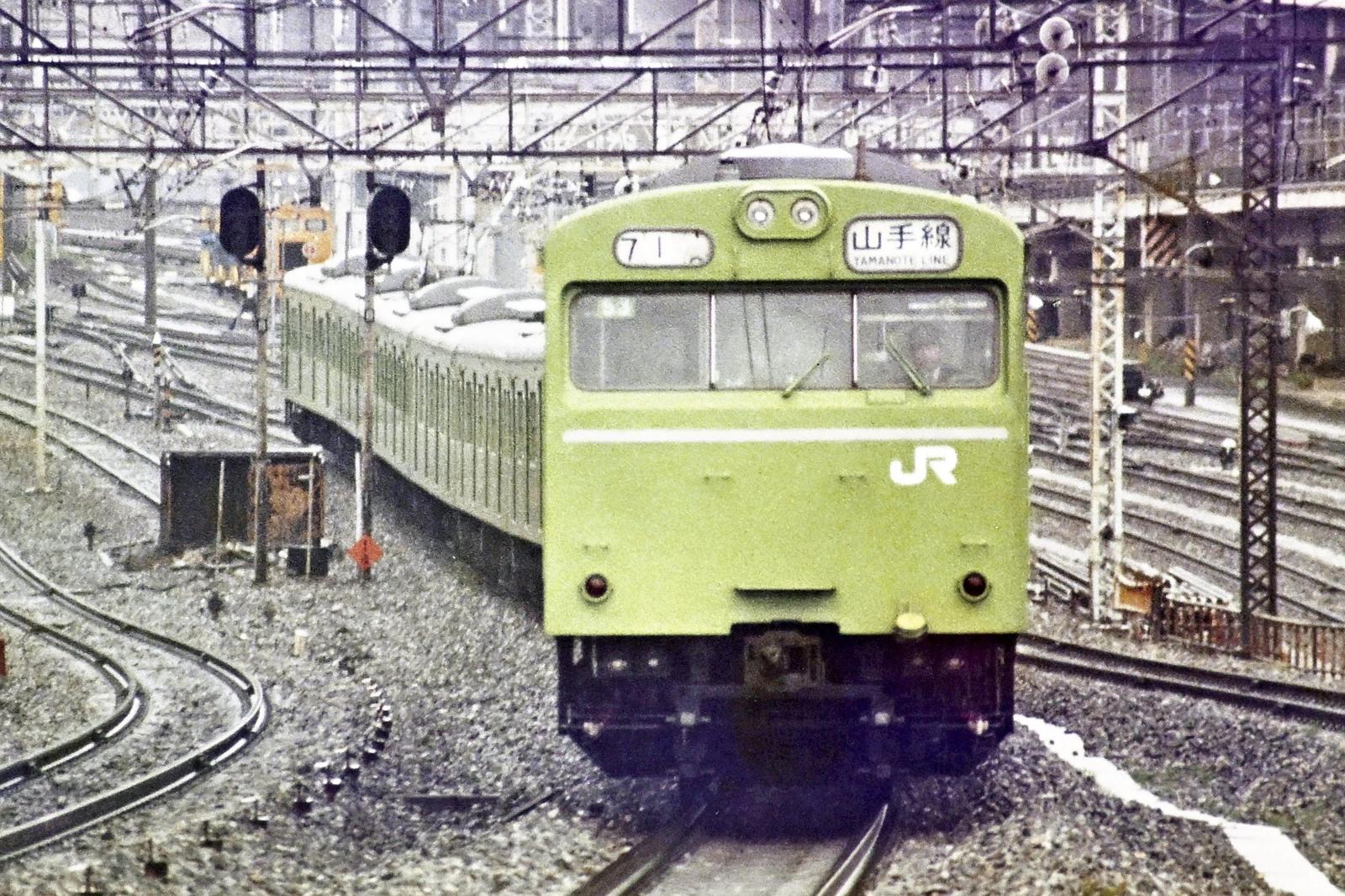
A 103 series train, which ran regularly from 1963 to 1988 on the Yamanote Line
“Considering factors such as earthquake resistance, they employed the latest technology at the time,” said railway historian Kenji Nakamura, 79.
The construction of the elevated track section, which began in 1923, was completed in 1925 — just six months behind schedule — despite huge damage wrought on stations during the Great Kanto Earthquake in 1923. On Nov. 1, operation of the line in a full circle finally started.
“With circular operation, efficient transportation was made possible,” said Shigeru Onoda, an adviser at the Railway Technical Research Institute, a public interest incorporated foundation. “Countries with circular lines running in their capitals, besides the subway system, are rare.”
You may also like to read
Retro-Wrapped Trains Celebrate Yamanote Loop Line’s 100th AnniversaryDuring Japan’s rapid economic growth period in the postwar years, the Yamanote Line evolved along with the country’s development. In 1963, the eight-car 103 series debuted, establishing the line’s signature light-green color. In 1968, operation of 10-car trains commenced.
Redevelopment for the next century
A new station, Takanawa Gateway, opened in 2020 between Tamachi and Shinagawa stations, marking the first new station on the line in 49 years.
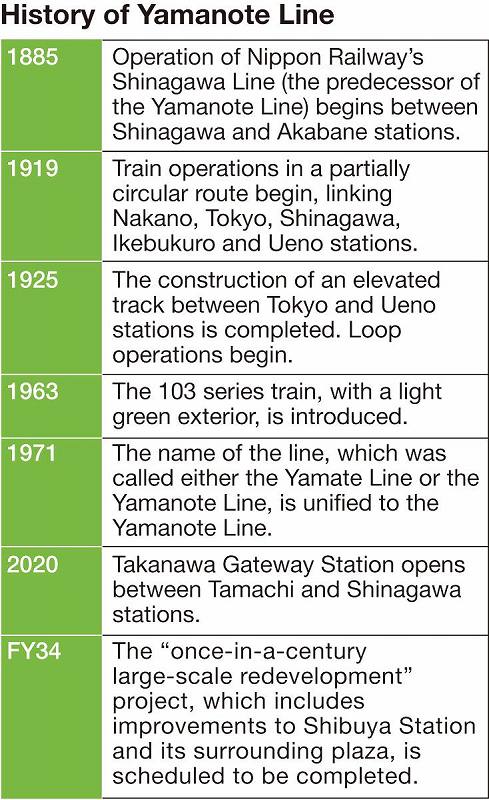
East Japan Railway Co. (JR East), Tokyu Corp., and Tokyo Metro Co. are currently moving ahead with what is called a “once-in-a-century large-scale redevelopment” project around Shibuya Station, an undertaking that is expected to be completed in fiscal 2034.
“We will build stations and towns that will continue to be loved for the next 100 years,” said a JR East official.
In addition, new technologies are being introduced for train operations. As early as fiscal 2028, trains capable of autonomous operation will be adopted. By 2035, the implementation of fully autonomous operation, where the conductor does not need to be qualified as a train driver, is planned.
For rolling stock and track maintenance, robotics and AI will be utilized, allowing employees to focus on human-centered services and emergency response, thereby improving overall efficiency, according to JR East.



Most Read
Popular articles in the past 24 hours
-

Record Snowfall in Japan Causes Serious Agricultural Damage in To...
-
Japan Traditional Puppet Performance Held at Onsen Resort in Shiz...
-

Strait of Hormuz Closure Shakes Markets; Prolonged Closure Could ...
-

U.S. Urges Citizens to Immediately Depart over A Dozen Middle Eas...
-

2 of Japan's Opposition Parties Submit Bill to Revise Political F...
-

Iran Situation: Japan Must Exert Diplomatic Efforts without Merel...
-
Chiba Police to Arrest Japanese National in Midair; Man Accused o...
-

Japanese Firms Ban Business Trips, Cancel Vacation Tours Amid Mid...
Popular articles in the past week
-

Milano Cortina 2026: Japanese Gold Medalist Figure Skater Miura S...
-
Tokyo Spends Big on Children, Wins Over Parents
-

Japan’s Miura, Kihara Announce Withdrawal from Figure Skating Wor...
-

Exhibition Featuring Yoshiharu Tsuge’s Manga World Underway in Ch...
-

Yokohama to Test Out Renewable-Powered Offshore Floating Data Cen...
-

BOJ Keeping Eye on Economy and Takaichi's ‘Proactive Fiscal Polic...
-
Tokyo Measles Patient Traveled to Fukuoka Aboard JAL Planes; Susp...
-

Japan Seeks to Counter China's Expanding Influence in Pacific by ...
Popular articles in the past month
-

Producer Behind Pop Group XG Arrested for Cocaine Possession
-

Japan PM Takaichi’s Cabinet Resigns en Masse
-

Man Infected with Measles Reportedly Dined at Restaurant in Tokyo...
-

Israeli Ambassador to Japan Speaks about Japan’s Role in the Reco...
-

Videos Plagiarized, Reposted with False Subtitles Claiming ‘Ryuky...
-

Prudential Life Insurance Plans to Fully Compensate for Damages C...
-

Woman with Measles Visited Hospital in Tokyo Multiple Times Befor...
-

iPS Treatments Pass Key Milestone, but Broader Applications Far f...
Top Articles in Society
-
Producer Behind Pop Group XG Arrested for Cocaine Possession
-
Man Infected with Measles Reportedly Dined at Restaurant in Tokyo Station
-
Woman with Measles Visited Hospital in Tokyo Multiple Times Before Being Diagnosed with Disease
-

Bus Carrying 40 Passengers Catches Fire on Chuo Expressway; All Evacuate Safely
-
Tokyo Skytree’s Elevator Stops, Trapping 20 People; All Rescued (Update 1)
JN ACCESS RANKING
-
Producer Behind Pop Group XG Arrested for Cocaine Possession
-
Japan PM Takaichi’s Cabinet Resigns en Masse
-
Man Infected with Measles Reportedly Dined at Restaurant in Tokyo Station
-
Israeli Ambassador to Japan Speaks about Japan’s Role in the Reconstruction of Gaza
-
Videos Plagiarized, Reposted with False Subtitles Claiming ‘Ryukyu Belongs to China’; Anti-China False Information Also Posted in Japan