
Japanese Govt to Classify Large-scale Infrastructure Failures as Disasters; Disaster Relief to Become Available for Such Incidents
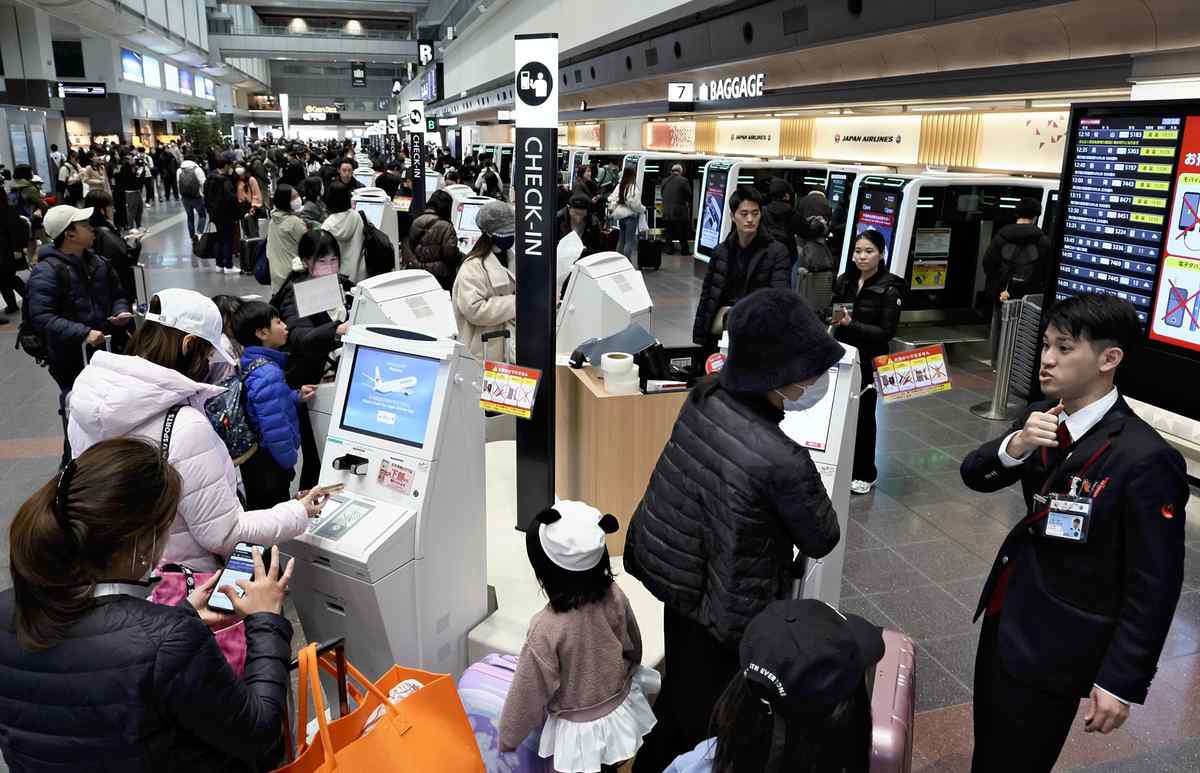
Japan Airlines’ service counter in Haneda Airport is crowded due to system failures caused by a cyberattack on Dec. 26, 2024.
20:00 JST, August 3, 2025
The government will classify large-scale failures in the functions of infrastructure as disasters under its new guidelines for such incidents, The Yomiuri Shimbun has learned.
The pillar of the guidelines is to legally treat incidents in which supplies of electricity, tap water and other essential goods or services are obstructed for prolonged periods of time as natural disasters, enabling the government to swiftly implement administrative action for relief.
The guidelines were compiled at a conference of relevant ministries and agencies in late June.
With cyberattacks becoming increasingly sophisticated, the guidelines aim to provide a way to better deal with any potentially serious impacts on society.
The government aims for the guidelines to cover interruptions to electric power supplies, telecommunication functions and data center operations, among others.
As examples of large-scale infrastructure failures, the government cites blackouts and telecommunication failures caused by system trouble, including those involving human error. The failures, it anticipates, could lead to such incidents as disruptions to roads due to failed traffic lights, people trapped in elevators, cuts to the water supply and adverse effects on medical institutions.
If certain criteria are met, such as “residential buildings are substantially dysfunctional,” an incident will be treated as a “disaster” under the Basic Law on Disaster Management, and all related laws will be applied.
Under the guidelines, the government will be able to provide push-style assistance and dispatch public officials in the immediate aftermath of such incidents.
Moreover, in cases where “many people’s lives may be under threat,” the government will make use of the Disaster Relief Law, which facilitates the provision of soup kitchens and welfare services.
“[The anticipated interruptions to society are] different from natural disasters, so knowledge and experience of past incidents alone are insufficient,” a government official said.
The government will include a policy in the guidelines requiring entities in both the public and private sectors to implement disaster-prevention drills and tabletop exercises to cope with the infrastructure failures in ordinary times.
The government will also create guidance for local governments, which handle the incidents on the front line.






Popular Articles
Popular articles in the past 24 hours
-
Nikkei Stock Average Exceeds 54,000 for 1st Time
-

Japan, Qatar Ministers Agree on Need for Stable Energy Supplies; ...
-

Milano Cortina 2026: Japanese Bobsleigh Athletes Lose Chance to C...
-

Poems on Brightness Recited at Imperial New Year's Reading; Princ...
-

Japanese PM Takaichi, South Korean President Lee Play Drums in Na...
-

Japan-South Korea Summit: Build up Cooperation through Frequent R...
-
Construction Crane Falls onto a Moving Train in Thailand, Killing...
-
Houses at UNESCO World Heritage Site Shirakawa-go Illuminated for...
Popular articles in the past week
-
JAL, ANA Cancel Flights During 3-day Holiday Weekend due to Blizz...
-
China Confirmed to Be Operating Drilling Vessel Near Japan-China ...
-
Univ. in Japan, Tokyo-Based Startup to Develop Satellite for Disa...
-

Honda to Launch New Electric Motorbike in Vietnam
-

Japan's ANA to Introduce Nationwide Logistics Service Using Drone...
-

10 Universities in Japan, South Korea, Mongolia to Establish Acad...
-

Inclusive Society / Japan's Remote Tourist Areas See Deluge of Fo...
-

At 58, the World's Oldest Professional Soccer Player Says He Is O...
Popular articles in the past month
-
As Chinese Tourists Shun Japan, Hotels and Stores Suffer
-

BOJ Gov. Ueda: Highly Likely Mechanism for Rising Wages, Prices W...
-
Core Inflation in Tokyo Slows in December but Stays above BOJ Tar...
-

Osaka-Kansai Expo's Economic Impact Estimated at ¥3.6 Trillion, T...
-
Japan Govt Adopts Measures to Curb Mega Solar Power Plant Project...
-
Economic Security Panels Debate Supply Chains, Rare Earths; Parti...
-

Japan, U.S. Start Talks on Tokyo's $550 Bil. Investment in U.S.; ...
-

Tokyo Ranks 2nd in Global Power City Index, Highest-Ever Position...
"Politics" POPULAR ARTICLE
-

Japanese Language Requirement Eyed for Permanent Residency Status; LDP Plans Revisions of Laws on Foreigners
-
-250x167.jpg)
Japan Eyes Plan to Accept Up To 1.23 Mil. Foreign Workers by End of Fiscal 2028
-
AI-Driven ‘Zero Clicks’ Phenomenon Threatens Democracy; News Outlets Must Be Able to Recover Costs, Stay Independent
-
Japanese Public, Private Sectors to Partner on ¥3 Tril. Project to Develop Domestic AI, SoftBank to Be Key Firm Involved
-
Japan’s Defense Ministry to Extend Reemployment Support for SDF Personnel to Age 65; Move Comes Amid Ongoing Labor Shortage
JN ACCESS RANKING
-
As Chinese Tourists Shun Japan, Hotels and Stores Suffer
-
BOJ Gov. Ueda: Highly Likely Mechanism for Rising Wages, Prices Will Be Maintained
-
Core Inflation in Tokyo Slows in December but Stays above BOJ Target
-
Osaka-Kansai Expo’s Economic Impact Estimated at ¥3.6 Trillion, Takes Actual Visitor Numbers into Account
-
Japan Govt Adopts Measures to Curb Mega Solar Power Plant Projects Amid Environmental Concerns