
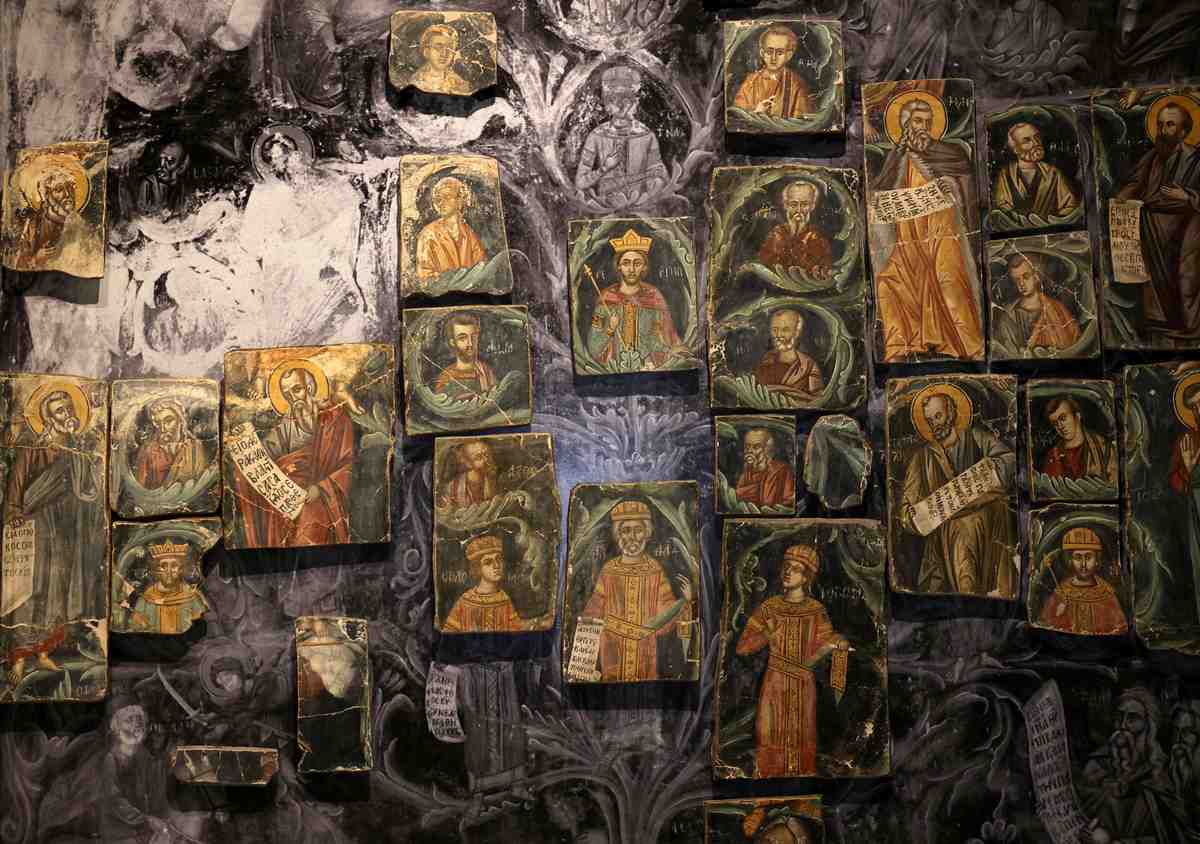
A wall painting of the Tree of Jesse, a biblical account of the genealogy of Jesus Christ, removed from the Antiphonitis Monastery in north Cyprus and cut into pieces by antiquities smugglers, is displayed after it was recovered by Cyprus authorities at the museum.
13:25 JST, April 10, 2025
NICOSIA (Reuters) — A museum that opened last month in Cyprus showcases priceless early Christian artworks, many of which were recovered after being stolen from churches in the north of the war-split island.
The Byzantine Museum of the Archbishop Makarios III Foundation opened on March 18 in the capital Nicosia after five years of extensive renovations. It features mosaics, icons and wall frescoes representing some of early Christianity’s finest and rarest works.
Many of the exhibits were looted by smugglers after a Turkish invasion in 1974 triggered by a brief Greek-inspired coup, and trafficked on the black market.
Over the years, Cypriot authorities have doggedly tracked down and reclaimed numerous stolen works, putting them in museums they hope can be temporary, if peace talks one day allow the island to be united again.
“The looting, the destruction was on a great scale,” said the museum’s director, Dr Ioannis Eliades. “We have calculated that more than 20,000 icons have been stolen and disappeared from the churches.
“We are still searching for them.”
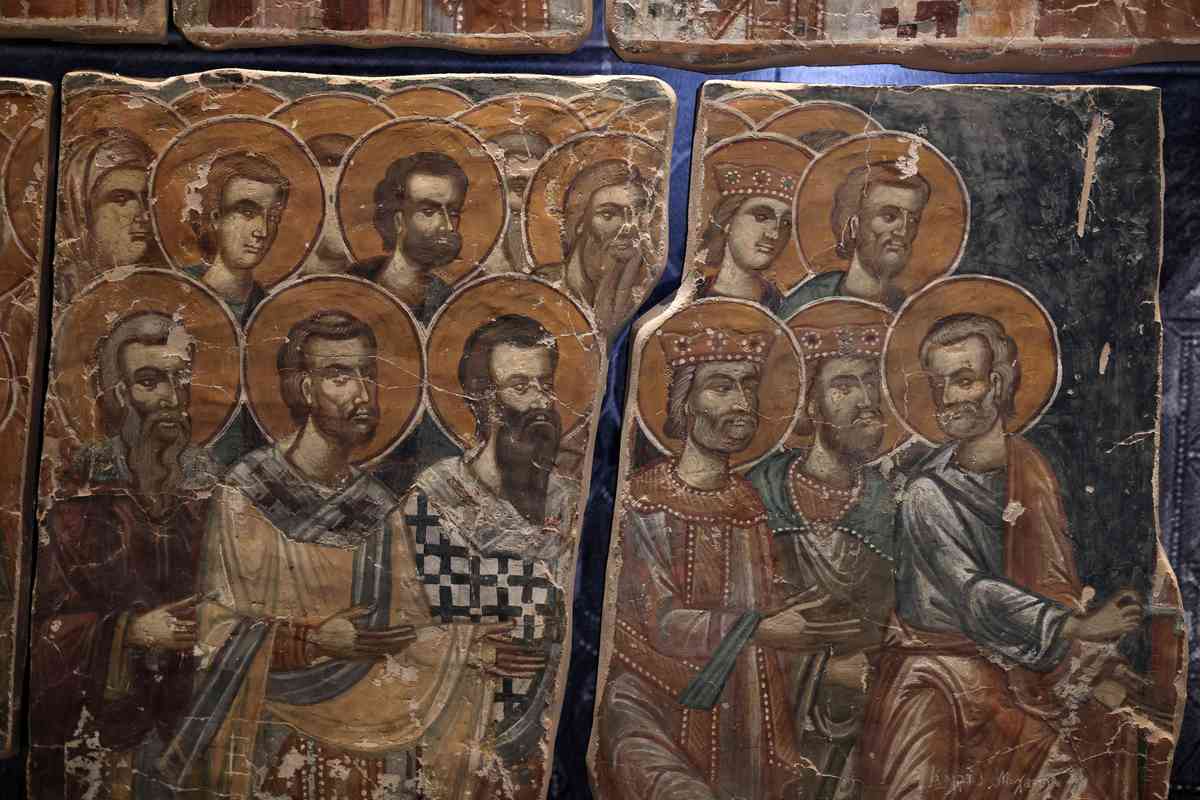
A wall painting of the Last Judgement, removed from the Antiphonitis Monastery in north Cyprus and cut into pieces by antiquities smugglers is displayed after it was recovered by Cyprus authorities at the Byzantine Museum in Nicosia on March 17.
The museum includes rare mosaics from the early 6th century, fitted into a reproduction of an apse as was the original, from the Church of Panagia Kanakaria at Lythrangomi in north Cyprus.
Even before the war, the mosaic was well documented by archaeologists as a rare work of art that had survived iconoclasm — where use of religious images was banned by Byzantine emperors throughout the region.
But the depiction of Christ, the Virgin Mary, archangels and apostles was hacked off the walls in the late 1970s, chopped into pieces and sold onto the black market. Most of the pieces were later discovered in private collections, recovered by Cyprus after litigation.
Eliades hopes the museum will inspire people and educate them on the extent of damage wrought to Cyprus’ cultural heritage through conflict.
“We want the new generation to understand what happened on our island, and why it is important to safeguard even the smallest piece which we can bring [home].”





Most Read
Popular articles in the past 24 hours
-

Ishinomaki Man Plush Toy Offers Hope to Children in Times of Disa...
-

Party Representatives’ Questions in Diet: Takaichi Says Consumpti...
-

Microsoft Japan Raided by Antitrust Watchdog for Allegedly Blocki...
-

Milano Cortina 2026: News in Pictures / Feats of Japanese Athlete...
-
Japan Eyes Introducing Prescreening System for Foreign Travelers,...
-

Pokémon Celebrates 30 Years with Japanese Pro Baseball Collab
-

Nikkei Tops 59,000 for First Time
-
New U.S. Tariff Unlikely to Significantly Impact Japan, BOJ Gov. ...
Popular articles in the past week
-

Producer Behind Pop Group XG Arrested for Cocaine Possession
-

iPS Treatments Pass Key Milestone, but Broader Applications Far f...
-
Tokyo Skytree's Elevator Stops, Trapping 20 People; All Rescued (...
-
Milano Cortina 2026: Japanese Gold Medalist Figure Skater Miura S...
-

Japan’s Major Real Estate Firms Expanding Overseas Businesses to ...
-
Nepal Bus Crash Kills 19 People, Injures 25 Including One Japanes...
-

Baby Monkey Punch Captures Hearts at Chiba Pref. Zoo, on Social M...
-

Milano Cortina 2026: Japanese Figure Skater Kaori Sakamoto’...
Popular articles in the past month
-
Producer Behind Pop Group XG Arrested for Cocaine Possession
-

Japan PM Takaichi’s Cabinet Resigns en Masse
-

Japan Institute to Use Domestic Commercial Optical Lattice Clock ...
-

Man Infected with Measles Reportedly Dined at Restaurant in Tokyo...
-

Israeli Ambassador to Japan Speaks about Japan’s Role in the Reco...
-

Videos Plagiarized, Reposted with False Subtitles Claiming ‘Ryuky...
-

Man Infected with Measles May Have Come in Contact with Many Peop...
-

Prudential Life Insurance Plans to Fully Compensate for Damages C...
Top Articles in News Services
-
Survey Shows False Election Info Perceived as True
-
Hong Kong Ex-Publisher Jimmy Lai’s Sentence Raises International Outcry as China Defends It
-
Japan’s Nikkei Stock Average Touches 58,000 as Yen, Jgbs Rally on Election Fallout (UPDATE 1)
-
Japan’s Nikkei Stock Average Falls as US-Iran Tensions Unsettle Investors (UPDATE 1)
-
Trump Names Former Federal Reserve Governor Warsh as the Next Fed Chair, Replacing Powell
JN ACCESS RANKING
-
Producer Behind Pop Group XG Arrested for Cocaine Possession
-
Japan PM Takaichi’s Cabinet Resigns en Masse
-
Man Infected with Measles Reportedly Dined at Restaurant in Tokyo Station
-
Israeli Ambassador to Japan Speaks about Japan’s Role in the Reconstruction of Gaza
-
Videos Plagiarized, Reposted with False Subtitles Claiming ‘Ryukyu Belongs to China’; Anti-China False Information Also Posted in Japan