

6:07 JST, July 19, 2023 (updated at 8:45 JST)
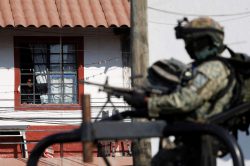
TOKYO, July 19 (Reuters) – North Korea launched two ballistic missiles eastward early on Wednesday, Japan’s and South Korea’s militaries said, just hours after a U.S. ballistic missile submarine arrived in a South Korean port for the first time in four decades.
Both of the missiles appeared to have fallen outside Japan’s exclusive economic zone, the Japanese Defence Ministry said.
South Korea’s Joint Chiefs of Staff (JCS) called on the North to cease such launches.
“We strongly condemn North Korea’s successive ballistic missile launches as grave provocative acts that undermine the peace and stability of the Korean Peninsula as well as the international community, and are a clear violation of U.N. Security Council resolutions,” the JCS said in a statement.
The U.S. military said it was aware of the missile launches and was consulting closely with its allies and partners.
The launches do not appear to pose an immediate threat to the United States or to its allies, but the events highlight the destabilizing impact of North Korea’s illicit weapons program, the U.S. Indo-Pacific Command said in a statement.
The first missile reached an altitude of 50 km (31 miles) and covered a range of 550 km, while the second one rose as high as 50 km and flew 600 km, Japanese Defence Minister Yasukazu Hamada told reporters.
Japan lodged a protest against the missile launches through diplomatic channels, he said.
The firing comes nearly a week after North Korea tested its latest Hwasong-18 intercontinental ballistic missile, a launch Pyongyang said was a warning to the United States and other adversaries.
Also on Tuesday, a U.S. soldier facing disciplinary action fled across the inter-Korean border into North Korea. The soldier is believed to be in North Korean custody, Washington said, creating a fresh crisis between the two foes.
“North Korea’s latest firing of ballistic missiles is probably unrelated to an American soldier crossing the inter-Korean border, but such an incident doesn’t help matters either,” said Leif-Eric Easley, a professor at Ewha University in Seoul.
North Korea “undoubtedly opposes” a new U.S.-South Korea nuclear war planning group that met for the first time on Tuesday, as well as the visit of the U.S. nuclear ballistic missile submarine, he said.






Most Read
Popular articles in the past 24 hours
-

Yokohama to Test Out Renewable-Powered Offshore Floating Data Cen...
-

Ishinomaki Man Plush Toy Offers Hope to Children in Times of Disa...
-

Microsoft Japan Raided by Antitrust Watchdog for Allegedly Blocki...
-
Japan Eyes Introducing Prescreening System for Foreign Travelers,...
-

Nikkei Tops 59,000 for First Time
-
Pokémon Celebrates 30 Years with Japanese Pro Baseball Collab
-

Party Representatives’ Questions in Diet: Takaichi Says Consumpti...
-

Milano Cortina 2026: News in Pictures / Feats of Japanese Athlete...
Popular articles in the past week
-

Producer Behind Pop Group XG Arrested for Cocaine Possession
-

iPS Treatments Pass Key Milestone, but Broader Applications Far f...
-

Japan, U.S. Name 3 Inaugural Investment Projects; Reached Agreeme...
-

Tokyo Skytree's Elevator Stops, Trapping 20 People; All Rescued (...
-
Milano Cortina 2026: Japanese Gold Medalist Figure Skater Miura S...
-

Japan’s Major Real Estate Firms Expanding Overseas Businesses to ...
-
Nepal Bus Crash Kills 19 People, Injures 25 Including One Japanes...
-

Baby Monkey Punch Captures Hearts at Chiba Pref. Zoo, on Social M...
Popular articles in the past month
-
Producer Behind Pop Group XG Arrested for Cocaine Possession
-

Japan PM Takaichi’s Cabinet Resigns en Masse
-

Japan Institute to Use Domestic Commercial Optical Lattice Clock ...
-

Man Infected with Measles Reportedly Dined at Restaurant in Tokyo...
-

Israeli Ambassador to Japan Speaks about Japan’s Role in the Reco...
-

Videos Plagiarized, Reposted with False Subtitles Claiming ‘Ryuky...
-

Man Infected with Measles May Have Come in Contact with Many Peop...
-

Prudential Life Insurance Plans to Fully Compensate for Damages C...
Top Articles in News Services
-
Survey Shows False Election Info Perceived as True
-
Hong Kong Ex-Publisher Jimmy Lai’s Sentence Raises International Outcry as China Defends It
-
Japan’s Nikkei Stock Average Touches 58,000 as Yen, Jgbs Rally on Election Fallout (UPDATE 1)
-
Japan’s Nikkei Stock Average Falls as US-Iran Tensions Unsettle Investors (UPDATE 1)
-

Trump Names Former Federal Reserve Governor Warsh as the Next Fed Chair, Replacing Powell
JN ACCESS RANKING
-
Producer Behind Pop Group XG Arrested for Cocaine Possession
-
Japan PM Takaichi’s Cabinet Resigns en Masse
-
Man Infected with Measles Reportedly Dined at Restaurant in Tokyo Station
-
Israeli Ambassador to Japan Speaks about Japan’s Role in the Reconstruction of Gaza
-
Videos Plagiarized, Reposted with False Subtitles Claiming ‘Ryukyu Belongs to China’; Anti-China False Information Also Posted in Japan