
Fish-Shaped Soy Sauce Bottles Are Forbidden by an Australian State in an Oddly Specific Plastic Ban
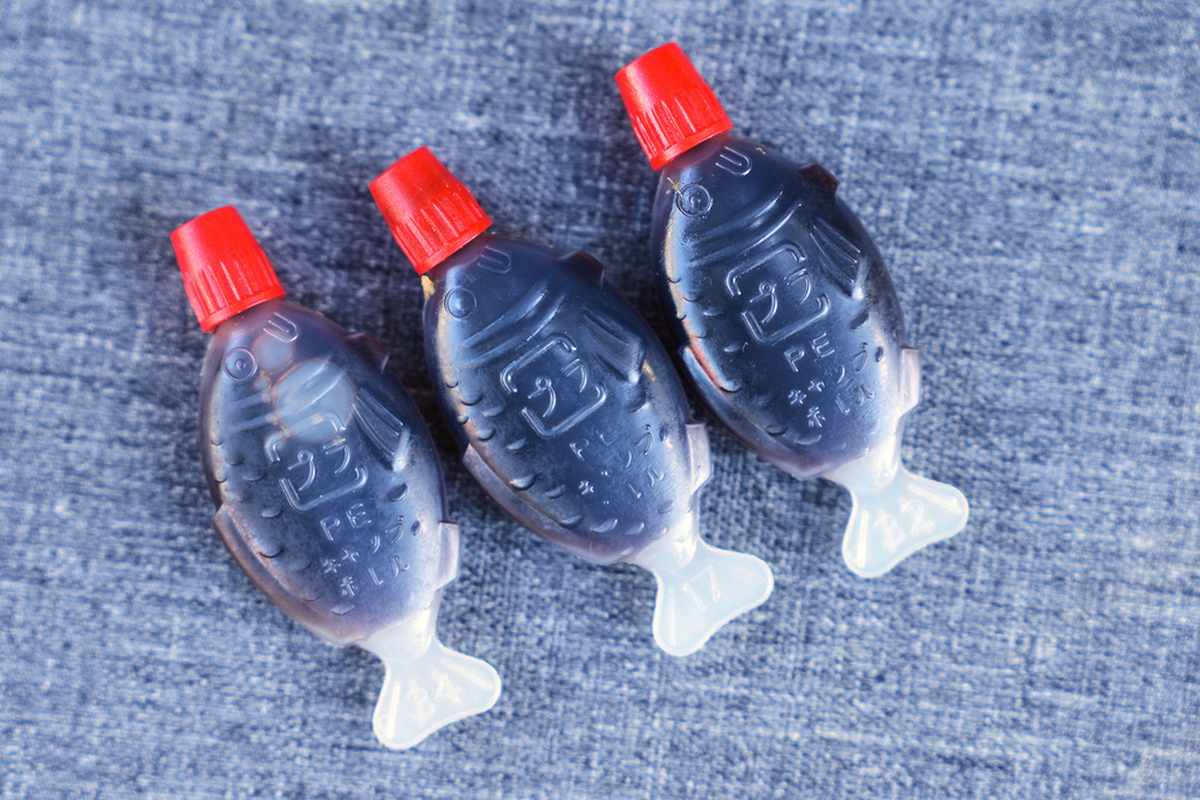
This photo shows plastic soy sauce fish containers in Newcastle, Australia, Monday, Sept. 1, 2025.
17:38 JST, September 1, 2025
WELLINGTON, New Zealand (AP) — Plastic soy sauce bottles shaped like fish are tiny, cute and beloved by many sushi eaters. But in the state of South Australia, the decorative containers swam into a growing net of outlawed plastics.
Officials enacted an unusually specific ban on the fish-shaped bottles beginning Monday, saying they were worse for the environment than other condiment containers.
The state of 1.9 million was the first in Australia to institute the prohibition in an initiative to curb plastic waste. South Australia’s government has annually added new items to its list of banned plastics, making the measures the country’s most comprehensive.
Fish-shaped bottles were singled out
Singling out the fishy containers might seem unusually specific, but officials said the receptacles were particularly bad for the environment and could be mistaken by marine life for food when they reached the ocean.
The tiny bottles were “easily dropped, blown away, or washed into drains,” South Australia Deputy Premier Susan Close said in a statement.
Even when the bottles landed in recycling bins, they were “too small to be captured by sorting machinery and often end up in landfill or as fugitive plastic in the environment,” she said.
Instead, restaurants were required to use larger bottles, refillable condiment containers or what officials said were less harmful single-use alternatives such as sachets, squeezable packs or compostable vessels. The ban covered fish-shaped or rectangular containers that had lids, caps or stoppers and held less than 30 milliliters (1 ounce) of soy sauce.
Balloon sticks and Q-Tips among banned items
Other items banned beginning Monday included cutlery or straws attached to food items, such as the plastic-wrapped straws often connected to juice boxes.
The move was the latest expansion of plastic elimination measures that began in 2009 when South Australia became the first state to ban single-use plastic shopping bags.
Plastic cutlery, plastic straws and many forms of takeout packaging and single-use coffee cups have followed since a 2021 law change. Plastic balloon sticks, confetti and Q-Tips are among other items banned.
Breaches of the law are enforced by the state’s Environment Protection Authority, with possible penalties ranging from warnings to prosecution.
Next on the list for prohibition are stickers often applied to fresh produce, such as apples, that identify the item’s branding or origin. The state government delayed the change, which was due to take effect in 2025, after producers said it would drive up costs and hamper the supply chain moving fresh fruit and vegetables between Australian states.
Talks on a global plastics treaty have collapsed
Governments around the world have enacted various forms of consumer plastic bans.
In 2023, New Zealand’s government said it was the first to implement a nationwide prohibition on thin plastic bags used for produce in grocery stores. Authorities in Lagos, Nigeria, one of the world’s most plastic polluted urban areas, established a prohibition on single-use items in July, with mixed results so far.
The world has seen an explosion in plastic use this century, much of it single-use items that take hundreds of years to break down. Every day, the equivalent of 2,000 garbage trucks full of plastic are dumped into the world’s oceans, rivers and lakes where they drive environmental degradation, poisoning of marine life and human ill-health, according to the United Nations Environment Programme.
Very little plastic is recycled. About 85% of single-use plastic bottles, containers and packaging end up in landfills or are mismanaged, U.N. reports say.
Talks to create a binding global plastic pollution treaty collapsed in August with no consensus. Plastics are made from fossil fuels, such as oil, and oil-producing countries oppose any moves to include limiting the production of plastics in the accord.








Most Read
Popular articles in the past 24 hours
-
My Spendthrift Mother Constantly Asks Me for Money
-
Japanese Students Use Traditional Pickle to Create Novel Wagashi ...
-

‘Dry Bonsai’ Gives New Life to Withered Trees, Allows Free Artist...
-
McDonald's Japan Raises Prices; Big Mac to Cost ¥500, Double Chee...
-

Nepal Bus Crash Kills 19 People, Injures 25 Including One Japanes...
-
Astellas Collaborates with Vir to Develop Its Experimental Prosta...
-
Japan’s Nikkei Stock Average Rises as AI-Related Stocks Shine; Co...
-
Early-Blooming Kawazu Cherry Blossoms Create Sea of Pink at Park ...
Popular articles in the past week
-

Producer Behind Pop Group XG Arrested for Cocaine Possession
-

Japan PM Takaichi’s Cabinet Resigns en Masse
-

Sanae Takaichi Elected Prime Minister of Japan; Keeps All Cabinet...
-

Japan's Govt to Submit Road Map for Growth Strategy in March, PM ...
-

Bus Carrying 40 Passengers Catches Fire on Chuo Expressway; All E...
-

U.S. Firm to Build Training Hub in Fukushima N-plant for Debris R...
-

Japan, U.S. Name 3 Inaugural Investment Projects; Reached Agreeme...
-

Riku-Ryu Pair Wins Gold Medal: Their Strong Bond Leads to Major C...
Popular articles in the past month
-
Producer Behind Pop Group XG Arrested for Cocaine Possession
-
Japan PM Takaichi’s Cabinet Resigns en Masse
-

Japan Institute to Use Domestic Commercial Optical Lattice Clock ...
-

Man Infected with Measles Reportedly Dined at Restaurant in Tokyo...
-

Israeli Ambassador to Japan Speaks about Japan’s Role in the Reco...
-

Videos Plagiarized, Reposted with False Subtitles Claiming ‘Ryuky...
-

Man Infected with Measles May Have Come in Contact with Many Peop...
-

Prudential Life Insurance Plans to Fully Compensate for Damages C...
Top Articles in News Services
-
Survey Shows False Election Info Perceived as True
-
Hong Kong Ex-Publisher Jimmy Lai’s Sentence Raises International Outcry as China Defends It
-
Japan’s Nikkei Stock Average Touches 58,000 as Yen, Jgbs Rally on Election Fallout (UPDATE 1)
-
Japan’s Nikkei Stock Average Falls as US-Iran Tensions Unsettle Investors (UPDATE 1)
-
Trump Names Former Federal Reserve Governor Warsh as the Next Fed Chair, Replacing Powell
JN ACCESS RANKING
-
Producer Behind Pop Group XG Arrested for Cocaine Possession
-
Japan PM Takaichi’s Cabinet Resigns en Masse
-
Japan Institute to Use Domestic Commercial Optical Lattice Clock to Set Japan Standard Time
-
Man Infected with Measles Reportedly Dined at Restaurant in Tokyo Station
-
Israeli Ambassador to Japan Speaks about Japan’s Role in the Reconstruction of Gaza