
Nihombashi Takashimaya Continues to Excite for Almost 100 Years, Maintains Traditions and Classical Charms
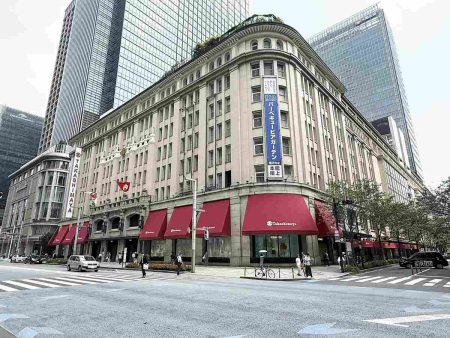
The exterior of Nihombashi Takashimaya’s main building is a reminder of its long history.
18:05 JST, October 20, 2025
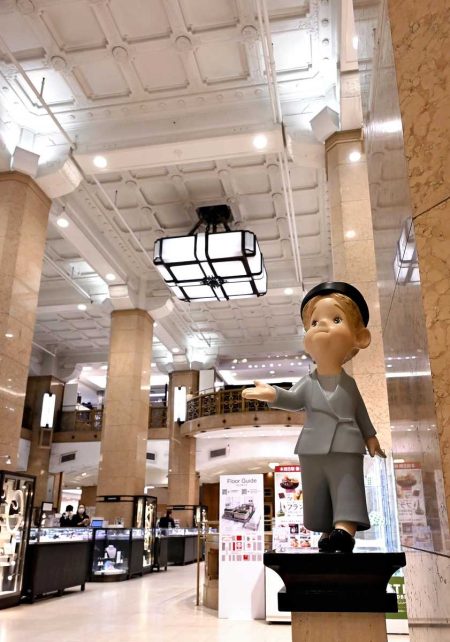
The department store’s mascot “Rose-chan” welcomes visitors in the impressive atrium with decorative ceiling and columns.
Takashimaya, a department store founded in Kyoto during the late Edo period, opened its branch in Nihombashi, Tokyo, in 1933. The Nihombashi Takashimaya main building is still in use today, having survived the ravages of war, and it became the first department store designated as a national important cultural property in 2009.
The magnificent exterior got my heart racing before I walked through the main entrance, where I could see the luxurious atrium lined with marble columns. The ceiling has a lattice pattern, following a design typically found in prestigious buildings like temples, and is adorned with decorative plaster rosettes, creating a splendid effect.
Further inside, one can find the store’s iconic antique elevator. While the machinery has been modernized, attendants still manually operate it, and the original interior remains after having been restored.
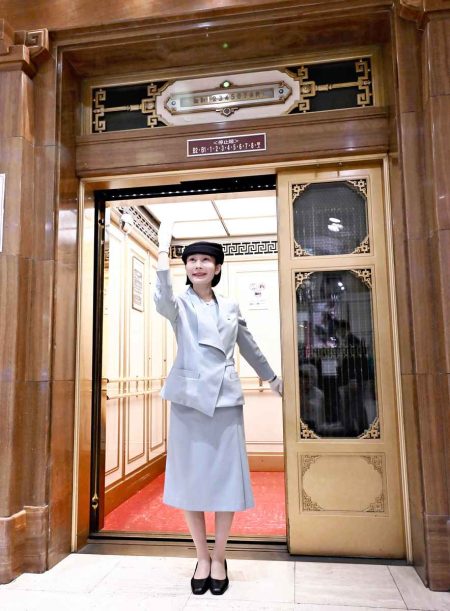
An employee operates a stylish elevator formed by a marble imitation of wood.
“Going up,” the attendant said.
Watching the attendant close the collapsible gate and operate the lever brought back memories of admiring “elevator girls” as a child.
She smiled, saying, “Everyone seems to enjoy it,” noting many customers visit specifically for the elevator.
As I was captivated by her work, we reached the rooftop before I knew it.
For four years from 1950, just after the war, a baby elephant named Takako lived here. She was hoisted to the rooftop by a crane. After she grew too large, she was donated to the Ueno Zoological Gardens. At that time, she reportedly walked down the stairs inside the building to the first floor.
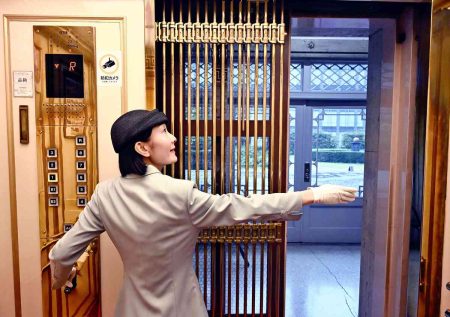
The garden is seen from an elevator through its doors.
Two architects were involved in the building’s design. The first, Teitaro Takahashi, combined traditional Western styles with Japanese architecture. After the war, Togo Murano incorporated modern architectural techniques for expansions and renovations. The design harmonizes the early Showa period construction with more recent styles.
Kazuhiko Kishi, the department store’s concierge, said, “We want to convey this building’s value to our guests by cherishing the spirit of hospitality.”
Nihombashi Takashimaya main building
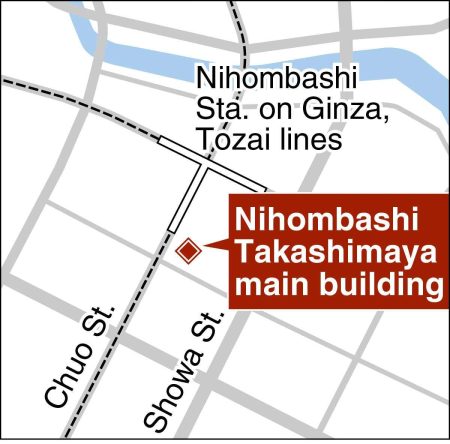
Address: 2-4-1 Nihombashi, Chuo Ward, Tokyo
Access: Directly connected to Nihombashi Station on the Ginza Line and Tozai Line; four-minute walk from Nihombashi Station on the Toei Asakusa LineHours: 10:30 a.m. to 7:30 p.m.


Related Tags





Most Read
Popular articles in the past 24 hours
-
Japanese High School Student Aims to Share Kaiten History Through...
-
Business Hotels Expanding into Regional Areas in Japan, Aiming to...
-
Milano Cortina 2026: Japan Sees Leap in Olympic Performance Throu...
-

Milano Cortina 2026: Japan's Satoshi Furuno Places 4th in Men's S...
-

Milano Cortina 2026: Speed Skater Takagi Finishes 6th in the 1,50...
-
Osaka: 40 Ninjas Display Shuriken Throwing Skills at Japan Champi...
-

Fiji Defense Minister Hopes Japan Will Support Stabilization of P...
-

Milano Cortina 2026: Malinin Highlights Dangers of Social Media i...
Popular articles in the past week
-

Japan PM Takaichi’s Cabinet Resigns en Masse
-

Man Infected with Measles Reportedly Dined at Restaurant in Tokyo...
-

Sanae Takaichi Elected Prime Minister of Japan; Keeps All Cabinet...
-

Japan's Govt to Submit Road Map for Growth Strategy in March, PM ...
-

Bus Carrying 40 Passengers Catches Fire on Chuo Expressway; All E...
-

Milano Cortina 2026: Figure Skaters Riku Miura, Ryuichi Kihara Pa...
-

Japan, U.S. Name 3 Inaugural Investment Projects; Reached Agreeme...
-

U.S. Firm to Build Training Hub in Fukushima N-plant for Debris R...
Popular articles in the past month
-
Japan PM Takaichi’s Cabinet Resigns en Masse
-

Japan Institute to Use Domestic Commercial Optical Lattice Clock ...
-

Israeli Ambassador to Japan Speaks about Japan’s Role in the Reco...
-
Man Infected with Measles Reportedly Dined at Restaurant in Tokyo...
-

Videos Plagiarized, Reposted with False Subtitles Claiming ‘Ryuky...
-

Man Infected with Measles May Have Come in Contact with Many Peop...
-

Prudential Life Insurance Plans to Fully Compensate for Damages C...
-

Woman with Measles Visited Hospital in Tokyo Multiple Times Befor...
Top Articles in Features
-
Tokyo’s New Record-Breaking Fountain Named ‘Tokyo Aqua Symphony’
-
Sapporo Snow Festival Opens with 210 Snow and Ice Sculptures at 3 Venues in Hokkaido, Features Huge Dogu
-

Tourists Flock to Ice Dome Lodge at Resort in Hokkaido, Japan; Facility Invites Visitors to Sleep on Beds Made of Ice
-

High-Hydration Bread on the Rise, Seeing Increase in Specialty Shops, Recipe Searches
-
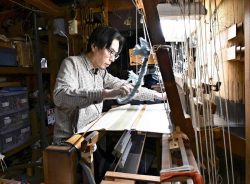
Heirs to Kyoto Talent: Craftsman Works to Keep Tradition of ‘Kinran’ Brocade Alive Through Initiatives, New Creations
JN ACCESS RANKING
-
Japan PM Takaichi’s Cabinet Resigns en Masse
-
Japan Institute to Use Domestic Commercial Optical Lattice Clock to Set Japan Standard Time
-
Israeli Ambassador to Japan Speaks about Japan’s Role in the Reconstruction of Gaza
-
Man Infected with Measles Reportedly Dined at Restaurant in Tokyo Station
-
Videos Plagiarized, Reposted with False Subtitles Claiming ‘Ryukyu Belongs to China’; Anti-China False Information Also Posted in Japan