
Tottori: Daisen Offers Glamping on Vast Lawns with Spectacular Views, Also Known for Holding T-Rex Races
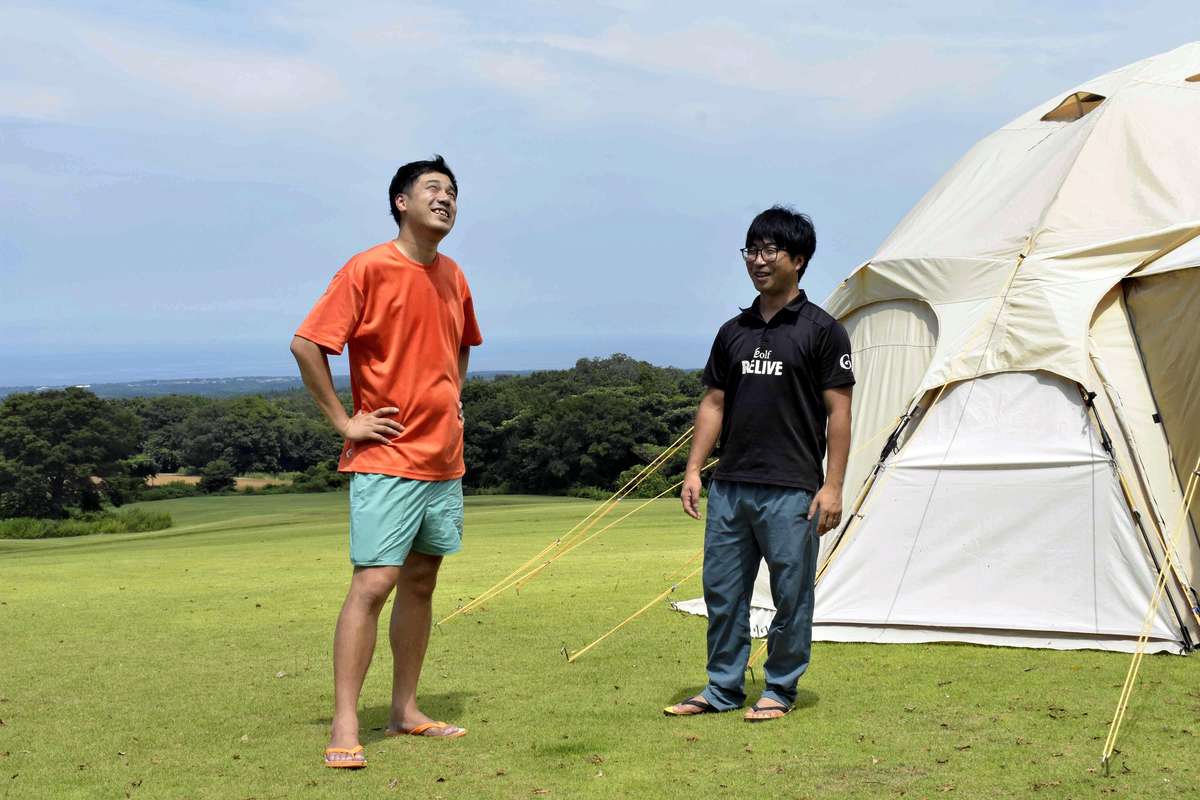
Masashi Sasaki, left, and Tamaki Yamagami talk about future initiatives beside a canvas tent at Toma Shiba in Daisen, Tottori Prefecture.
11:15 JST, October 4, 2025
DAISEN, Tottori — Nestled between 1,729-meter-high Mt. Daisen and the Sea of Japan, the town of Daisen in Tottori Prefecture is one of Japan’s leading turf farming regions.
Young people in the area make use of the scenic turf farms by renting them for glamping or holding fun events to revitalize the region.
A canvas tent is set up on 2 hectares of a lush, area of grass called Toma Shiba. Between April and mid-November, the grass turf is rented out to one group a night. Located at about 300 meters above sea level at the foot of Mt. Daisen, the turf area offers a luxurious view of the fishing lights on the horizon and a sky full of stars.
“Gazing at the spectacular view lying on the grass is something you can’t experience anywhere else,” said Masashi Sasaki, 37, representative of the company that runs Toma Shiba. “I want many people to experience it.”
Toma Shiba was launched by Tokyo-native Sasaki and Tamaki Yamagami, 40, who farms the turf.
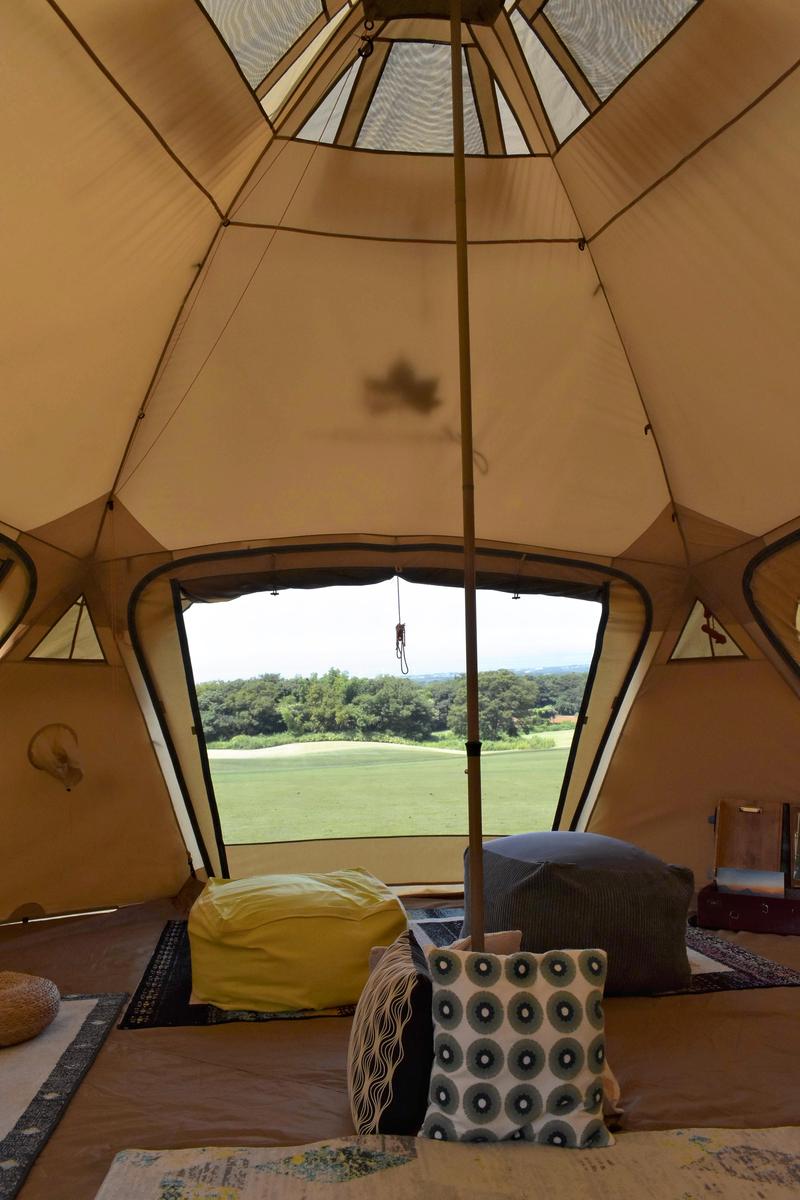
The interior of a tent in Toma Shiba
Sasaki, who used to work at a Tokyo advertising agency, was captivated by the natural beauty of the town when he saw it online and relocated in 2015. He met Yamagami when helping with farming and fishing in the town.
Yamagami, who had no plan to take over the family business, was job hunting. One day, Sasaki visited Yamagami family’s grass field and proposed using it to host glamping as “it would be amazing to spend a night here.”
“He [Sasaki] made me realize the value of this grass field I’ve gotten used to seeing since my childhood,” Yamagami recalled.
They raised the initial costs through crowdfunding to open Toma Shiba in 2018. Coinciding with the COVID-19 pandemic, word of mouth has spread about Toma Shiba since 2020 as a leisure option avoiding the so-called Three Cs — closed spaces, crowded places and close-contact settings — leading to a surge in bookings.
A 29-year-old man from Tokyo visiting with his friend said: “Staying in the open grass field itself is fun. It is great to have the fresh air from the sea and mountain at the same time.”
Last year, Toma Shiba accepted 70 groups, including those with pets and families with children.
The success of Toma Shiba has also caused a ripple effect. In spring 2022, video creator Naoki Kawamoto, who participates in Toma Shiba’s operation, held a T-Rex race in which participants wearing Tyrannosaurus rex costumes ran across the turf, inspired by similar events overseas. A scene of about 100 participants in T-Rex suits doing a warm-up together induced laughter and gained unexpected views after Kawamoto posted a video on social media.

A T-rex race is held at Toma Shiba in April 2022.
The event provoked similar races nationwide, and Toma Shiba became known as the pilgrimage site for T-Rex races. The fourth race drew about 200 participants from across Japan.
“It proved that a good idea can allow even a small town to host a successful event,” Kawamoto said.
Sasaki said, “We will keep presenting initiatives that connect primary industries with tourism to create added value.”
Bus travel with your bicycle
The Yomiuri Shimbun
TOTTORI — Tottori Prefecture and local bus company Nihon Kotsu Co. launched a trial of allowing passengers to take their bicycle on a route bus, thereby letting them enjoy a trip on the bus and cycle around the town of Daisen after getting off.
The service, called Cycle Bus, covers the 13-kilometer route between Daisenguchi Station and Daisenji bus stops. It is about a 30 minute ride. Four buses depart daily from Daisenguchi, and three depart from Daisenji, which is located halfway up Mt. Daisen. Each bus has the capacity for two people with bicycles.
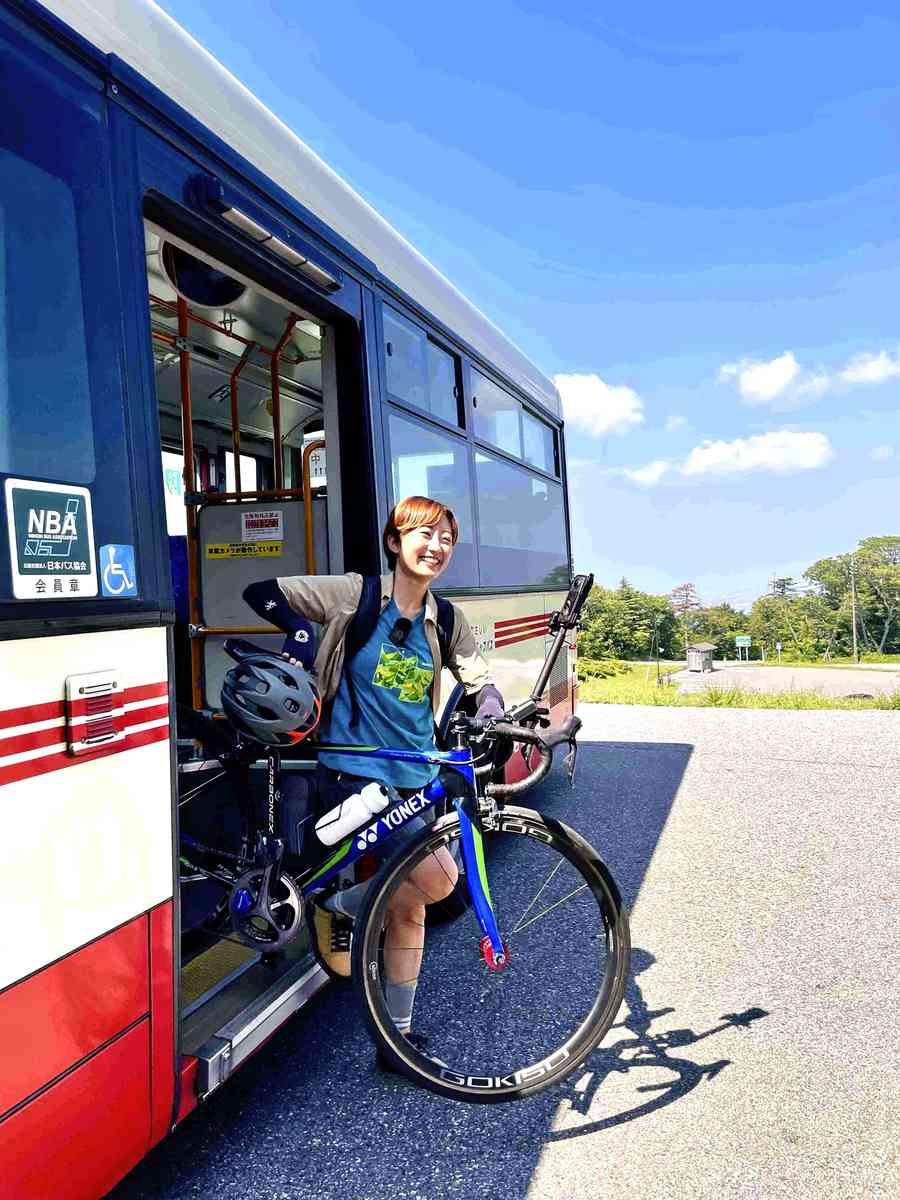
A woman holds a bicycle to get off a route bus in Daisen in a demonstration of an envisioned Cycle Bus service.
Designed for tourists, the service runs only on weekends and holidays until Nov. 30. The fare is ¥1,500 per ride. Passengers make a reservation via Japan Railway Co. (JR West)’s “tabiwa by WESTER” app by 3 p.m. of the day before use and present their digital ticket to the driver on the day.
The buses are not chartered but are existing route buses with regular passengers. Cycle bus users cannot board or disembark at intermediate bus stops. They must bring rubber bands or belts to fasten their bicycles to handrails and sit next to their bicycle while holding it during the ride.
“Cyclists can go up the hill on the bus, so anyone, including beginner cyclists or those not confident in their physical strength, will find it accessible,” a prefectural official said. “We hope this encourages people to more casually enjoy the scenic spots and breathtaking views around Mt. Daisen.”
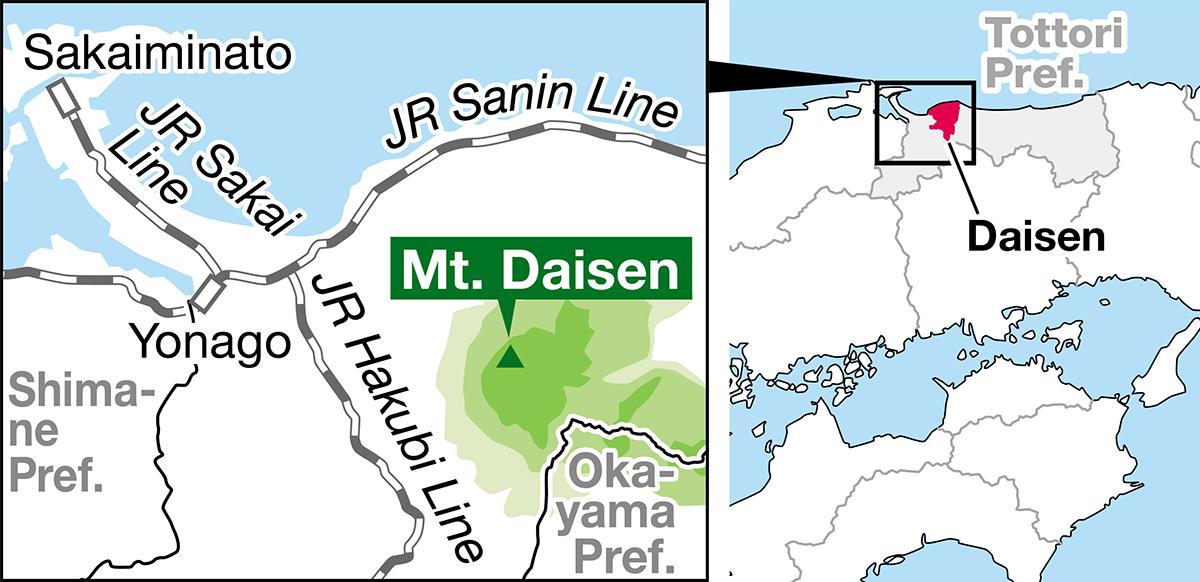
Daisen
This small town with a population of about 14,600 faces the Sea of Japan to the north and encompasses the summit of Mt. Daisen to the south. The town’s lawn cultivation began during Japan’s high-growth period, making use of the well-drained black volcanic soil rich in ash found throughout the town.In 2022, the value of the prefecture’s turf production reached ¥1.62 billion, ranking second only to Ibaraki Prefecture. Other well-known local specialties include broccoli, pears, sea urchin and ita wakame, which is dried wakame seaweed spread in a flat, board-like shape.


Related Tags



Most Read
Popular articles in the past 24 hours
-
Japanese High School Student Aims to Share Kaiten History Through...
-
Business Hotels Expanding into Regional Areas in Japan, Aiming to...
-
Milano Cortina 2026: Japan Sees Leap in Olympic Performance Throu...
-

Milano Cortina 2026: Japan's Satoshi Furuno Places 4th in Men's S...
-

Milano Cortina 2026: Speed Skater Takagi Finishes 6th in the 1,50...
-
Osaka: 40 Ninjas Display Shuriken Throwing Skills at Japan Champi...
-

Fiji Defense Minister Hopes Japan Will Support Stabilization of P...
-

Milano Cortina 2026: Malinin Highlights Dangers of Social Media i...
Popular articles in the past week
-

Japan PM Takaichi’s Cabinet Resigns en Masse
-

Man Infected with Measles Reportedly Dined at Restaurant in Tokyo...
-

Sanae Takaichi Elected Prime Minister of Japan; Keeps All Cabinet...
-

Japan's Govt to Submit Road Map for Growth Strategy in March, PM ...
-

Bus Carrying 40 Passengers Catches Fire on Chuo Expressway; All E...
-

Milano Cortina 2026: Figure Skaters Riku Miura, Ryuichi Kihara Pa...
-

Japan, U.S. Name 3 Inaugural Investment Projects; Reached Agreeme...
-

U.S. Firm to Build Training Hub in Fukushima N-plant for Debris R...
Popular articles in the past month
-
Japan PM Takaichi’s Cabinet Resigns en Masse
-

Japan Institute to Use Domestic Commercial Optical Lattice Clock ...
-

Israeli Ambassador to Japan Speaks about Japan’s Role in the Reco...
-
Man Infected with Measles Reportedly Dined at Restaurant in Tokyo...
-

Videos Plagiarized, Reposted with False Subtitles Claiming ‘Ryuky...
-

Man Infected with Measles May Have Come in Contact with Many Peop...
-

Prudential Life Insurance Plans to Fully Compensate for Damages C...
-

Woman with Measles Visited Hospital in Tokyo Multiple Times Befor...
Top Articles in Features
-

Tokyo’s New Record-Breaking Fountain Named ‘Tokyo Aqua Symphony’
-
Sapporo Snow Festival Opens with 210 Snow and Ice Sculptures at 3 Venues in Hokkaido, Features Huge Dogu
-

Tourists Flock to Ice Dome Lodge at Resort in Hokkaido, Japan; Facility Invites Visitors to Sleep on Beds Made of Ice
-

High-Hydration Bread on the Rise, Seeing Increase in Specialty Shops, Recipe Searches
-
Heirs to Kyoto Talent: Craftsman Works to Keep Tradition of ‘Kinran’ Brocade Alive Through Initiatives, New Creations
JN ACCESS RANKING
-
Japan PM Takaichi’s Cabinet Resigns en Masse
-
Japan Institute to Use Domestic Commercial Optical Lattice Clock to Set Japan Standard Time
-
Israeli Ambassador to Japan Speaks about Japan’s Role in the Reconstruction of Gaza
-
Man Infected with Measles Reportedly Dined at Restaurant in Tokyo Station
-
Videos Plagiarized, Reposted with False Subtitles Claiming ‘Ryukyu Belongs to China’; Anti-China False Information Also Posted in Japan