
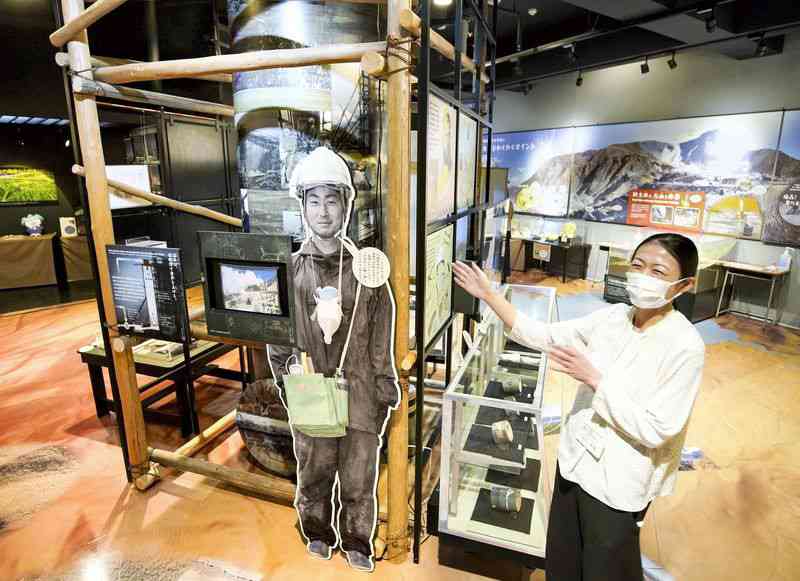
A model of a Jokisei Onsen system is seen inside the Hakone Geomuseum.
14:42 JST, January 11, 2022
HAKONE, Kanagawa — The constantly rising steam and the boiling hot mud of Owakudani reminded people of a place they would rather not be, earning it the nickname, “the great hell.”
The district in Hakone, Kanagawa Prefecture, was renamed Owakudani in 1873 prior to Emperor and Empress Meiji’s visit because “the Imperial couple should not be taken to hell.”
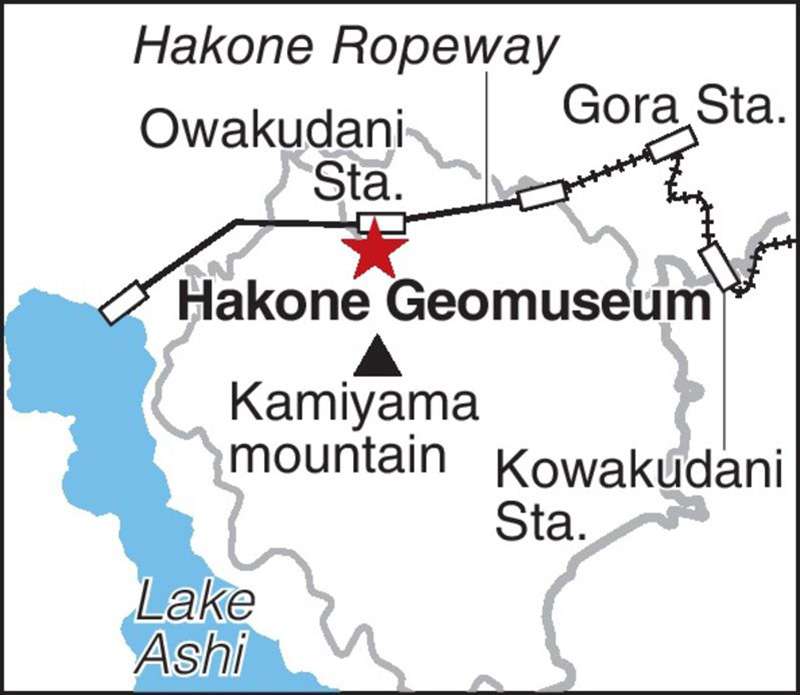
The Hakone Geomuseum not only allows visitors to get a feel for Hakone, but also exhibits volcanic rocks and fossils that were found in the area, including in Owakudani.
One of the exhibits at the museum features sulfur rocks, which are bright yellow and can either have a smooth or rough surface. The rocks themselves do not smell like sulfur, but some have a glittery appearance, which is dependent on how quickly it solidifies.
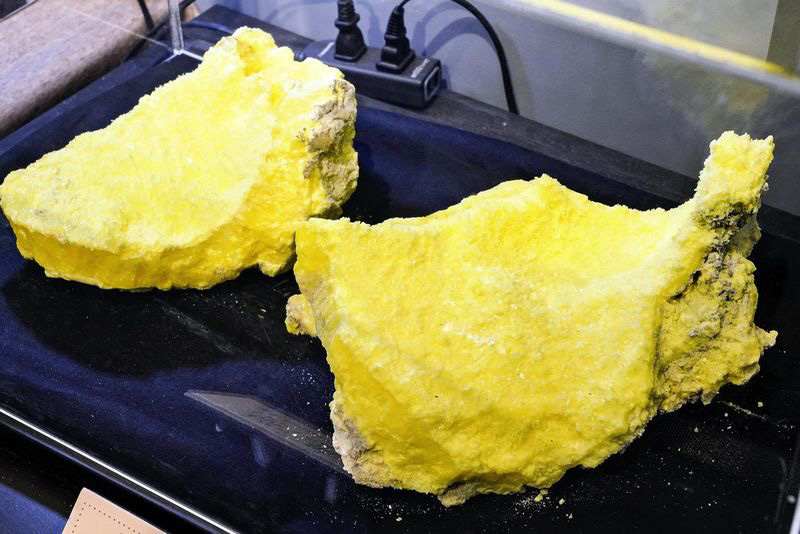
Sulfur rocks
“That sulfur smell comes from hydrogen sulfide,” curator Tamami Yamaguchi said. “Many visitors are surprised when they learn that the rocks don’t actually smell.”
The museum also has a large section dedicated to hot springs.
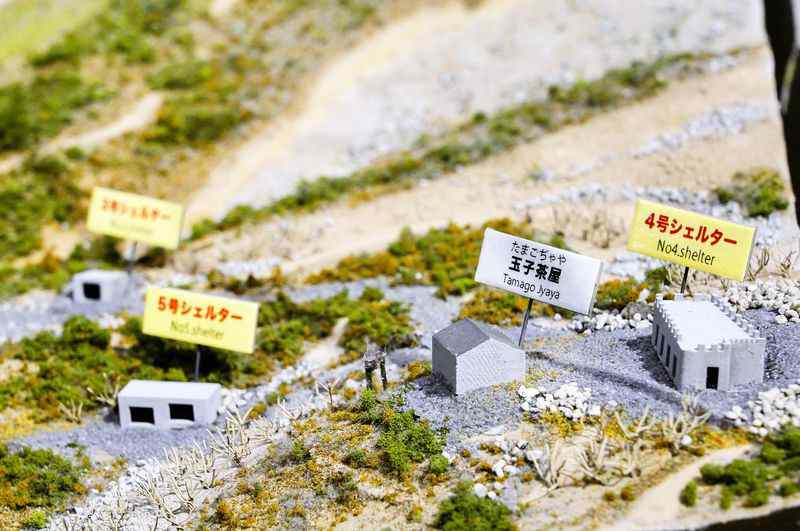
The miniature display of the area around Owakudani in Hakone, Kanagawa Prefecture
The massive amount of volcanic steam spewing around Owakudani contains elements found in Hakone’s hot spring water, which is made by mixing the steam with water from low-lying areas. The onsen water made through this method, known as Jokisei (steam wells) Onsen, is delivered to nearby accommodation facilities, together with other hot spring water, via special pumps.
At the museum’s entrance, two handmade working models of a Jokisei Onsen system are on display, which can be operated using a foot pump.
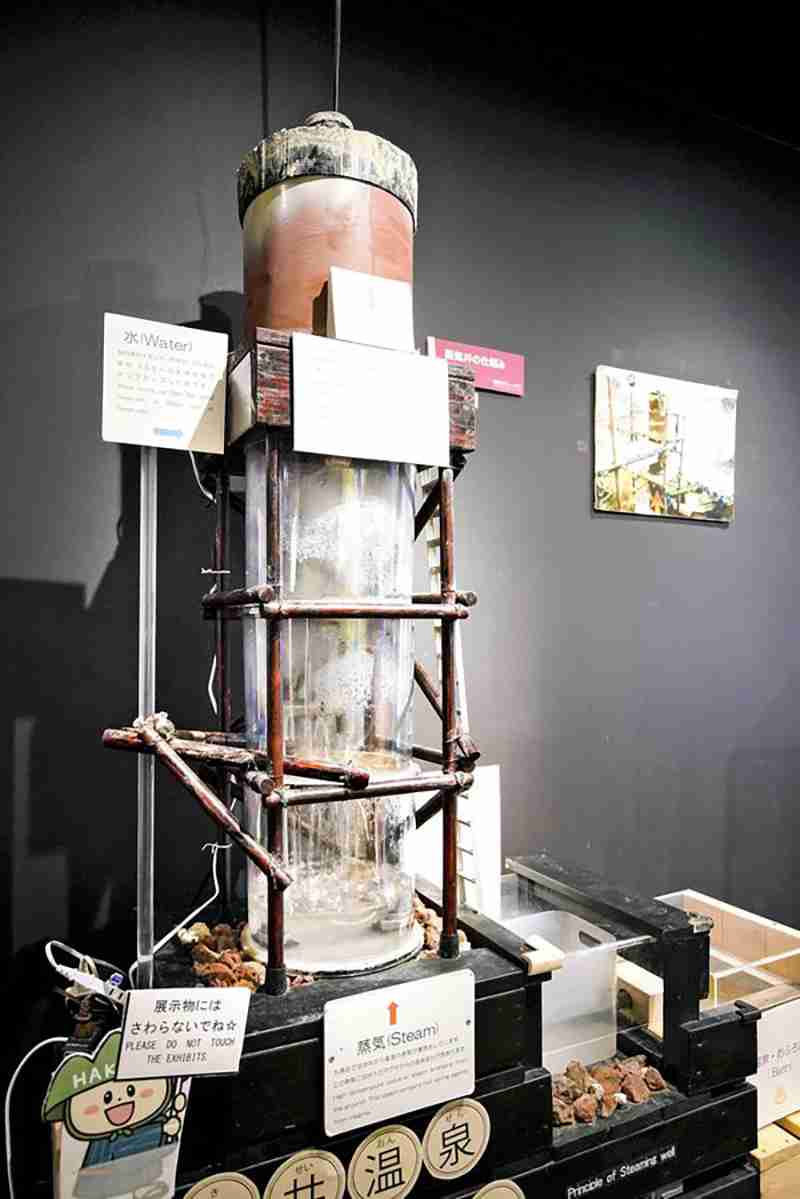
A handmade model of a Jokisei Onsen system
“Understanding the Jokisei Onsen is the first step to understanding Owakudani,” Yamaguchi said. “I want visitors to first understand how it all works.”
“It’s a rare museum in which you can feel that the Earth is alive,” she added.
As I inhaled the hydrogen sulfide that filled the air, I felt like I was inhaling the Earth’s breath. That was when I realized that Yamaguchi was right.
Hakone Geomuseum: 1251 Sengokuhara, Hakone, Kanagawa Prefecture


Related Tags



Most Read
Popular articles in the past 24 hours
-

Japan Train Company to Increase Fares, Including in Tokyo Metropo...
-
Hawaii Museum on Tsunami Including Japan's 2011 Disaster at Risk ...
-

Japan Govt to Tighten Requirements to Receive Permanent Residency...
-

Tail of ANA Plane Struck Runway During Landing in Houston; No Inj...
-

Samurai Japan Holds First Practice in Miami; Team Will Play again...
-

Medical Care at Home and Disasters: Ensure Systems to Provide Con...
-

Iran Targets Busiest International Airport as Top UN Body Demands...
-

Japan to Face Venezuela in World Baseball Classic Quarterfinals
Popular articles in the past week
-

Japan Figure Skating Legend Yuzuru Hanyu Is Proud Disaster Surviv...
-

Nippon Life Insurance's U.S. Arm Sues OpenAI Over Legal Assistanc...
-

Ibaraki Pref.'s 1st Foreign Bus Driver Hired in Tsukuba
-
Govt to Utilize ODA for Ensuring Economic Security; Securing Ener...
-
Massive Sewer Pipe Found Jutting Out of Highway in Osaka
-
Amid Strait of Hormuz Blockade, Shipping Companies Scramble to Ge...
-

Beckoning Cats Get Makeover to Fit Modern Lifestyles with Sleek D...
-
Japan Govt Survey Finds Just 10% of Workers Want Working Hours to...
Popular articles in the past month
-

Producer Behind Pop Group XG Arrested for Cocaine Possession
-

Japan PM Takaichi’s Cabinet Resigns en Masse
-

Man Infected with Measles Reportedly Dined at Restaurant in Tokyo...
-

Videos Plagiarized, Reposted with False Subtitles Claiming ‘Ryuky...
-

iPS Treatments Pass Key Milestone, but Broader Applications Far f...
-
Japan Figure Skating Legend Yuzuru Hanyu Is Proud Disaster Surviv...
-

Sanae Takaichi Elected Prime Minister of Japan; Keeps All Cabinet...
-

Nepal Bus Crash Kills 19 People, Injures 25 Including One Japanes...
Top Articles in Features
-
Tokyo’s New Record-Breaking Fountain Named ‘Tokyo Aqua Symphony’
-
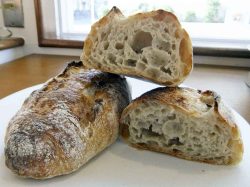
High-Hydration Bread on the Rise, Seeing Increase in Specialty Shops, Recipe Searches
-
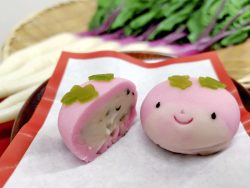
Japanese Students Use Traditional Pickle to Create Novel Wagashi Confectionery
-
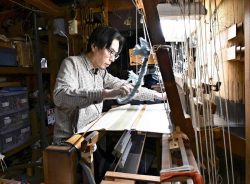
Heirs to Kyoto Talent: Craftsman Works to Keep Tradition of ‘Kinran’ Brocade Alive Through Initiatives, New Creations
-

My Spendthrift Mother Constantly Asks Me for Money
JN ACCESS RANKING
-
Producer Behind Pop Group XG Arrested for Cocaine Possession
-
Japan PM Takaichi’s Cabinet Resigns en Masse
-
Man Infected with Measles Reportedly Dined at Restaurant in Tokyo Station
-
Videos Plagiarized, Reposted with False Subtitles Claiming ‘Ryukyu Belongs to China’; Anti-China False Information Also Posted in Japan
-
iPS Treatments Pass Key Milestone, but Broader Applications Far from Guaranteed