
Pause on U.S. Reciprocal Tariffs: Financial Market Sends Serious Warning
15:53 JST, April 11, 2025
U.S. President Donald Trump’s attempt to rewrite trade rules has been forced to change course in less than a day. He must have taken note of the warnings of violently turbulent financial markets.
No one comes out as the winner in a trade war. Trump should proceed with further policy reviews.
On April 9, the U.S. government announced that it would suspend for 90 days the additional portion of reciprocal tariffs applied to about 60 countries and regions including Japan. The suspension does not apply to China, and a blanket 10% tariff covering almost all countries and regions will be maintained, it said.
Reciprocal tariffs on Japan will be reduced from 24% to 10%, as the additional 14% will be suspended. Meanwhile, tariffs on China, which has been engaged in an exchange of retaliatory tariffs with the United States, were raised to a total of 125%.
The closing stock price of the Dow Jones Industrial Average on the New York Stock Exchange fell below 40,000 points for the first time in eight months on April 4, marking its third largest one-day decline in history. There was also a sell-off in U.S. Treasury bonds on April 9, temporarily causing a triple decline in U.S. stocks, U.S. Treasury bonds and the U.S. dollar.
Trump explained the reason for the policy revision by saying that people were getting “a little bit afraid,” with unstable financial markets in mind. Even if this does not mean that Trump has admitted an error, it is noteworthy that he revised the failure at an early stage.
In the first place, reciprocal tariffs are too self-serving and are an outrageous move that could destroy the free trade system. The chaos of the past few days has seriously undermined confidence in the United States. Trump has said the aim is to bring manufacturing industries back to the United States. However, under such circumstances, companies will not be able to invest in the United States with peace of mind.
The intensifying confrontation between the two superpowers — the United States and China — is also a concern.
The abnormally high tariffs will sharply reduce trade between the two countries. If both countries fall into a recession caused by the high tariffs, there is a risk of the situation dealing a serious blow to the global economy.
Although the worst scenario has been averted for the time being, the unstable situation is highly likely to continue in the future.
U.S. Treasury Secretary Scott Bessent said Japan would “get priority” among countries in the upcoming negotiations regarding the reciprocal tariffs.
It is vital for Japan to formulate a strategy with a long-term perspective and face negotiations without being swayed by remarks of the U.S. side.
Japan needs to work to maintain close communications with the European Union, Britain and the Association of Southeast Asian Nations, among others, and deepen cooperation to promote the free trade regime.
One idea would be for Japan to take the lead in holding an emergency summit on the Trans-Pacific Partnership free trade accord and stress the importance of free trade.
Creating an environment to develop the global economy without being pushed around by the U.S. administration’s odd behavior would become a powerful way to make Washington reconsider its high tariff policy.
(From The Yomiuri Shimbun, April 11, 2025)


Related Tags



Most Read
Popular articles in the past 24 hours
-

Japan Train Company to Increase Fares, Including in Tokyo Metropo...
-

Japan Govt to Tighten Requirements to Receive Permanent Residency...
-

Tail of ANA Plane Struck Runway During Landing in Houston; No Inj...
-

Samurai Japan Holds First Practice in Miami; Team Will Play again...
-

Medical Care at Home and Disasters: Ensure Systems to Provide Con...
-

Iran Targets Busiest International Airport as Top UN Body Demands...
-

Japan to Face Venezuela in World Baseball Classic Quarterfinals
-

North Korean Leader Kim and His Daughter Try out New Pistols at S...
Popular articles in the past week
-

Japan Figure Skating Legend Yuzuru Hanyu Is Proud Disaster Surviv...
-

Nippon Life Insurance's U.S. Arm Sues OpenAI Over Legal Assistanc...
-

Ibaraki Pref.'s 1st Foreign Bus Driver Hired in Tsukuba
-

Govt to Utilize ODA for Ensuring Economic Security; Securing Ener...
-

Massive Sewer Pipe Found Jutting Out of Highway in Osaka
-

Beckoning Cats Get Makeover to Fit Modern Lifestyles with Sleek D...
-

Japan Govt Survey Finds Just 10% of Workers Want Working Hours to...
-
Japan's 2nd Round of U.S. Investments May Be Worth Over $100 Bill...
Popular articles in the past month
-

Producer Behind Pop Group XG Arrested for Cocaine Possession
-

Japan PM Takaichi’s Cabinet Resigns en Masse
-

Man Infected with Measles Reportedly Dined at Restaurant in Tokyo...
-

Videos Plagiarized, Reposted with False Subtitles Claiming ‘Ryuky...
-

iPS Treatments Pass Key Milestone, but Broader Applications Far f...
-
Japan Figure Skating Legend Yuzuru Hanyu Is Proud Disaster Surviv...
-

Sanae Takaichi Elected Prime Minister of Japan; Keeps All Cabinet...
-

Nepal Bus Crash Kills 19 People, Injures 25 Including One Japanes...
Top Articles in Editorial & Columns
-
Riku-Ryu Pair Wins Gold Medal: Their Strong Bond Leads to Major Comeback Victory
-

Reciprocal Tariffs Ruled Illegal: Judiciary Would Not Tolerate President’s High-Handed Approach
-
Japan’s Plan for Investment in U.S.: Aim for Mutual Development by Ensuring Profitability
-
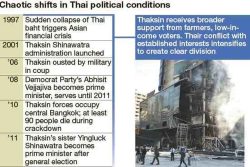
Chronic Issues Erode Thailand’s Economy as Political Confusion Persists, Threatening Terminal Decline in Its Economy
-
Iran Situation: Japan Must Exert Diplomatic Efforts without Merely Standing by
JN ACCESS RANKING
-
Producer Behind Pop Group XG Arrested for Cocaine Possession
-
Japan PM Takaichi’s Cabinet Resigns en Masse
-
Man Infected with Measles Reportedly Dined at Restaurant in Tokyo Station
-
Videos Plagiarized, Reposted with False Subtitles Claiming ‘Ryukyu Belongs to China’; Anti-China False Information Also Posted in Japan
-
iPS Treatments Pass Key Milestone, but Broader Applications Far from Guaranteed