
Economic Measures Approved: Will The Govt Continue to Issue Lavish Handouts out of Habit?
15:36 JST, November 23, 2024
It must be said that the government has inflated budgetary spending by prioritizing its scale without fully examining the effects on policy. Funds should be used especially for measures that enhance Japan’s growth potential.
The government has approved a package of economic measures to deal with high prices and for other purposes at a Cabinet meeting. The supplementary budget proposal for fiscal 2024 to implement the package calls for about ¥13.9 trillion to be spent from the general account, up from ¥13.1 trillion in the fiscal 2023 supplementary budget.
The scale of the economic measures, including private-sector spending, will total around ¥39 trillion.
The Japanese economy is at a critical juncture in the shift toward becoming a growth-oriented economy, in which both wages and investment increase. Funds need to be used strategically.
With the fallout of the COVID-19 pandemic having faded and the economy continuing its gradual recovery, the government itself in June last year decided on a policy to “return the expenditure structure to normalcy” in order to achieve both economic growth and fiscal consolidation.
Nevertheless, the size of the supplementary budget proposal has increased largely because Prime Minister Shigeru Ishiba mentioned during campaigning in the recent House of Representatives election that the size of the budget proposal would be larger than the previous fiscal year, without considering its content.
As a result, the supplementary budget proposal has become a lavish handout-type budget, with priority placed on budget scale from the start, rather than a careful examination and accumulation of necessary measures.
A typical example of a measure that has continued out of habit, with little impact commensurate with the huge cost, would be the ¥30,000 in benefits for each household exempt from residential taxation. Since the outbreak of the pandemic, such benefits have been issued repeatedly, and last autumn’s economic measures also included ¥70,000 in benefits for each such household.
Most households exempt from residential taxation are those whose members are aged 65 or older, which means that benefits are extended to the elderly with large financial assets. There are instead persistent calls for more generous support to be provided to the working-age generations.
It is also problematic that the subsidy system for electricity and gas bills will be resumed from January to March next year and that gasoline subsidies, which had been set to expire by the end of the year, will be extended.
A budget totaling over ¥11 trillion has already been allocated for these subsidy programs. Not only will this put pressure on the nation’s fiscal condition, it also runs counter to the trend toward decarbonization.
In order to overcome high prices and strengthen the Japanese economy, it is important to make use of the funds for key areas such as decarbonization, digitalization and labor-saving efforts to solve labor shortages.
The government intends to provide more than ¥10 trillion in support for the artificial intelligence and semiconductor sectors by fiscal 2030. It is hoped that the financial support will be steadily provided while carefully considering the risks.
The economic measures also include a review of the “¥1.03 million barrier” — the ¥1.03 million annual income threshold for the imposition of income tax. It is hoped that an appropriate review will be considered, taking into account the balance between the advantages, such as the easing of labor shortages, and the measures needed to secure financial resources to compensate for a decrease in tax revenues.
(From The Yomiuri Shimbun, Nov. 23, 2024)


Most Read
Popular articles in the past 24 hours
-

Voters Using AI to Choose Candidates in Japan's Upcoming General ...
-

Japan's Snow-Clad Beauty: Camellia Flowers Seen in Winter Bloom a...
-
Monkey Strikes Junior High School Girl from Behind in Japan's Yam...
-
Genichiro Inokuma's Mural in Ueno Station That Gave Hope in Postw...
-
Senior Japanese Citizens Return to University to Gain Knowledge, ...
-
Heavy Snow Linked to 30 Deaths across Japan since Late Jan.; JMA ...
-

Foreign and Security Policy: Political Parties Must Discuss How T...
-

Tokyo Police Arrest Head of Resignation Assistance Firm
Popular articles in the past week
-

Japan Institute to Use Domestic Commercial Optical Lattice Clock ...
-
Australian Woman Dies After Mishap on Ski Lift in Nagano Prefectu...
-
Foreign Snowboarder in Serious Condition After Hanging in Midair ...
-

Chinese Embassy in Japan Reiterates Call for Chinese People to Re...
-
Narita Airport, Startup in Japan Demonstrate Machine to Compress ...
-
Toyota Motor Group Firm to Sell Clean Energy Greenhouses for Stra...
-

Sakie Yokota, Last Surviving Parent of a North Korea Abductee, Ur...
-

Beer Yeast Helps Save Labor, Water Use in Growing Rice; Govt Hope...
Popular articles in the past month
-
Univ. in Japan, Tokyo-Based Startup to Develop Satellite for Disa...
-
JAL, ANA Cancel Flights During 3-day Holiday Weekend due to Blizz...
-
China Confirmed to Be Operating Drilling Vessel Near Japan-China ...
-

China Eyes Rare Earth Foothold in Malaysia to Maintain Dominance,...
-
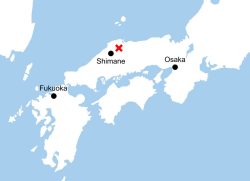
M6.2 Earthquake Hits Japan's Tottori, Shimane Prefectures; No Tsu...
-
Japan Institute to Use Domestic Commercial Optical Lattice Clock ...
-
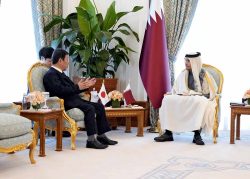
Japan, Qatar Ministers Agree on Need for Stable Energy Supplies; ...
-

Japan, Italy to Boost LNG Cooperation; Aimed at Diversifying Japa...
Top Articles in Editorial & Columns
-
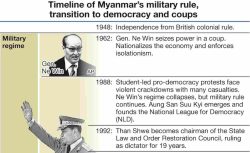
Myanmar Will Continue Under Military Rule Even After Election, Ex-Ambassador Maruyama Says in Exclusive Interview
-
40 Million Foreign Visitors to Japan: Urgent Measures Should Be Implemented to Tackle Overtourism
-

Expansion of New NISA: Devise Ways to Build up Household Assets
-
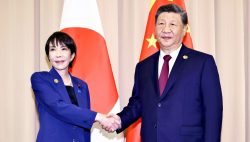
China Criticizes Sanae Takaichi, but China Itself Is to Blame for Worsening Relations with Japan
-
Withdrawal from International Organizations: U.S. Makes High-handed Move that Undermines Multilateral Cooperation
JN ACCESS RANKING
-
Univ. in Japan, Tokyo-Based Startup to Develop Satellite for Disaster Prevention Measures, Bears
-
JAL, ANA Cancel Flights During 3-day Holiday Weekend due to Blizzard
-
China Confirmed to Be Operating Drilling Vessel Near Japan-China Median Line
-
China Eyes Rare Earth Foothold in Malaysia to Maintain Dominance, Counter Japan, U.S.
-
Japan Institute to Use Domestic Commercial Optical Lattice Clock to Set Japan Standard Time