
11:00 JST, November 28, 2025
After U.S. President Donald Trump launched his second administration, a feud between the White House and prominent U.S. universities quickly came to the fore as the federal government intensified its demands.
Among other things, the government insisted that universities redress what it called their antisemitic political stance, including pro-Palestinian activities on campus, and terminate programs based on racial, gender and other minority status, and it announced that it had revoked one university’s eligibility to enroll international students.
Many universities have shown that they are still willing to fight back. Harvard University, for example, has sued the Trump administration, arguing that its threat to freeze federal funding and contracts if its demands were not met violated the First Amendment to the U.S. Constitution that protects the freedom of speech. In September, a federal district court ruled in favor of the university, and then reportedly the school embarked on settlement talks with the administration.
The battle between U.S. universities and the federal government entered a new phase in October when the Department of Education sent the Compact for Academic Excellence in Higher Education to nine leading universities.
The department specified its demands and a deadline for schools to comply with them, and proposed benefits for the institutions that sign the compact, namely federal funding incentives.
The document contains certain criteria that may appear reasonable, including equality in admissions decisions and faculty and administrative hiring, with no consideration for factors such as sex, race and religious association; respect for free speech and expression; and an environment of civility, such as protection from violence against opposing views. Nonetheless, the document states that it is the White House that will determine, through regular checks and monitoring, whether the compact is being complied with.
Massachusetts Institute of Technology President Sally Kornbluth was the first U.S. university leader to reply to the document. Her open letter is helpful in understanding the root of the issue. She noted that before writing her reply she had a discussion with the secretary of education to share the mission of university education: to advance knowledge, educate students and bring knowledge to bear on the world’s great challenges. Kornbluth then said the compact would restrict freedom of expression and MIT’s independence as an institution, and “with respect” declined to support it.
The MIT president maintained that “[federal] scientific funding should be based on scientific merit alone” and urged the importance of “independent thinking and open competition for excellence.” Kornbluth referenced examples of the school’s practical efforts to fairly select the most talented students, such as allowing “incoming undergraduates whose families earn less than $200,000 a year [to] pay no tuition.” She also stated that MIT makes “a wealth of free courses and low-cost certificates available to any American with an internet connection.”
She also noted with pride that “nearly 88% of our last graduating class left MIT with no debt for their education.”
Cap on foreign students
The compact demanded that universities keep the overall ratio of international undergraduates at no more than 15%, and Kornbluth added, “And in service to the nation, we cap enrollment of international undergraduates at roughly 10%.” She went on to disclose that of the undergraduate degrees awarded by MIT, “94% are in STEM [science, technology, engineering and mathematics] fields.”
The university is also well-known for its excellent education and research in such fields as economics, political science, linguistics, philosophy, literature and music.
The letter also stated that, unlike other prominent schools, MIT “has never had legacy preferences in admissions” for applicants whose family members include alumni and others, and it has continued to select students based on merit.
According to surveys and research conducted in the United States over the past 20 years, prominent schools reserve admission slots for the children of alumni and outstanding athletes, with 10% to 30% of their incoming class comprised of “legacy students.” It is also said that about 80% of private universities in the country have such enrollment slots.
The compact made no mention of the legacy system. Some U.S. universities have abolished it, as the legacy system has been increasingly criticized for violating the principle of equal opportunity in education.
Some survey results have shown no significant difference in academic performance between legacy and non-legacy students after enrollment, and some argue that legacy admissions do not cause any particular inequality. Rather, many universities still believe that alumni donations are necessary to support private school finances in order to uphold their founding principles.
‘Spirit of resistance’
It is noteworthy that the largest portion of the compact was devoted to restrictions on the enrollment of international students.
The White House is concerned that some foreign students who come to the United States with ample funds for tuition, living expenses and research funding may be using the university system to facilitate money laundering to finance anti-American political activities. It is evident from such concerns that the administration is determined to strictly screen the entry of foreign students and limit their numbers.
The compact reflects the belief that the growing number of foreign students at leading universities has endangered U.S. national security.
The United States already had colleges when the nation was founded in the 18th century, and unlike Germany and Japan, government control over universities has been minimal.
Admissions were almost noncompetitive until the 1920s, when U.S. universities began to expand in size. This resulted in a surge in student numbers, which in turn made it necessary for the university system to adopt competitive student selection and a structure in which the presence of students with strong abilities from high-income families was supported by high tuition and donations.
Legacy admissions were introduced against the backdrop of a unique history in which elite schools moved to secure enrollment slots for so-called WASPs (white Anglo-Saxon Protestants) in response to an influx of immigrants, including Jews, Catholics, Chinese and Japanese.
The legacy admissions system has been in place for a century now. One factor behind that is said to be the significant regional disparities in the level of high school education in the United States.
It has been said that simply administering nationally standardized tests like the SAT — which is similar to Japan’s Common Test for University Admissions — in the student selection process is not adequate to sufficiently gauge young people’s potential capabilities. It probably has also been recognized that only attracting students who performed outstandingly in secondary schools would not foster an environment in which robust intelligence emerges from the interaction of varied minds and experience.
Given the diverse backgrounds and opinions regarding university education, not all nine universities have responded the same way to the compact.
Brown University in Rhode Island reached an agreement in July with the Trump administration, but in October, it announced that it was declining to participate in the compact. The University of Texas at Austin is withholding a formal response due to internal opposition, despite earlier reports that its leadership was positive about supporting the document.
Universities outside the nine, as well as the Association of American Universities (AAU), have expressed their opposition to the compact while showing understanding for the need for university reform. Their statements reveal their strong political judgments and their will to choose their own path instead of merely sticking to a “spirit of resistance.”
Certainly, this reflects the confidence and spirit of the U.S. university leaders who are determined to “choose our own path,” deciding for themselves on university reform rather than being directed by the government.
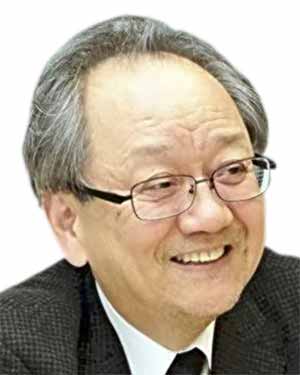
Takenori Inoki
Inoki is a professor emeritus at Osaka University, where he also served as dean of the economics department. He was a specially appointed professor at Aoyama Gakuin University from 2012 to 2016. Prior to that, he served as director general of the International Research Center for Japanese Studies from 2008 to 2012.
The original Japanese article appeared in the Nov. 23 issue of The Yomiuri Shimbun.





Most Read
Popular articles in the past 24 hours
-

Japanese Shipping Giants Halt Strait of Hormuz Transit as Iran Co...
-

U.S. Launches Attacks on Iran: Avoid Escalation of Conflict by An...
-

Japan Shares and Yen Fall, Jgbs Rise as Iran Strikes Continue
-

Takaichi: Japan Striving to Ensure Safety of Japanese Nationals; ...
-

Sawtooth Roof Factory Stands as Monument to Ashikaga Textile Hist...
-

Kyoto Animation President Hideaki Hatta Dies of Illness at 76; Co...
-

Parents of Japanese Teen Shot in U.S. Strive for Gun Control
-

Disinformation Spreads About Team Mirai, Ballot Readers; Online P...
Popular articles in the past week
-

Nepal Bus Crash Kills 19 People, Injures 25 Including One Japanes...
-
Milano Cortina 2026: Japanese Gold Medalist Figure Skater Miura S...
-

Tokyo Spends Big on Children, Wins Over Parents
-

McDonald's Japan Raises Prices; Big Mac to Cost ¥500, Double Chee...
-
Japan’s Miura, Kihara Announce Withdrawal from Figure Skating Wor...
-

Exhibition Featuring Yoshiharu Tsuge’s Manga World Underway in Ch...
-

Yokohama to Test Out Renewable-Powered Offshore Floating Data Cen...
-

BOJ Keeping Eye on Economy and Takaichi's ‘Proactive Fiscal Polic...
Popular articles in the past month
-

Producer Behind Pop Group XG Arrested for Cocaine Possession
-

Japan PM Takaichi’s Cabinet Resigns en Masse
-

Man Infected with Measles Reportedly Dined at Restaurant in Tokyo...
-

Israeli Ambassador to Japan Speaks about Japan’s Role in the Reco...
-

Videos Plagiarized, Reposted with False Subtitles Claiming ‘Ryuky...
-

Man Infected with Measles May Have Come in Contact with Many Peop...
-

Prudential Life Insurance Plans to Fully Compensate for Damages C...
-

Woman with Measles Visited Hospital in Tokyo Multiple Times Befor...
Top Articles in Editorial & Columns
-

Riku-Ryu Pair Wins Gold Medal: Their Strong Bond Leads to Major Comeback Victory
-
Reciprocal Tariffs Ruled Illegal: Judiciary Would Not Tolerate President’s High-Handed Approach
-

China Provoked Takaichi into Risky Move of Dissolving House of Representatives, But It’s a Gamble She Just Might Win
-
Japan’s Plan for Investment in U.S.: Aim for Mutual Development by Ensuring Profitability
-
Flu Cases Surging Again: Infection Can Also Be Prevented by Humidifying Indoor Spaces
JN ACCESS RANKING
-
Producer Behind Pop Group XG Arrested for Cocaine Possession
-
Japan PM Takaichi’s Cabinet Resigns en Masse
-
Man Infected with Measles Reportedly Dined at Restaurant in Tokyo Station
-
Israeli Ambassador to Japan Speaks about Japan’s Role in the Reconstruction of Gaza
-
Videos Plagiarized, Reposted with False Subtitles Claiming ‘Ryukyu Belongs to China’; Anti-China False Information Also Posted in Japan