
Paul Scharder’s ‘Mishima’ Film to Finally Screen in Japan after 40 Years, Marking Anniversary of Author’s Birth
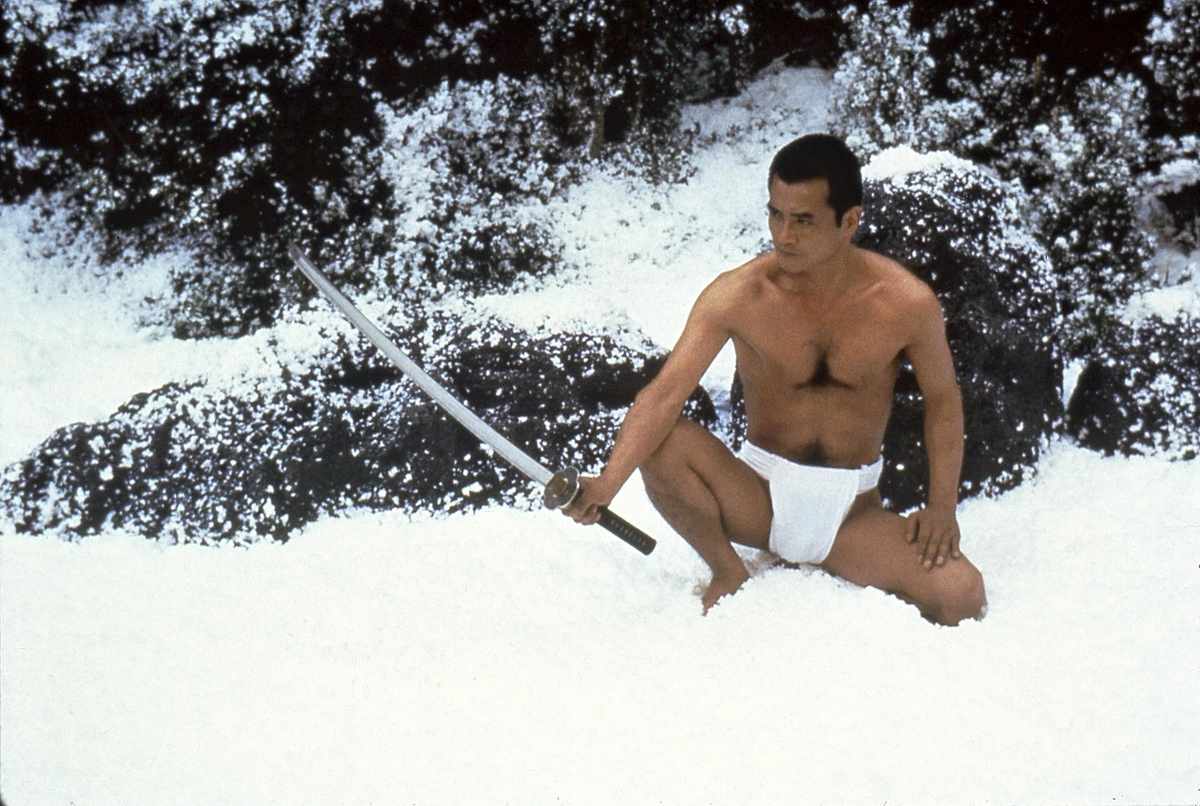
A scene from the film “Mishima,” featuring Ken Ogata as Yukio Mishima
6:00 JST, October 11, 2025
A legendary phantom film, “Mishima: A Life in Four Chapters,” featuring the life and art of author Yukio Mishima — to mark the 100th anniversary of his birth this year — is finally set to have its first screening in Japan after a 40-year wait.
The 38th Tokyo International Film Festival, which opens on Oct. 27, will feature the 1985 film directed by Paul Schrader and produced through a collaboration of top Japanese and American staff.
Despite garnering international acclaim, the film was never released theatrically or on home video in Japan.
“Mishima” will be screened as part of the film festival’s special program, the “100th Anniversary of the Birth of Mishima Yukio .”
The story revolves around life and death of Mishima, played by Ken Ogata. The film interweaves three narrative threads: the events of Nov. 25, 1970, when Mishima committed ritual “seppuku” suicide at the Ground Self-Defense Force Camp Ichigaya in Tokyo; biographical episodes from his childhood; and three plays-within-a-play illustrating Mishima’s novels: “The Temple of the Golden Pavilion,” “Kyoko’s House” and “Runaway Horses”— each depicting the unique world of his works.
In the plays-within-a-play, kabuki actor Bando Yasosuke V, singer Kenji Sawada, and actor Toshiyuki Nagashima portray Mishima’s alter egos on aesthetic and innovative sets designed by art director Eiko Ishioka.
Schrader, 79, is a master filmmaker who received the Golden Lion for Lifetime Achievement at the 79th Venice International Film Festival in 2022. He is also renowned as the screenwriter for the masterpiece “Taxi Driver.”
The original screenplay for “Mishima” was co-written by the director and his late brother, Leonard Schrader. The soundtrack was composed by modern music maestro Philip Glass, and the executive producers were Francis Ford Coppola and George Lucas.
The film had its world premiere at the Cannes Film Festival in France in May 1985, where it won the Best Artistic Contribution award.
While the production team had hoped for a screening at the inaugural Tokyo International Film Festival that same year and a theatrical release in Japan, they did not materialize.
It is believed that concerns over backlash from some right-wing groups regarding a foreign director portraying Mishima cast a shadow over those plans. In the United States, the film was released theatrically and on home video.
According to sources close to the film, the catalyst for the upcoming Japanese premiere at the Tokyo festival was Schrader’s strong personal request. In response, the film festival spent about two years carefully proceeding with preparations, including confirming all rights issues.
In an interview with The Yomiuri Shimbun, Schrader said he knew it would eventually happen, adding that the only thing he didn’t know was whether he would be alive to see it. He also revealed his plan to attend the screening.





Most Read
Popular articles in the past 24 hours
-

Japanese High School Student Aims to Share Kaiten History Through...
-

PM Takaichi Spells out Plans to Advance Bold Policy Shifts in Spe...
-

Chronic Issues Erode Thailand’s Economy as Political Confusion Pe...
-

Japanese Version of Shohei Ohtani's Picture Book Published
-

Tottori: 95-Year-Old Japanese Descendent from Philippines Visits ...
-

Japan to Monitor Trump Administration's Response to U.S. Supreme ...
-

Milano Cortina 2026: Speed Skater Takagi Finishes 6th in the 1,50...
-
Osaka: 40 Ninjas Display Shuriken Throwing Skills at Japan Champi...
Popular articles in the past week
-

Japan PM Takaichi’s Cabinet Resigns en Masse
-

Man Infected with Measles Reportedly Dined at Restaurant in Tokyo...
-

Sanae Takaichi Elected Prime Minister of Japan; Keeps All Cabinet...
-

Japan's Govt to Submit Road Map for Growth Strategy in March, PM ...
-

Bus Carrying 40 Passengers Catches Fire on Chuo Expressway; All E...
-

Milano Cortina 2026: Figure Skaters Riku Miura, Ryuichi Kihara Pa...
-

Japan, U.S. Name 3 Inaugural Investment Projects; Reached Agreeme...
-

U.S. Firm to Build Training Hub in Fukushima N-plant for Debris R...
Popular articles in the past month
-
Japan PM Takaichi’s Cabinet Resigns en Masse
-

Japan Institute to Use Domestic Commercial Optical Lattice Clock ...
-

Israeli Ambassador to Japan Speaks about Japan’s Role in the Reco...
-
Man Infected with Measles Reportedly Dined at Restaurant in Tokyo...
-

Videos Plagiarized, Reposted with False Subtitles Claiming ‘Ryuky...
-

Man Infected with Measles May Have Come in Contact with Many Peop...
-

Prudential Life Insurance Plans to Fully Compensate for Damages C...
-

Woman with Measles Visited Hospital in Tokyo Multiple Times Befor...
Top Articles in Culture
-

BTS to Hold Comeback Concert in Seoul on March 21; Popular Boy Band Releases New Album to Signal Return
-

Lifestyle at Kyoto Traditional Machiya Townhouse to Be Showcased in Documentary
-

Director Naomi Kawase’s New Film Explores Heart Transplants in Japan, Production Involved Real Patients, Families
-

‘Jujutsu Kaisen’ Voice Actor Junya Enoki Discusses Rapid Action Scenes in Season 3, Airing Now
-

Tokyo Exhibition Offers Inside Look at Impressionism; 70 of 100 Works on ‘Interiors’ by Monet, Others on Loan from Paris
JN ACCESS RANKING
-
Japan PM Takaichi’s Cabinet Resigns en Masse
-
Japan Institute to Use Domestic Commercial Optical Lattice Clock to Set Japan Standard Time
-
Israeli Ambassador to Japan Speaks about Japan’s Role in the Reconstruction of Gaza
-
Man Infected with Measles Reportedly Dined at Restaurant in Tokyo Station
-
Videos Plagiarized, Reposted with False Subtitles Claiming ‘Ryukyu Belongs to China’; Anti-China False Information Also Posted in Japan