
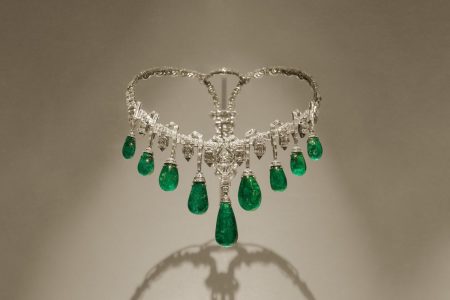
Collaret 1929, platinum, emeralds, diamonds
16:21 JST, November 30, 2025
A fuzzy-headed bee with diamond eyes, a butterfly with sculpted wings, a perched bird with sapphire and emerald plumage. These are a few of the more minor pieces from jewelry house Van Cleef & Arpels at a new exhibit being held at the Tokyo Metropolitan Teien Art Museum.
The exhibition, titled “Timeless Art Deco with Van Cleef & Arpels High Jewelry,” features 250 creations in total, some of which are true marvels. A collaret once owned by Princess Faiza of Egypt dangles 165 carats of cloudy, cabochon emeralds from strands of rectangular diamonds. Another necklace shimmers with 958 gems of varied cuts, yet looks delicate enough to have been snipped out of cloth.
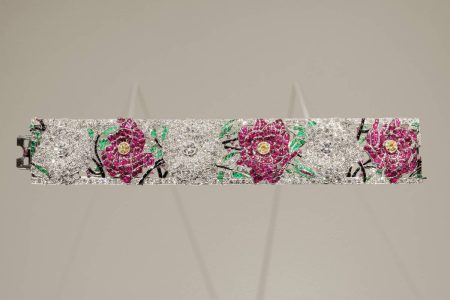
Entwined Flowers, Red and White Roses bracelet 1924, platinum, emeralds, rubies, onyx, yellow diamonds.
Just as dazzling and more colorful is a bracelet of intertwined red ruby and white diamond roses. The bracelet helped the maison to win a grand prize at the 1925 International Exhibition of Modern Decorative and Industrial Arts, more commonly known as the “Art Deco Exhibit.” Incidentally, the grand prize certificate is also on display, as is video showing Prince and Princess Asaka visiting the exhibit venue in Paris.
While the centerpieces are breathtaking, the smaller pieces are hardly trifles. Sapphire and diamond earrings cut a sharp contrast of marine blue and white. A bowtie brooch — also of sapphires and diamonds but with a trompe-l’oeil twist that makes it appear three dimensional — showcases the maison’s couture influences. Vivid enamel lends color to the wings of a ladybug clip, and the flowers in a bouquet clip.
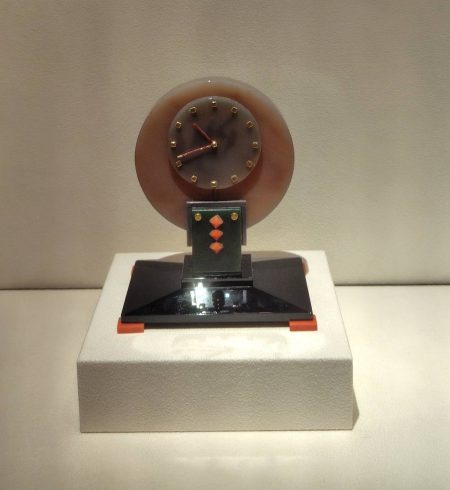
One of the several clocks on display
Beyond these glitzy accessories, there are some fine decor pieces. Several clocks are presented, including one that doubles as a gilt cigarette lighter and another that is mounted with two staring monkeys of carved amethyst. Then there is the outlandish pink and green-lacquered nightlight, which, with its bright colors and projecting fins, looks vaguely Googie.
Among the more standard items, there are several vanity cases. These range in design from a pearl-beaded top to geometric displays of diamonds. The jewelry house even created its own sleek version of the vanity case in the 1930s called the “minaudiere,” a term that entered the English lexicon with relative swiftness. Five minaudieres are on display.
-
The Japan News
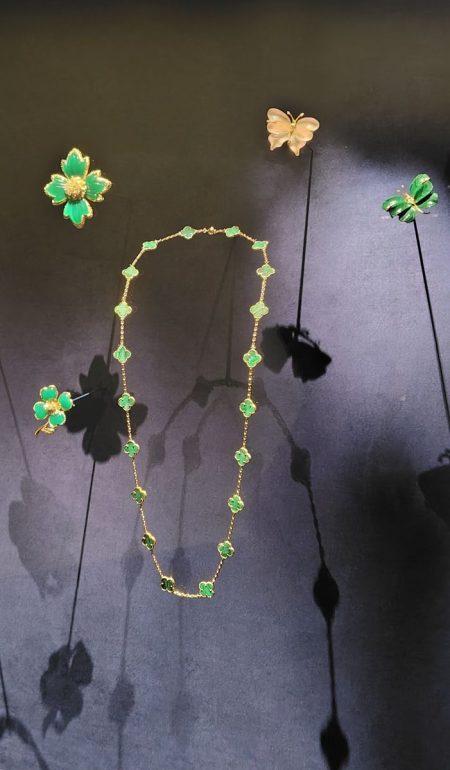
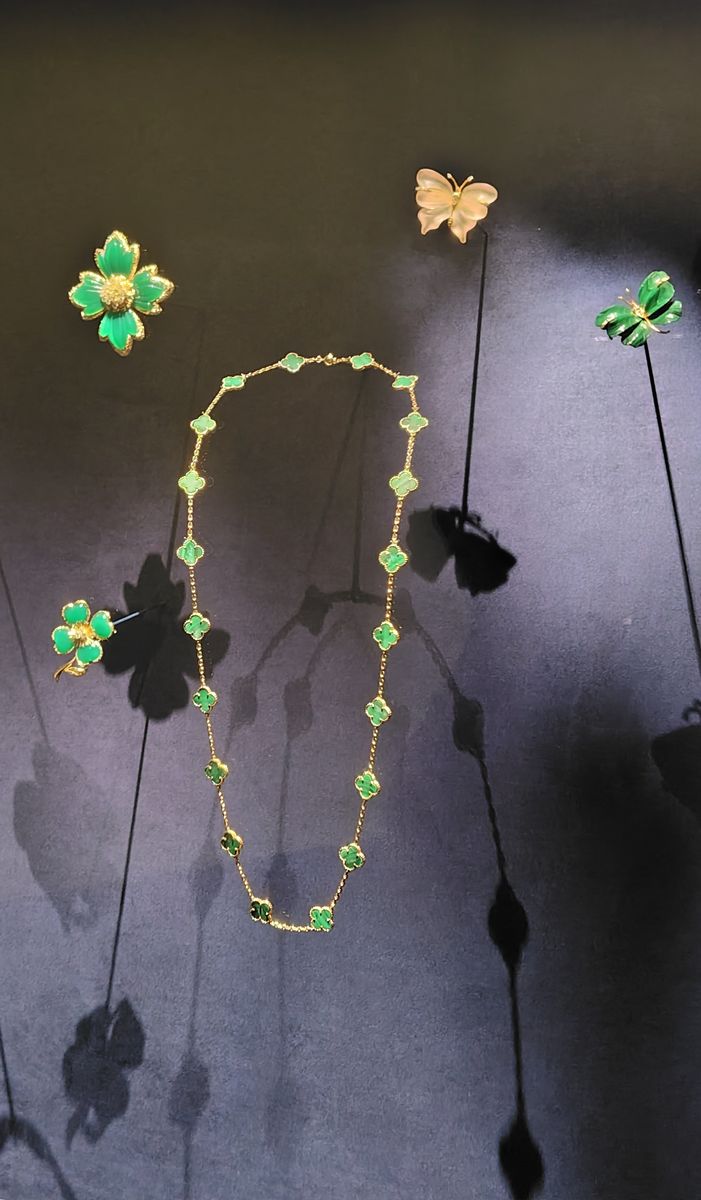
One of the jewelry house’s iconic Alhambra necklaces. The butterfly broach at right has wings sculpted from malachite. -
The Japan News
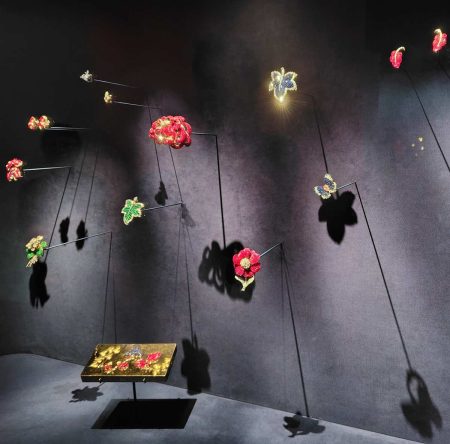
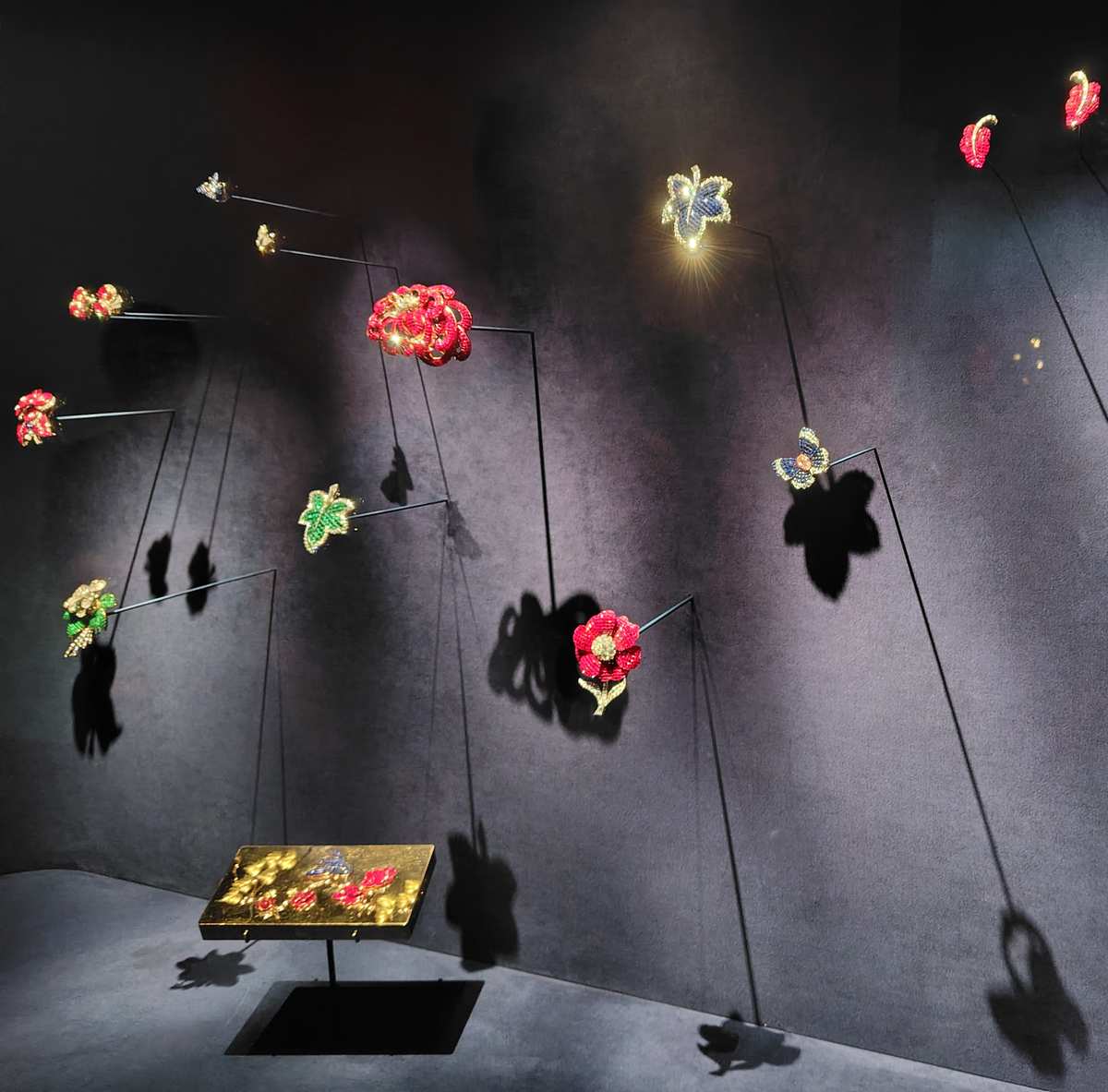
A chrysanthemum clip, center, hints at the influence Japan has had on the jewelry house over the years.
Crossing paths in Paris
The 1925 Art Deco Exhibit marked the ascendence of the new style, and left a lasting impression on Prince and Princess Asaka during their visit. They even had a new residence — the building now housing the Tokyo Metropolitan Teien Art Museum — created for themselves in the expo style. French artists such as Henri Rapin and Rene Lalique were commissioned to design everything from the wall murals to the glass-relief doors in the front entrance hall. Given its shared history in art deco, Van Cleef & Arpels was a natural fit for this year’s exhibit on the 100th anniversary of the Paris expo.
Pieces for the current exhibit were selected in part for their similarities with the building’s architecture, according to Alexandrine Maviel-Sonet, the jewelry house’s patrimony and exhibitions director. On the second floor, an observant visitor might detect parallels between the pieces and details in the architecture of the rooms.
The jewelry brand has had other brushes with Japan. In this exhibit, for example, a chrysanthemum clip, set with rubies and diamonds, exudes influence from the Japonisme movement, in which Western artists were inspired by Japan beginning in the 19th century. No setting shows on the clip, and the rubies on the surface “just look like velvet,” in the words of Maviel-Sonet.
Van Cleef & Arpels also redesigned certain accessories for women in the early 1920s to more closely resemble inro, or small cases that were traditionally worn on a kimono sash. Further inspiration has come from Japanese prints and the hilts of Japanese swords.
The current exhibit runs until Jan. 18. Admission is ¥1,400 for adults, ¥1,120 for college students and ¥700 for high school students and senior citizens. Entry is free for those below high school age. Tickets should be purchased ahead of time on the exhibit’s website.


Related Tags

Most Read
Popular articles in the past 24 hours
-

Japanese Shipping Giants Halt Strait of Hormuz Transit as Iran Co...
-

U.S. Launches Attacks on Iran: Avoid Escalation of Conflict by An...
-

Sawtooth Roof Factory Stands as Monument to Ashikaga Textile Hist...
-

Parents of Japanese Teen Shot in U.S. Strive for Gun Control
-

Disinformation Spreads About Team Mirai, Ballot Readers; Online P...
-
Asahi Breweries to Stage Comeback with New Product in April; Comp...
-

Bank of Japan Deputy Governor Says Rate Hikes Likely to Continue
-

Japanese Government Bonds Rally, Yields Tumble as Iran Strikes Sp...
Popular articles in the past week
-

Nepal Bus Crash Kills 19 People, Injures 25 Including One Japanes...
-

Milano Cortina 2026: Japanese Gold Medalist Figure Skater Miura S...
-
Tokyo Spends Big on Children, Wins Over Parents
-

McDonald's Japan Raises Prices; Big Mac to Cost ¥500, Double Chee...
-

Japan’s Miura, Kihara Announce Withdrawal from Figure Skating Wor...
-
Exhibition Featuring Yoshiharu Tsuge’s Manga World Underway in Ch...
-

Yokohama to Test Out Renewable-Powered Offshore Floating Data Cen...
-

BOJ Keeping Eye on Economy and Takaichi's ‘Proactive Fiscal Polic...
Popular articles in the past month
-

Producer Behind Pop Group XG Arrested for Cocaine Possession
-

Japan PM Takaichi’s Cabinet Resigns en Masse
-

Man Infected with Measles Reportedly Dined at Restaurant in Tokyo...
-

Israeli Ambassador to Japan Speaks about Japan’s Role in the Reco...
-

Videos Plagiarized, Reposted with False Subtitles Claiming ‘Ryuky...
-

Man Infected with Measles May Have Come in Contact with Many Peop...
-

Prudential Life Insurance Plans to Fully Compensate for Damages C...
-

Woman with Measles Visited Hospital in Tokyo Multiple Times Befor...
Top Articles in Culture
-
BTS to Hold Comeback Concert in Seoul on March 21; Popular Boy Band Releases New Album to Signal Return
-

Director Naomi Kawase’s New Film Explores Heart Transplants in Japan, Production Involved Real Patients, Families
-

Tokyo Exhibition Offers Inside Look at Impressionism; 70 of 100 Works on ‘Interiors’ by Monet, Others on Loan from Paris
-
Traditional Japanese Silk Hakama Tradition Preserved by Sole Weaver in Sendai
-
Exhibition Featuring Yoshiharu Tsuge’s Manga World Underway in Chofu, Tokyo; Unique, Surreal Works Draw Steady Crowds
JN ACCESS RANKING
-
Producer Behind Pop Group XG Arrested for Cocaine Possession
-
Japan PM Takaichi’s Cabinet Resigns en Masse
-
Man Infected with Measles Reportedly Dined at Restaurant in Tokyo Station
-
Israeli Ambassador to Japan Speaks about Japan’s Role in the Reconstruction of Gaza
-
Videos Plagiarized, Reposted with False Subtitles Claiming ‘Ryukyu Belongs to China’; Anti-China False Information Also Posted in Japan