
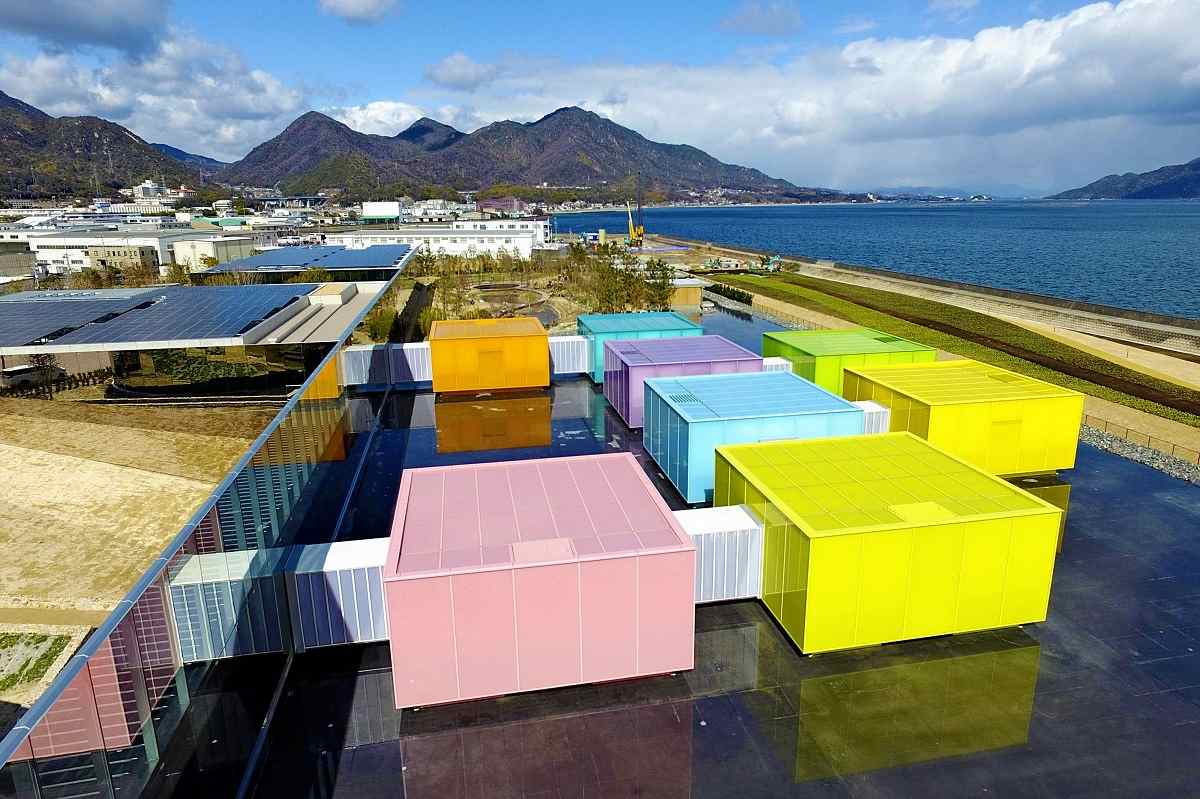
Colorful movable galleries at the Simose Art Museum in Otake, Hiroshima Prefecture
10:50 JST, April 27, 2023
HIROSHIMA — The Simose Art Museum, the first art museum in Otake, Hiroshima Prefecture, has opened to a delighted public.
The museum was designed by world-famous architect Shigeru Ban, 65, under the concept of “looking at art amid art,” and offers a space that is itself highly aesthetic, such as in its colorful, movable galleries. The museum complex also includes villa-style accommodations and a French restaurant, raising hopes that it could be a new tourist hub.
Marui Sangyo Co., a Hiroshima-based company that manufactures and sells building materials, purchased a 4.6-hectare plot facing the Seto Inland Sea from the prefecture and set in motion the construction of the museum, which opened on March 1. The museum is currently exhibiting traditional Japanese dolls and glass works created by French artist Emile Galle, all collected by the Shimose family, which founded the company. By the end of March, some 7,000 visitors had come to the museum.
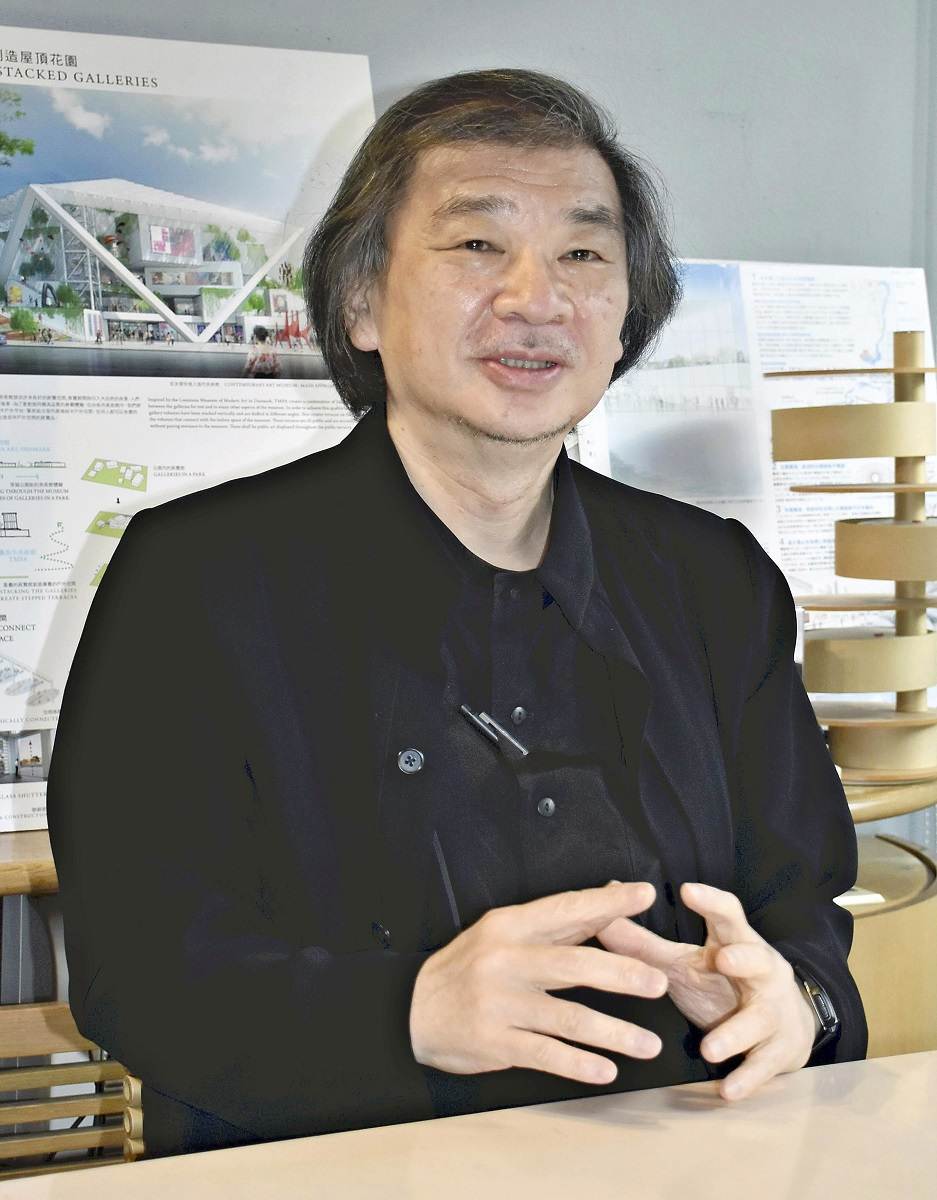
Shigeru Ban
The museum’s most striking feature is its movable glass galleries that stand over a shallow pool of water. There are eight such box-shaped galleries, each in a different candy-color finish. They can be rearranged by raising the water level and floating them.
Ban said he was inspired by the Seto Inland Sea, where there are many small islands.
“By changing the placement of the galleries, it is possible to offer repeat visitors new discoveries and surprises,” he added.
“Rearranging galleries takes a week or two, so we are now considering how often we should do it, but I hope we can demonstrate the feature sometime,” said Fumihiko Tanifuji, the museum’s deputy director.
And as for humidity, the bane of much art, the museum is fending it off with individual air conditioner units for each gallery room.
The entrance building, which houses the museum shop, is noted for its arched beams that resemble the trunks and spreading branches of large trees. Additionally, a corridor linking the building and the static exhibition room is glass-walled, allowing visitors to see the Seto Inland Sea from indoors.
The glass of the corridor’s walls has a mirror-like coating on the outside, creating an exterior that reflects the sea and mountains and blends into the surrounding landscape.
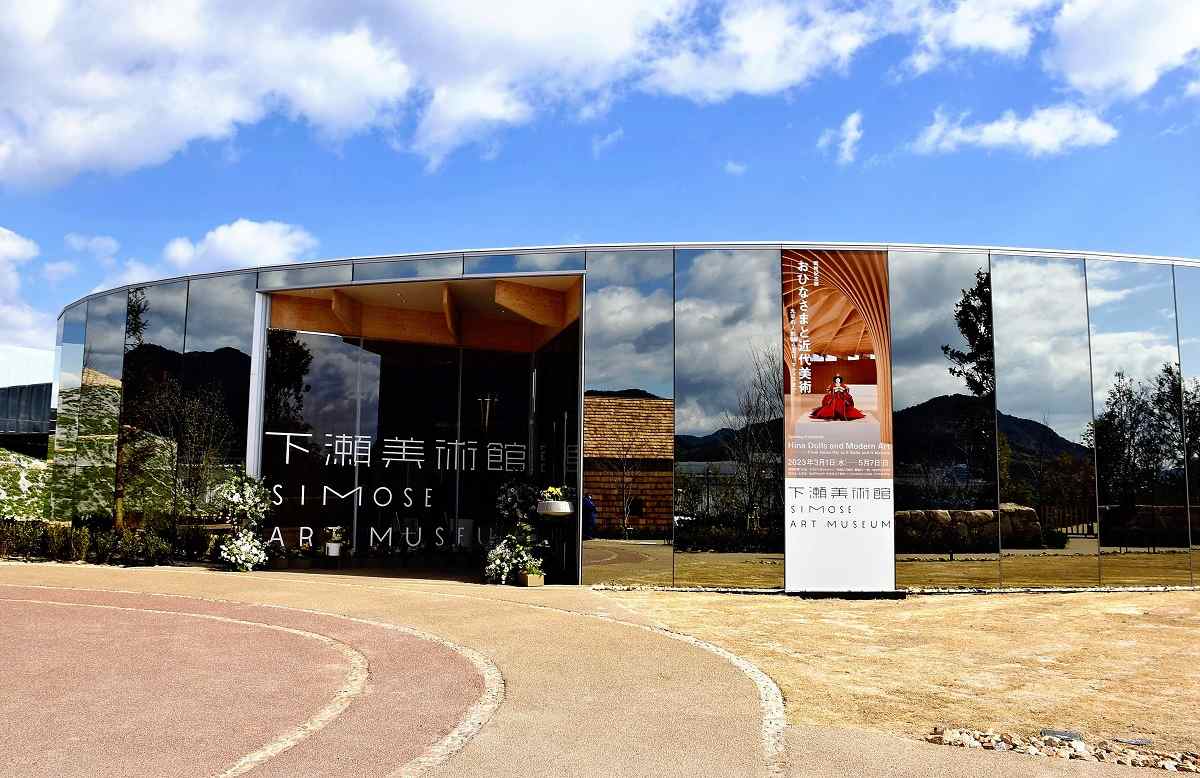
The museum’s glass-walled entrance building
“Many art museums are monochrome buildings in black or white. I wanted to diminish [the museum’s] presence to make the most of a landscape so rich in nature,” Ban said, explaining why he chose to use reflective glass.
To make good use of the large premises, arrangements were also made for a garden, a French restaurant and 10 villas that can be rented separately. The entire complex is designed to be a space where visitors can appreciate art and food at their leisure.
“I hope it will become a new place of interest that connects Hiroshima and Yamaguchi prefectures,” Ban said.
The opening exhibition featuring traditional hina dolls, glass works by Galle and Western paintings runs through May 7.
For more information, visit https://simose-museum.jp/;




Most Read
Popular articles in the past 24 hours
-

Nippon Life Insurance's U.S. Arm Sues OpenAI Over Legal Assistanc...
-

Japan Asked U.S. Not to Disadvantage Tokyo under New Tariff Rules
-
Sake Mash Brewed Aboard ISS Returns to Japan; Final Product Alrea...
-

Milano Cortina Paralympics Open: Games Represent a Wish for Inclu...
-

Japan to Send SDF Jet to Maldives for Iran Evacuations; Planes to...
-

Ohtani Helps Get Samurai Japan Off to Stellar Start in WBC Opener...
-

Yamamoto's High School Coach Discovered His Pitching Talent; Dodg...
-

Foreign Minister Motegi Conveys Japan's Concerns to Israel Over W...
Popular articles in the past week
-
South Korea Tightens Rules on Foreigners Buying Homes in Seoul Me...
-

Ibaraki Pref.'s 1st Foreign Bus Driver Hired in Tsukuba
-
Amid Strait of Hormuz Blockade, Shipping Companies Scramble to Ge...
-

2 Unpublished Early Novellas by Japan's Kenzaburo Oe Discovered, ...
-
Strait of Hormuz Closure Shakes Markets; Prolonged Closure Could ...
-

Iran Situation: Japan Must Exert Diplomatic Efforts without Merel...
-
Measles Patient Visited Hospital in Bunkyo Ward, Tokyo, Metropoli...
-
Japanese Shipping Giants Halt Strait of Hormuz Transit as Iran Co...
Popular articles in the past month
-

Producer Behind Pop Group XG Arrested for Cocaine Possession
-

Japan PM Takaichi’s Cabinet Resigns en Masse
-

Man Infected with Measles Reportedly Dined at Restaurant in Tokyo...
-

Videos Plagiarized, Reposted with False Subtitles Claiming ‘Ryuky...
-

Prudential Life Insurance Plans to Fully Compensate for Damages C...
-

Woman with Measles Visited Hospital in Tokyo Multiple Times Befor...
-

iPS Treatments Pass Key Milestone, but Broader Applications Far f...
-

Sanae Takaichi Elected Prime Minister of Japan; Keeps All Cabinet...
Top Articles in Culture
-

Director Naomi Kawase’s New Film Explores Heart Transplants in Japan, Production Involved Real Patients, Families
-

Tokyo Exhibition Offers Inside Look at Impressionism; 70 of 100 Works on ‘Interiors’ by Monet, Others on Loan from Paris
-
Traditional Japanese Silk Hakama Tradition Preserved by Sole Weaver in Sendai
-
Exhibition Featuring Yoshiharu Tsuge’s Manga World Underway in Chofu, Tokyo; Unique, Surreal Works Draw Steady Crowds
-
2 Unpublished Early Novellas by Japan’s Kenzaburo Oe Discovered, Show Budding Promise of Future Nobel Prize-Winning Author
JN ACCESS RANKING
-
Producer Behind Pop Group XG Arrested for Cocaine Possession
-
Japan PM Takaichi’s Cabinet Resigns en Masse
-
Man Infected with Measles Reportedly Dined at Restaurant in Tokyo Station
-
Videos Plagiarized, Reposted with False Subtitles Claiming ‘Ryukyu Belongs to China’; Anti-China False Information Also Posted in Japan
-
Prudential Life Insurance Plans to Fully Compensate for Damages Caused by Fraudulent Actions Without Waiting for Third-Party Committee Review