
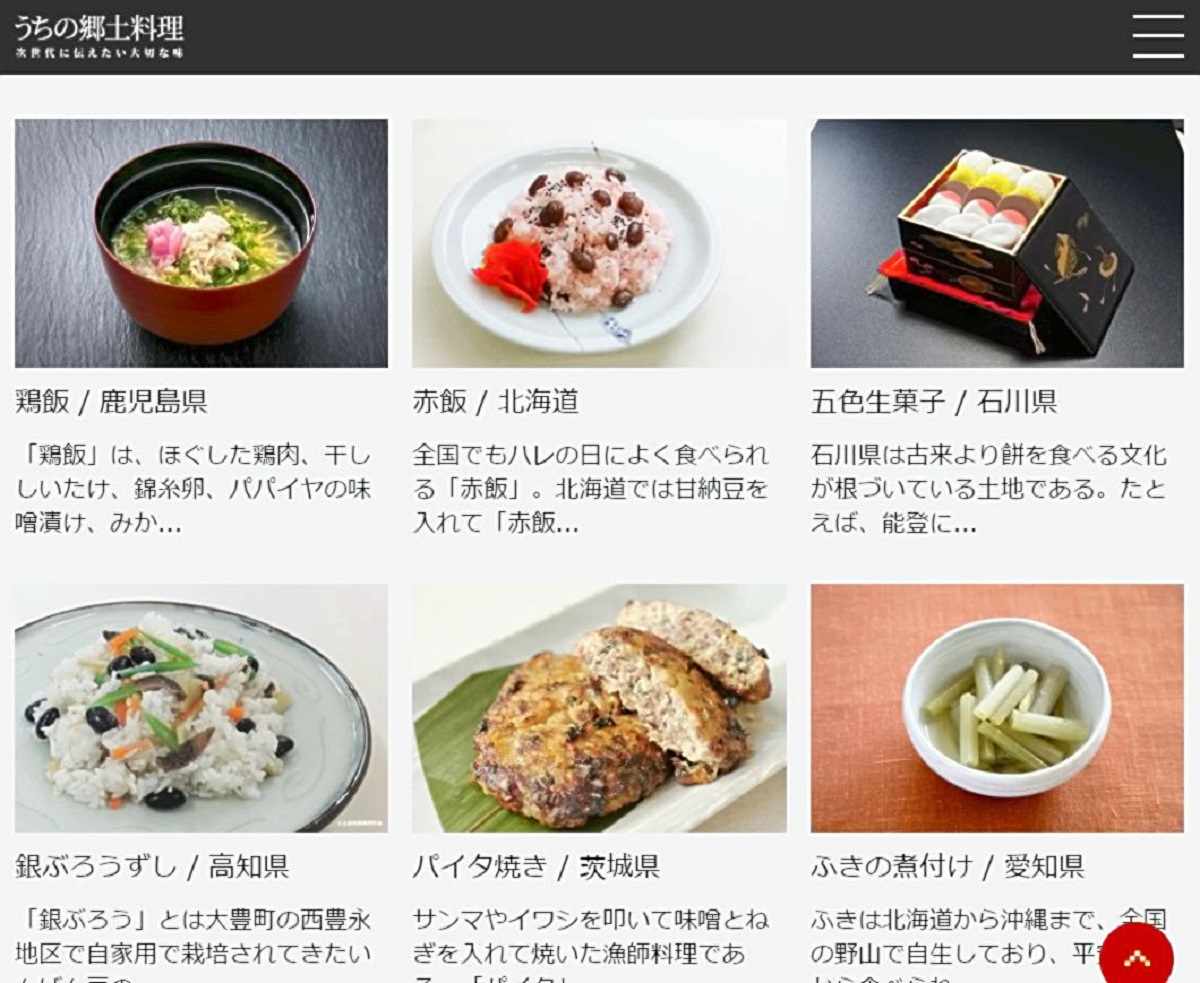
Various regional dishes are introduced on the agriculture ministry’s website.
11:34 JST, February 16, 2021
As traditional Japanese cooking techniques and regional culinary traditions gradually fade into history, the government and other groups are working to ensure that these dishes are preserved and passed down to the next generation.
The Agriculture, Forestry and Fisheries Ministry conducted a survey of 2,000 people in 2020. When asked about their image of Japanese food, with multiple answers possible, the top responses were favorable, such as “good for one’s health” (49%) and “you can get a sense of the seasons” (45%). However, 21% of respondents said that the Japanese cuisine was difficult to prepare.
Sixty-eight percent of respondents said they “don’t know” the local cuisine of the region where they were born and raised. In addition, 83% of respondents had never learned how to make local dishes, indicating that such cuisine has become unfamiliar to them.
The ministry launched a project in 2018 to encourage people to become familiar with Japanese food by posting recipes on its website, such as “sweet potato and chicken wings in amazake and soy sauce” and “steamed chicken and rice with maitake mushrooms.”

Tai-meshi from Hyogo Prefecture arranged in the style of French cuisine
Since 2019, the ministry has been compiling a database of regional dishes and publishing it on its website, along with how to make each dish and its history. You can view such dishes as imoni (taro and meat soup) from Yamagata Prefecture, which is said to have its roots in the boaters who transported foods along the Mogami River, and gane (fried shredded sweet potatoes and other ingredients) from Kagoshima Prefecture, which was named for its crab-like appearance (crab is pronounced “gane” in the regional dialect).
Tanita Corp., a Tokyo-based health equipment manufacturer, started a contest in 2018 for modernized versions of regional dishes. In 2020, the grand prix was awarded to tai-meshi (sea bream rice) from Hyogo Prefecture, which was made by cooking a fillet of sea bream in rice and arranging it in French style with herbs.
Tetsuro Takaoka, vice chairman of the All Japan Food Association, a group of chefs and producers working to pass on food culture, said: “It is important to preserve the original form of both Japanese cuisine and regional dishes. However, I think it is also necessary to make it easier for people to make these dishes and to come up with new ways of enjoying them in response to changes in dining habits, in order to pass them down.”

A chirashi-zushi sandwich from the Tango region of Kyoto Prefecture








Most Read
Most read in the last 24 hours
-

Milano Cortina 2026: Miura, Kihara Among Participants at Tokyo Pa...
-

Japan to Release Additional Oil Reserves from May 1
-

Former Staff Members at Japan's Osaka-Kansai Expo Use Skills from...
-
Iwate Pref. Forest Fires Continue into 4th Day, with 30% of Town'...
-

Mazda to End Domestic Production of Mazda2 Compact Car
-

India’s Arms Indigenization Quest for Self-Reliance / Big Firms, ...
-

Japan Moves Closer to Blocking Illegal Online Casinos as Governme...
-

Profitability of Hokkaido Shinkansen Project Profitability
Most read in the last 7 days
-
Earthquake Hits Japan's Tohoku Region; 3-meter Tsunami Warning Is...
-

China, South Korea Object to Japanese PM Takaichi's Ritual Offeri...
-

Trump Extends the Ceasefire with Iran but Keeps the Blockade
-

India's Arms Indigenization Quest for Self-Reliance / New Delhi S...
-

¥1,000 Coins to Be Issued to Mark Anniversary of Beginning of Jap...
-

Most Serious Cyberattacks against the UK Now from Russia, Iran an...
-

Trump Opposes United–American Merger, Signals Support for Spirit
-

System Malfunction in Haneda Airport Causes 83 Flight Cancelation...
Most read in the last 30 days
-
Earthquake Hits Japan's Tohoku Region; 3-meter Tsunami Warning Is...
-
Police Find Child's Shoe During Search for Missing Boy in Nantan,...
-
Body Found in Nantan, Kyoto Prefecture, During Search for 11-Year...
-
Cherry Blossoms, Rapeseed Flowers Perform Colorful ‘Duet’ in Niig...
-
China, South Korea Object to Japanese PM Takaichi's Ritual Offeri...
-
Trump Extends the Ceasefire with Iran but Keeps the Blockade
-

Olympic Gold Medal-Winning Figure Skaters Riku-Ryu Announce Retir...
-

Japanese Prime Minister Takaichi Speaks to Pakistani Prime Minist...
Top Articles in Features
-
Cherry Blossoms in Full Bloom Draw Crowds in Sendai, Miyagi Pref.; Aquarium Creates Underwater ‘Cherry Blossom Viewing’ Show
-
Cherry Blossom Viewing Season at Peak in Japan’s Kanazawa
-
Cherry Blossoms, Tulips, Snow-Capped Peaks Create Picturesque Scene in Toyama Pref., Japan
-
Cherry Blossoms Reach Peak in Fukushima Pref., Including Trees Planted to Commemorate Birth of Princess Aiko
-
Cherry Blossom Viewers Enjoy Picnic Under the Trees in Full Bloom in Famous Osaka Spot
JN ACCESS RANKING
-
Earthquake Hits Japan’s Tohoku Region; 3-meter Tsunami Warning Issued (Update 1)
-
Police Find Child’s Shoe During Search for Missing Boy in Nantan, Kyoto Prefecture
-
Body Found in Nantan, Kyoto Prefecture, During Search for 11-Year-Old Boy in Area (Update 1)
-
Cherry Blossoms, Rapeseed Flowers Perform Colorful ‘Duet’ in Niigata
-
China, South Korea Object to Japanese PM Takaichi’s Ritual Offering to Yasukuni Shrine
Most read in the last 24 hours
-
Milano Cortina 2026: Miura, Kihara Among Participants at Tokyo Pa...
-
Japan to Release Additional Oil Reserves from May 1
-
Former Staff Members at Japan's Osaka-Kansai Expo Use Skills from...
-
Iwate Pref. Forest Fires Continue into 4th Day, with 30% of Town'...
-
Mazda to End Domestic Production of Mazda2 Compact Car
Most read in the last 7 days
-
Earthquake Hits Japan's Tohoku Region; 3-meter Tsunami Warning Is...
-
China, South Korea Object to Japanese PM Takaichi's Ritual Offeri...
-
Trump Extends the Ceasefire with Iran but Keeps the Blockade
-
India's Arms Indigenization Quest for Self-Reliance / New Delhi S...
-
¥1,000 Coins to Be Issued to Mark Anniversary of Beginning of Jap...
Most read in the last 30 days
-
Earthquake Hits Japan's Tohoku Region; 3-meter Tsunami Warning Is...
-
Police Find Child's Shoe During Search for Missing Boy in Nantan,...
-
Body Found in Nantan, Kyoto Prefecture, During Search for 11-Year...
-
Cherry Blossoms, Rapeseed Flowers Perform Colorful ‘Duet’ in Niig...
-
China, South Korea Object to Japanese PM Takaichi's Ritual Offeri...