
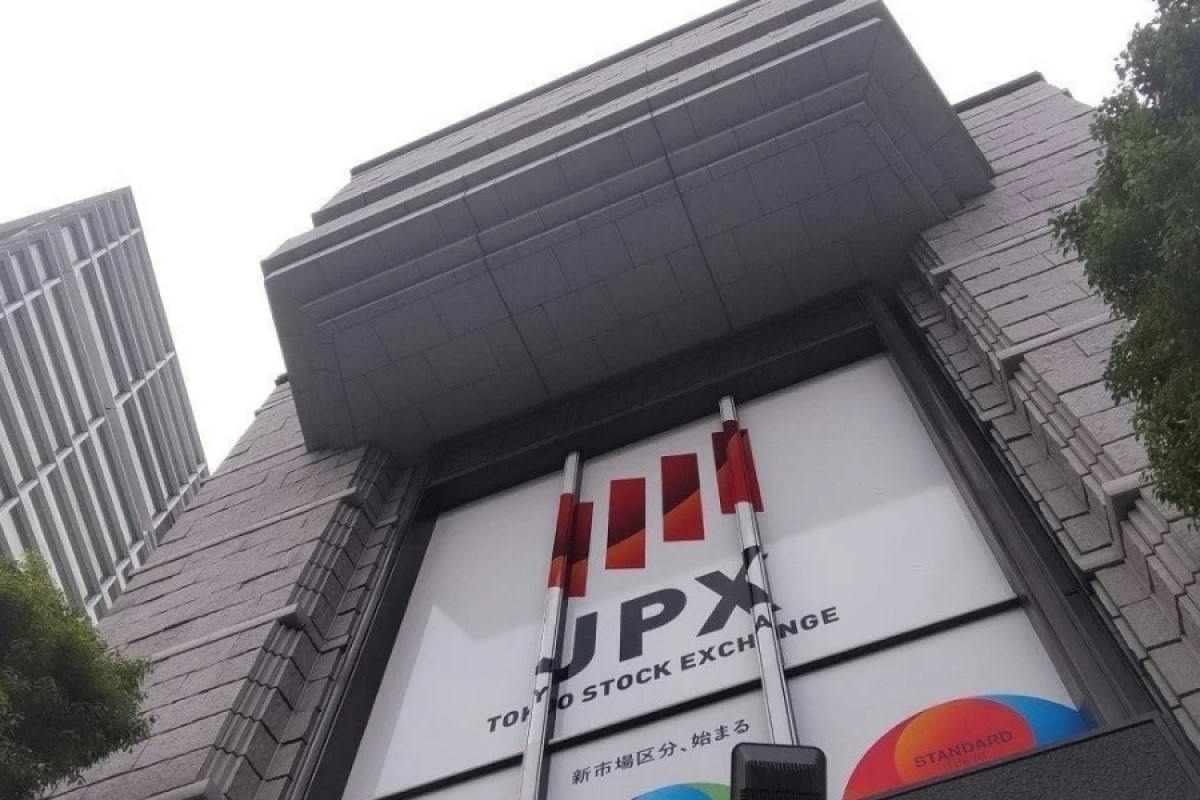
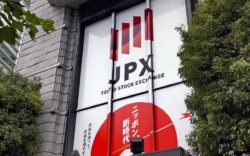
The Tokyo Stock Exchange
16:18 JST, March 2, 2026
TOKYO, March 2 (Reuters) – Japanese shares and the yen fell on Monday, while government bonds rose, as investors saw no clear end to U.S. and Israeli military strikes following the killing of Iran’s leader.
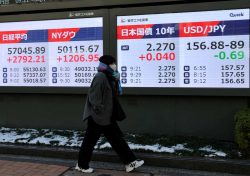
The benchmark Nikkei 225 Index .N225 fell 1.3% to close at 58,057.24, its steepest drop in five weeks. The broader Topix .TOPX slid 1%.
The yen weakened 0.6% to 156.95, while the yield on the 10-year Japanese government bond JP10YTN=JBTC fell 5 basis points (bps) to 2.06%.
Bond yields move inversely to prices.
Global markets were roiled, as Israel launched a new wave of strikes on Iran, and Tehran retaliated with more missile barrages following the killing of Supreme Leader Ali Khamenei. U.S. President Donald Trump signaled that the assault on Iranian targets could continue for weeks.
Airlines were among the biggest decliners, while bank and brokerage shares were hit hard after British’s mortgage provider Market Financial Solutions filed forbankruptcy.
A 10% rise in crude oil prices could push the net profit of Topix-listed companies down about 1% to 2%, said Kazunori Tatebe, chief strategist at Daiwa Asset Management.
“The market is uncertain whether the conflict will go on for a long time or end soon. If it is escalated, the rise in oil prices will hit Japanese firms’ earnings,” Tatebe said.
Chip-related heavyweights dragged on the Nikkei, with Advantest6857.T losing 3.9% and Tokyo Electron 8035.T falling 1.1%.
Japan’s largest airline ANA Holdings 9202.T slid 5.4%, while the country’s biggest brokerage Nomura Holdings 8604.T fell 6.8%, leading declines on the Nikkei.
However, the energy explorers’ index .IMING.T jumped 6.3%, while Inpex 1605.T climbed 6.1% to become one of the sharpest gainers on the Nikkei.
The Nikkei index is coming off February’s steep 10.4% rise, its best month in four. The benchmark had closed at an all-time high of 58,850.27 on Friday.
“The market was hit just after the Nikkei posted a record high last week,” said Takamasa Ikeda, a senior portfolio manager at GCI Asset Management.
“The Middle Eastern conflict has become an excuse to sell stocks and book profits.”



Most Read
Popular articles in the past 24 hours
-

Improvement of Japanese Language Schools Lags Rise in Foreigners
-

Japan's Test-Takers in Sapporo Offered Special Accommodation Arra...
-

Japanese Shipping Giants Halt Strait of Hormuz Transit as Iran Co...
-

Rental Lab Space in Tokyo Area More Than Doubles Since 2010, Offe...
-

U.S. Launches Attacks on Iran: Avoid Escalation of Conflict by An...
-
Parents of Japanese Teen Shot in U.S. Strive for Gun Control
-

Sawtooth Roof Factory Stands as Monument to Ashikaga Textile Hist...
-

Disinformation Spreads About Team Mirai, Ballot Readers; Online P...
Popular articles in the past week
-

Nepal Bus Crash Kills 19 People, Injures 25 Including One Japanes...
-

Milano Cortina 2026: Japanese Gold Medalist Figure Skater Miura S...
-
Tokyo Spends Big on Children, Wins Over Parents
-

McDonald's Japan Raises Prices; Big Mac to Cost ¥500, Double Chee...
-

‘Dry Bonsai’ Gives New Life to Withered Trees, Allows Free Artist...
-

Japan’s Miura, Kihara Announce Withdrawal from Figure Skating Wor...
-

Exhibition Featuring Yoshiharu Tsuge’s Manga World Underway in Ch...
-

Yokohama to Test Out Renewable-Powered Offshore Floating Data Cen...
Popular articles in the past month
-

Producer Behind Pop Group XG Arrested for Cocaine Possession
-

Japan PM Takaichi’s Cabinet Resigns en Masse
-

Man Infected with Measles Reportedly Dined at Restaurant in Tokyo...
-

Israeli Ambassador to Japan Speaks about Japan’s Role in the Reco...
-

Videos Plagiarized, Reposted with False Subtitles Claiming ‘Ryuky...
-

Man Infected with Measles May Have Come in Contact with Many Peop...
-

Prudential Life Insurance Plans to Fully Compensate for Damages C...
-

Woman with Measles Visited Hospital in Tokyo Multiple Times Befor...
Top Articles in News Services
-
Survey Shows False Election Info Perceived as True
-
Hong Kong Ex-Publisher Jimmy Lai’s Sentence Raises International Outcry as China Defends It
-
Japan’s Nikkei Stock Average Touches 58,000 as Yen, Jgbs Rally on Election Fallout (UPDATE 1)
-
Japan’s Nikkei Stock Average Falls as US-Iran Tensions Unsettle Investors (UPDATE 1)
-
Japan’s Nikkei Stock Average Rises on Tech Rally and Takaichi’s Spending Hopes (UPDATE 1)
JN ACCESS RANKING
-
Producer Behind Pop Group XG Arrested for Cocaine Possession
-
Japan PM Takaichi’s Cabinet Resigns en Masse
-
Man Infected with Measles Reportedly Dined at Restaurant in Tokyo Station
-
Israeli Ambassador to Japan Speaks about Japan’s Role in the Reconstruction of Gaza
-
Videos Plagiarized, Reposted with False Subtitles Claiming ‘Ryukyu Belongs to China’; Anti-China False Information Also Posted in Japan