
Low Rainfall in Japan’s Kanto Region Sees Water Levels in Dams Drop, Exposing Typically Submerged Structures
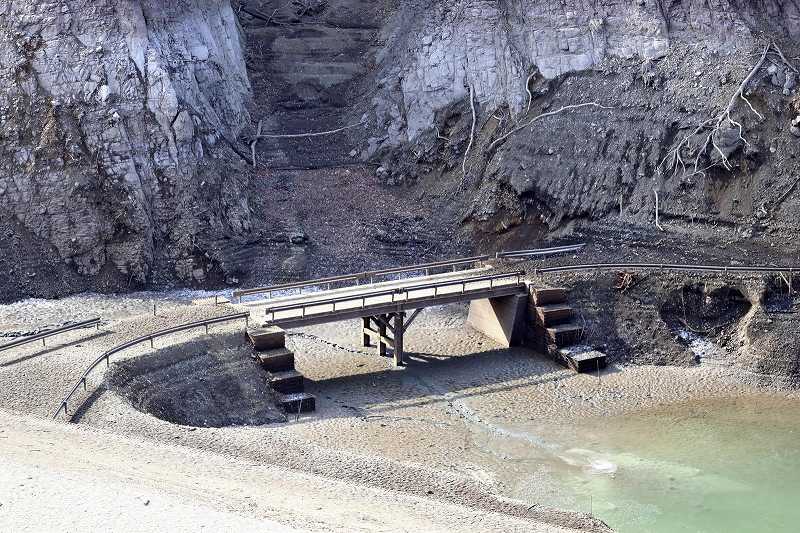
A bridge and other structures emerge from the bottom of Miyagase Dam in Kanagawa Prefecture on Thursday.
13:58 JST, February 7, 2026
A lack of rain is impacting the Kanto region, in contrast with the heavy snows affecting the Sea of Japan side of the country.
In Kanagawa Prefecture, the volume of water at some dams has dropped. Bridges and other structures that are typically submerged are now visible along the lakebed.
Due to the lack of rain since October, the total volume of water stored at three dams in the Sagami River system in Kanagawa Prefecture is only about half the average for the same period over the past 10 years.
Miyagase Dam, which supplies tap water to 21 municipalities including Yokohama, had a water storage rate of 41% as of Thursday. According to the Land, Infrastructure, Transport and Tourism Ministry’s office that manages the dam, rainfall last year was about 500 millimeters below average and the second lowest since the dam began operation in 2001. Monthly rainfall was lowest last year in November.
There was zero millimeters of rainfall recorded in January.
“At the moment, the situation is not at a stage that would cause disruption to daily life, but we ask people to use water resources sparingly,” said an official at the office.
At Lake Tsukui, an artificial lake created by Shiroyama Dam in Sagamihara, the water storage rate had fallen to 17% as of Thursday. Stone structures and what appear to be pillars, which are usually underwater, were also visible.
In the city of Mito, a drop in river water levels has prompted the growth of blue-green algae, leading to complaints that tap water smells moldy. Complaints began arriving at the city offices around January, and by Wednesday the number had reached about 100.
According to the Mito Regional Meteorological Observatory, the city of Mito saw zero millimeters of rainfall in January. This lack of rain has reduced the water level of the Naka River, which is the source of tap water for the city. The amount of water in the river in January fell to about 60% of the average level for the same month over the past 10 years, according to the land ministry’s local office that manages the river.
This has made it easier for sunlight to reach the riverbed, prompting the growth of blue-green algae that produce odorous substances, the city government said. But it stressed that the substances are not toxic, saying, “Tap water is safe to drink.”
In addition to the usual treatment at the water purification plant, the city government adds powdered activated carbon to absorb and remove the odor. However, a person in charge said, “It’s not enough to completely remove [the smell].” The odor is expected to remain until sufficient rain falls and the water level recovers.



Most Read
Popular articles in the past 24 hours
-
JR Yamanote Line Resumes Services after Suspension Due to Acciden...
-
Vietnam's Cherry Blossom Doctor Turns 10 Seeds from Japan into 12...
-

China Provoked Takaichi into Risky Move of Dissolving House of Re...
-
Supreme Court Justices on Ballot in Japan; Public Interest Rising...
-
Takaichi's Popularity Giving LDP Candidates a Leg Up in Campaign'...
-
JR Yamanote Line Suspends Service Due to Accident on Saikyo Line
-

Social Media and Disinformation: Risks Becoming More Serious with...
-

Galaxy Cluster Seen Forming Early in Universe’s History
Popular articles in the past week
-

Man Infected with Measles May Have Come in Contact with Many Peop...
-
Australian Woman Dies After Mishap on Ski Lift in Nagano Prefectu...
-

BTS to Hold Comeback Concert in Seoul on March 21; Popular Boy Ba...
-

Toyota Motor Group Firm to Sell Clean Energy Greenhouses for Stra...
-

Beer Yeast Helps Save Labor, Water Use in Growing Rice; Govt Hope...
-
Japan Tourism Agency Calls for Strengthening Measures Against Ove...
-

Rising Prices in Japan Squeeze Household Finances; Major Parties ...
-

Milano Cortina 2026: Japan’s Athletes Arrive in Italy for Milano ...
Popular articles in the past month
-

Univ. in Japan, Tokyo-Based Startup to Develop Satellite for Disa...
-
JAL, ANA Cancel Flights During 3-day Holiday Weekend due to Blizz...
-

Japan Institute to Use Domestic Commercial Optical Lattice Clock ...
-
China Eyes Rare Earth Foothold in Malaysia to Maintain Dominance,...
-

China Confirmed to Be Operating Drilling Vessel Near Japan-China ...
-
Man Infected with Measles May Have Come in Contact with Many Peop...
-

Japan, Qatar Ministers Agree on Need for Stable Energy Supplies; ...
-
Australian Woman Dies After Mishap on Ski Lift in Nagano Prefectu...
Top Articles in Society
-
JAL, ANA Cancel Flights During 3-day Holiday Weekend due to Blizzard
-
Man Infected with Measles May Have Come in Contact with Many People in Tokyo, Went to Store, Restaurant Around When Symptoms Emerged
-
Australian Woman Dies After Mishap on Ski Lift in Nagano Prefecture
-
Foreign Snowboarder in Serious Condition After Hanging in Midair from Chairlift in Nagano Prefecture
-
Record-Breaking Snow Cripples Public Transport in Hokkaido; 7,000 People Stay Overnight at New Chitose Airport
JN ACCESS RANKING
-
Univ. in Japan, Tokyo-Based Startup to Develop Satellite for Disaster Prevention Measures, Bears
-
JAL, ANA Cancel Flights During 3-day Holiday Weekend due to Blizzard
-
Japan Institute to Use Domestic Commercial Optical Lattice Clock to Set Japan Standard Time
-
China Eyes Rare Earth Foothold in Malaysia to Maintain Dominance, Counter Japan, U.S.
-
Man Infected with Measles May Have Come in Contact with Many People in Tokyo, Went to Store, Restaurant Around When Symptoms Emerged