
Takaichi’s Popularity Giving LDP Candidates a Leg Up in Campaign’s Final Days
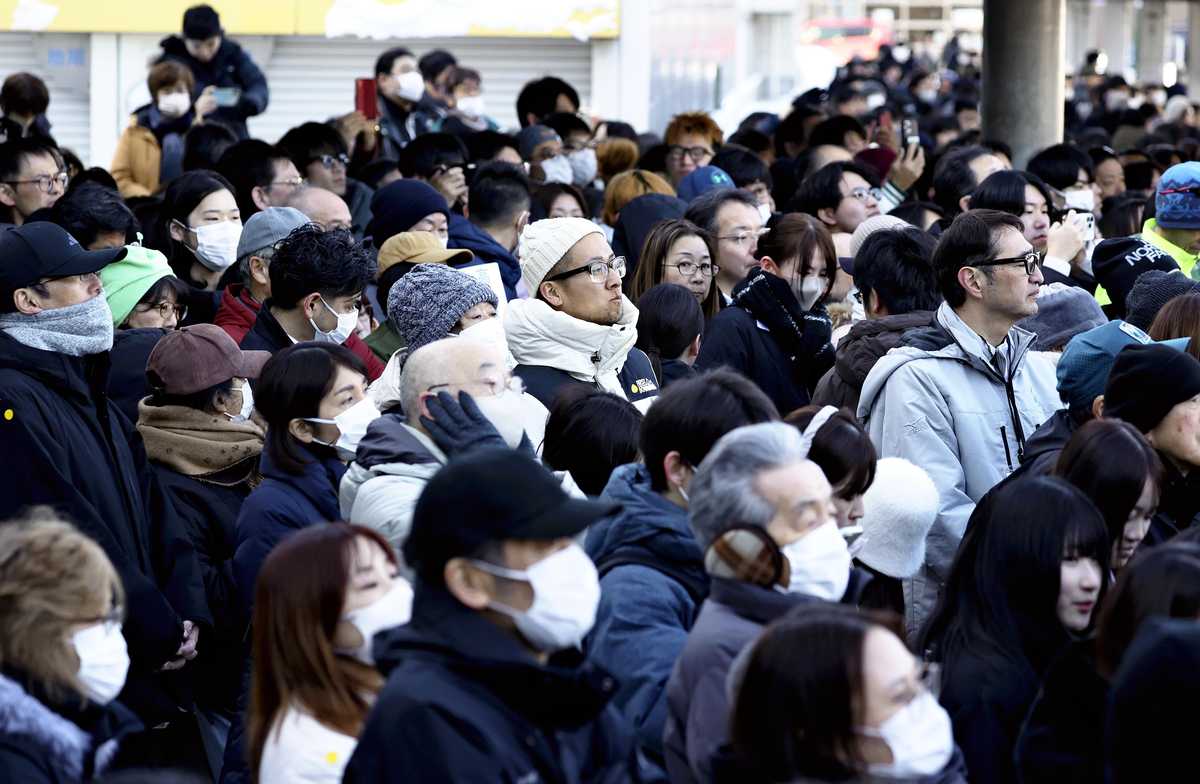
People listen to a House of Representatives election candidate giving a speech in Sapporo on Jan. 28.
21:00 JST, February 6, 2026
The high public approval rating for Prime Minister Sanae Takaichi’s Cabinet has given a significant and potentially decisive boost to many Liberal Democratic Party candidates running in single-seat constituencies in Sunday’s House of Representatives election.
A Yomiuri Shimbun survey conducted in the final stage of the election campaign has revealed that the number of LDP candidates holding healthy leads in their constituencies had increased by 18 from the early days of the campaign.
Takaichi offered her support to an LDP candidate during a speech she gave at a park in the town of Shiroishi, Saga Prefecture, on Thursday. “I’m watching the election situation at party headquarters closely, and visiting the constituencies where the races are very tight,” Takaichi said. “This is a crucial moment.”
Long lines formed at the baggage checks set up for people who wanted to see Takaichi. Affectionate calls of “Takaichi-san” often rang out at the event.
The LDP strategy of tapping into Takaichi’s popularity to help candidates locked in close races appears to be bearing fruit.
On Wednesday, Takaichi delivered a stump speech in Okayama Constituency No. 4. During the campaign’s early stage, the LDP candidate, Gaku Hashimoto, had been running neck-and-neck with the Centrist Reform Alliance candidate, Michiyoshi Yunoki. But as the campaign enters the last stretch, Hashimoto has opened up a big lead. A similar effect has emerged in Nagano Constituency No. 2, which Takaichi visited Monday. The LDP candidate there was trailing well behind the CRA candidate in the campaign’s early phase, but this gap has closed right up.
In the campaign’s initial stage, 129 LDP candidates were in tight contests, but this figure has dropped by 17 to 112. The number of LDP candidates seen as unlikely to win their constituency has fallen by one, while 147 LDP candidates – up from 129 – look likely to comfortably win seats. An LDP official said the party’s strategy was to “totally lean into Takaichi’s popularity” during this election, and the party planned to have the prime minister visit closely fought constituencies in Tokyo and elsewhere in the campaign’s final days.
Voter turnout key variable
Although momentum appears to be with the LDP, party officials are fretting over the decline in voting rates that occurs during heavy snow and cold snaps.
The LDP has typically been bolstered by block voters from industry groups and organizations such as Soka Gakkai, a lay-Buddhist group that is a support body for Komeito, which was previously the LDP’s coalition partner. As such, low voter turnout tended to be considered advantageous to the LDP. However, the LDP has been picking up support among young voters and people with no particular party affiliation ahead of this election, and the CRA which will be backed by votes from the Japanese Trade Union Confederation (Rengo) and Komeito supporters is shaping up for a battle to gain the most support from various organizations.
Snow has been forecast in many parts of Japan on Sunday. On Wednesday, LDP Election Strategy Committee Chairperson Keiji Furuya sent each candidate a notice calling for “every means possible be used to encourage people to vote early.” Takaichi cast an absentee ballot Thursday and in a message on X urged people to “vote early” and “cast their precious vote.”
LDP staying disciplined
After the 2024 lower house election was officially announced, the LDP lost steam following revelations that the party had given ¥20 million to candidates who were not officially endorsed after being tainted by a political funds scandal. The party has tried to run a more disciplined campaign this time. “One verbal gaffe could turn the tide in this election,” a senior LDP official said to The Yomiuri Shimbun.
The Japan Innovation Party, the LDP’s coalition partner, looks unlikely to gain ground outside of its home turf of Osaka. Despite this, JIP leader Hirofumi Yoshimura and other party officials sent a written message that urged their candidates to keep pushing until the very end. “Please tell voters that the JIP is the accelerator and the engine of the Takaichi administration,” the message said.


Related Tags





Most Read
Popular articles in the past 24 hours
-

Israeli Ambassador to Japan Speaks about Japan’s Role in the Reco...
-

Japan’s Govt Sets Goal for World’s No. 3 in Number of Highly Cite...
-

‘Bonbon Drop’ 3D Stickers Fly Off Shelves in Japan
-

Visitors Enjoy Early Blooming Flowers Set Against Mt. Fuji
-

Milano Cortina 2026: Japan’s Ayumu Hirano Points toward Com...
-

Japan’s Nikkei Stock AverageRallies on Earnings in Unsteady Trade...
-

Japan IT Groups Urge Apple, Google to Waive New Commissions
-
Shirakawa Ice Pillars Hit Seasonal Peak in Nagano Pref.
Popular articles in the past week
-

Man Infected with Measles May Have Come in Contact with Many Peop...
-
Australian Woman Dies After Mishap on Ski Lift in Nagano Prefectu...
-
Foreign Snowboarder in Serious Condition After Hanging in Midair ...
-

Chinese Embassy in Japan Reiterates Call for Chinese People to Re...
-

Narita Airport, Startup in Japan Demonstrate Machine to Compress ...
-

Toyota Motor Group Firm to Sell Clean Energy Greenhouses for Stra...
-

BTS to Hold Comeback Concert in Seoul on March 21; Popular Boy Ba...
-

Beer Yeast Helps Save Labor, Water Use in Growing Rice; Govt Hope...
Popular articles in the past month
-

Univ. in Japan, Tokyo-Based Startup to Develop Satellite for Disa...
-

JAL, ANA Cancel Flights During 3-day Holiday Weekend due to Blizz...
-

Japan Institute to Use Domestic Commercial Optical Lattice Clock ...
-

China Eyes Rare Earth Foothold in Malaysia to Maintain Dominance,...
-
China Confirmed to Be Operating Drilling Vessel Near Japan-China ...
-
Man Infected with Measles May Have Come in Contact with Many Peop...
-

Japan, Qatar Ministers Agree on Need for Stable Energy Supplies; ...
-
Australian Woman Dies After Mishap on Ski Lift in Nagano Prefectu...
Top Articles in Politics
-
Japan Tourism Agency Calls for Strengthening Measures Against Overtourism
-

Japan Seeks to Enhance Defense Capabilities in Pacific as 3 National Security Documents to Be Revised
-

Japan’s Prime Minister: 2-Year Tax Cut on Food Possible Without Issuing Bonds
-

Voters Using AI to Choose Candidates in Japan’s Upcoming General Election; ChatGPT, Other AI Services Found Providing Incorrect Information
-
Japan-South Korea Leaders Meeting Focuses on Rare Earth Supply Chains, Cooperation Toward Regional Stability
JN ACCESS RANKING
-
Univ. in Japan, Tokyo-Based Startup to Develop Satellite for Disaster Prevention Measures, Bears
-
JAL, ANA Cancel Flights During 3-day Holiday Weekend due to Blizzard
-
Japan Institute to Use Domestic Commercial Optical Lattice Clock to Set Japan Standard Time
-
China Eyes Rare Earth Foothold in Malaysia to Maintain Dominance, Counter Japan, U.S.
-
Man Infected with Measles May Have Come in Contact with Many People in Tokyo, Went to Store, Restaurant Around When Symptoms Emerged