
Levels of Enthusiasm Differ within Japan’s Ruling Parties on Export of Defense Equipment
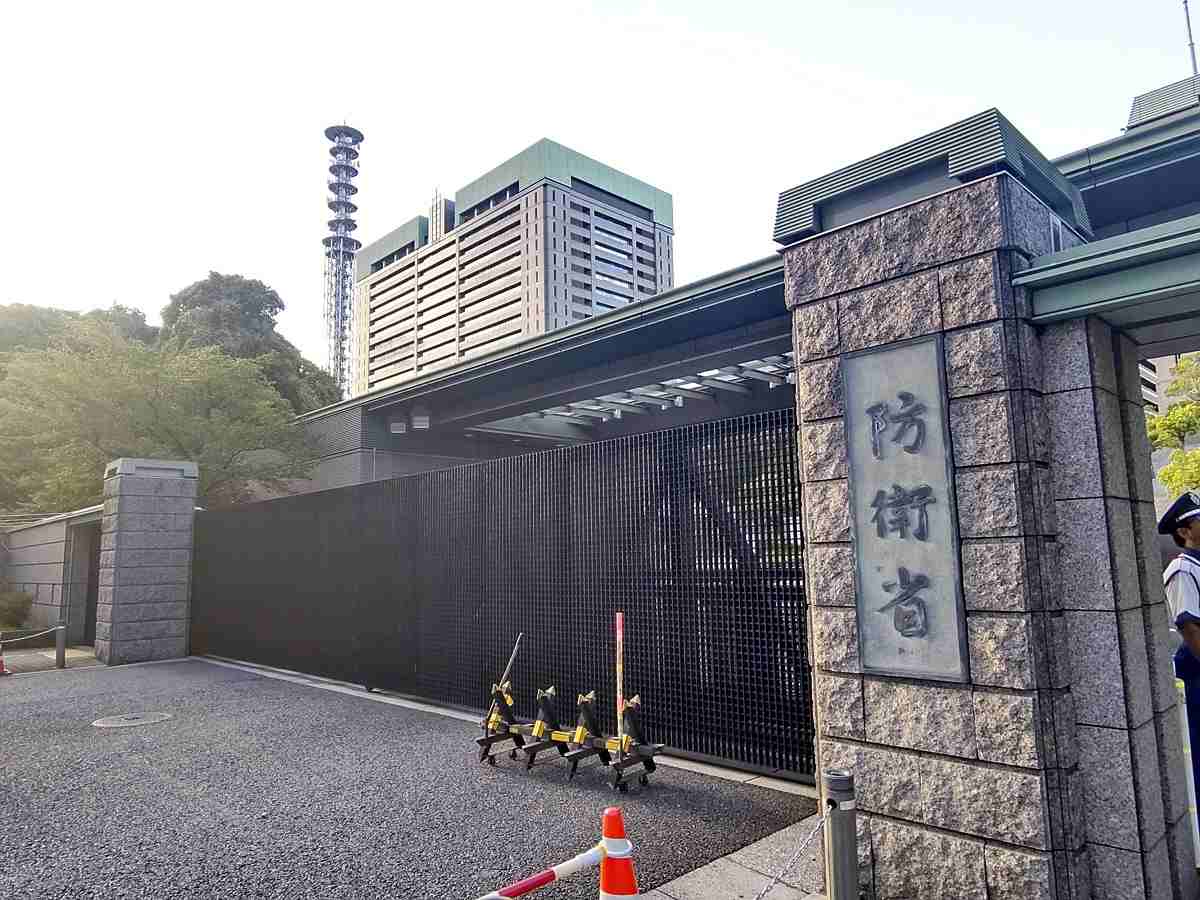
The Defense Ministry head office in Shinjuku Ward, Tokyo
16:55 JST, February 4, 2026
Candidates in the ruling parties differ in enthusiasm on the promotion of Japanese defense equipment export, according to a recent Yomiuri Shimbun survey on candidates in the upcoming House of Representatives election.
About points of contention on which respondents place importance, “diplomacy and national security” was ranked fifth, being cited by 27% of respondents.
Prime Minister Sanae Takaichi, also president of the Liberal Democratic Party, intended to make strengthening defense capabilities a major point of contention for this election.
But fewer than 50% of LDP candidates and fewer than 30% of Japan Innovation Party candidates replied that they consider the issue a high priority.
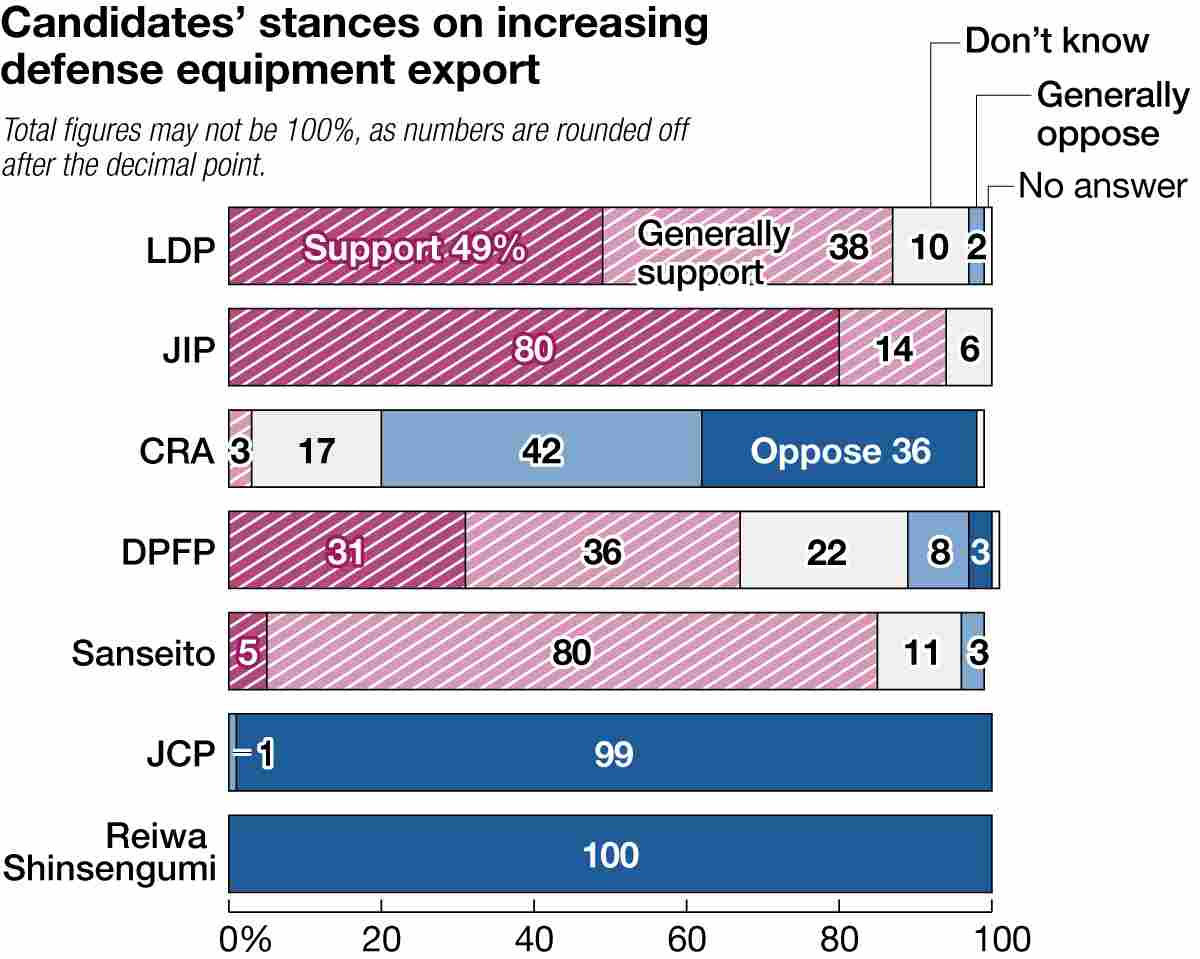
While 80% of JIP candidates supported an increase of defense equipment exports, 49% of LDP candidates replied so, indicating a complex difference in opinion inside the ruling bloc.
Among LDP candidates, 38% replied they generally support the plan.
Concerning guidelines for the Three Principles on Transfer of Defense Equipment and Technology overseas, the government and ruling parties aim to abolish the limitations which allow for only five categories of fully assembled equipment to be exported as early as this spring.
The JIP, which vows to play “a role of accelerator” for the Takaichi administration’s policies, wants to abolish most of conditions restricting defense equipment export and instead leave decisions to the government’s discretion.
However, many LDP members are considering a certain level of limitations on exports by, for example, strictly screening planned exports. Even among those with interests in defense affairs, several LDP candidates replied they generally support.
In contrast, 36% of Centrist Reform Alliance candidates opposed and 42% generally opposed. CRA candidates have shown strong opposition to Takaichi’s stance on the issue.
Opinions among ruling party candidates also differ over a numerical target of government spending related to national security, including the defense budget.
This fiscal year, the government moved forward with efforts to raise the percentage of national security expenditures against the nation’s gross domestic product to 2% two years earlier than previously scheduled.
While 79% of JIP candidates said the percentage against the GDP should be raised above 2%, 38% of LDP candidates replied so. Fifty-nine percent of LDP candidates and 55% of CRA candidates replied that the percentage should be capped at around 2%.
From now, the government and ruling parties aim to proceed with debates by the end of this year about revising the three national security documents, including the National Security Strategy, as well as the numerical target and how to secure revenue sources.
Securing revenue sources is essential for increasing government spending for national security-related affairs.
Because doing so could result in an increase of burdens on the people, it seems a remarkable number of candidates replied they aim to keep status quo.


Related Tags





Most Read
Popular articles in the past 24 hours
-

Man Infected with Measles May Have Come in Contact with Many Peop...
-

Green Tea Exports Hit Record High in 2025 Amid Growing Demand, Li...
-
Tokyo Had 65,000 More People Move In Than Out In 2025; Osaka Area...
-

Hunting for Small Details in PokéPark KANTO, Keep a Sharp Eye Out...
-

Japan's Nikkei Stock Average Slips after Sharp Gain as Software F...
-

Not Ready for Robots in Homes? The Maker of a Friendly New Humano...
-
Sapporo Snow Festival Opens with 210 Snow and Ice Sculptures at 3...
-

Astronomers Unveil Map of Dark Matter’s Distribution
Popular articles in the past week
-
Australian Woman Dies After Mishap on Ski Lift in Nagano Prefectu...
-
Foreign Snowboarder in Serious Condition After Hanging in Midair ...
-
Chinese Embassy in Japan Reiterates Call for Chinese People to Re...
-
Narita Airport, Startup in Japan Demonstrate Machine to Compress ...
-

Toyota Motor Group Firm to Sell Clean Energy Greenhouses for Stra...
-

Sakie Yokota, Last Surviving Parent of a North Korea Abductee, Ur...
-

Beer Yeast Helps Save Labor, Water Use in Growing Rice; Govt Hope...
-
Japan Tourism Agency Calls for Strengthening Measures Against Ove...
Popular articles in the past month
-
Univ. in Japan, Tokyo-Based Startup to Develop Satellite for Disa...
-
JAL, ANA Cancel Flights During 3-day Holiday Weekend due to Blizz...
-
China Confirmed to Be Operating Drilling Vessel Near Japan-China ...
-
China Eyes Rare Earth Foothold in Malaysia to Maintain Dominance,...
-

Japan Institute to Use Domestic Commercial Optical Lattice Clock ...
-
M6.2 Earthquake Hits Japan's Tottori, Shimane Prefectures; No Tsu...
-
Japan, Qatar Ministers Agree on Need for Stable Energy Supplies; ...
-

Japan, Italy to Boost LNG Cooperation; Aimed at Diversifying Japa...
Top Articles in Politics
-
Japan Tourism Agency Calls for Strengthening Measures Against Overtourism
-
Japan Seeks to Enhance Defense Capabilities in Pacific as 3 National Security Documents to Be Revised
-

Japan’s Prime Minister: 2-Year Tax Cut on Food Possible Without Issuing Bonds
-
Japan-South Korea Leaders Meeting Focuses on Rare Earth Supply Chains, Cooperation Toward Regional Stability
-
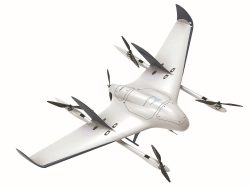
Japanese Government Plans New License System Specific to VTOL Drones; Hopes to Encourage Proliferation through Relaxed Operating Requirements
JN ACCESS RANKING
-
Univ. in Japan, Tokyo-Based Startup to Develop Satellite for Disaster Prevention Measures, Bears
-
JAL, ANA Cancel Flights During 3-day Holiday Weekend due to Blizzard
-
China Confirmed to Be Operating Drilling Vessel Near Japan-China Median Line
-
China Eyes Rare Earth Foothold in Malaysia to Maintain Dominance, Counter Japan, U.S.
-
Japan Institute to Use Domestic Commercial Optical Lattice Clock to Set Japan Standard Time