
11:00 JST, December 26, 2025
Three years and 10 months have passed since the war in Ukraine began, a period already longer than the Pacific War, which was fought for three years and eight months.
On Nov. 20, the United States presented Ukraine with a 28-point peace plan to end the war and urged Kyiv to accept it within a week. The proposal, which included Ukraine conceding Crimea and four regions in eastern and southern Ukraine, as well as a ban on Ukraine’s accession to NATO, was seen as extremely favorable to Russia.
Subsequent negotiations have reduced the number of relevant points to 20, making it somewhat more acceptable to Ukraine but now it is doubtful whether Russia would accept it.
Before anything else, let us consider what is essential for achieving peace.
First, there must be an agreed-upon ceasefire line. Russia insists that it will control Crimea and the four regions in eastern and southern Ukraine as parts of its own territory. These areas account for more than 20% of Ukraine’s territory, and certain sections of them are still under Ukrainian control.
Article 133 of the Ukraine Constitution names Crimea and the four regions in eastern and southern Ukraine as parts of its territory. Ceding them to a foreign country would violate the Constitution. The formal territorial settlement should be finalized within 10 to 25 years. Until then, Ukraine’s controlled territories should not be placed under Russian control but designated as neutral zones. This would likely represent the limit to the concessions Ukraine will make.
The second requirement is how to guarantee compliance with the ceasefire line. Given the Ukrainian side’s animosity toward Russia, clashes are likely to be unavoidable in some parts of the country. If this happens, the war is highly likely to resume with Moscow accusing Ukraine of violating the ceasefire agreement. So, there should be a framework that can avert such a contingency.
Deter another invasion
To deter Russia’s reckless moves to resume its aggression against Ukraine, Kyiv will need to have a certain level of military strength. The latest 20-point peace plan reportedly includes a provision for maintaining the size of the Ukraine military at 800,000 personnel. This could be a deterrent to some extent. Moreover, the latest version reportedly leaves open the possibility of Ukraine establishing an arrangement similar to the North Atlantic Treaty Organization with European countries.
The third element is postwar reconstruction. Ukraine’s recovery from the devastation of war will require an enormous amount of funds. Russia should bear the cost of restoring the damaged properties to their original condition, because it has caused most of the destruction in Ukraine.
Europe has been using interest payments accumulating on Russian assets frozen there to fund war rehabilitation in Ukraine. On top of that, Europe is thinking about financing Ukraine with the principal of the frozen assets, a scheme Russia is vehemently opposed to. It will be extremely difficult for Russia and Ukraine and its European allies to come to terms on this matter.
The fourth point is a legal issue. Russia launched its invasion of Ukraine under the pretext of “de-Nazifying” the four regions in eastern and southern Ukraine. Of course, that was a false accusation.
There is no evidence of Nazism spreading in the four regions. If Russia had honestly aimed to prevent the Nazification of those regions, there would have been no need to attack Kyiv.
In March 2022, the U.N. General Assembly recognized Russia’s aggression against Ukraine, and the International Court of Justice in The Hague ordered Russia to suspend its military operations. Those decisions effectively rejected the Russian allegation of genocide being committed against Russian speakers in the east of Ukraine.
Russian President Vladimir Putin strongly opposed those decisions. But it must be noted that revoking those decisions would be an immense stain on the history of the rule of law.
In a nutshell, Russia’s allegations have been meant to refuse to recognize Ukraine as an independent country while trying to force it into a subordinate position where it will not resist.
Not someone else’s problem
Ukraine is not a small country. It has an area of 600,000 square kilometers, which is 1.6 times the size of Japan and the largest in Europe, excluding Russia. It also has a population of about 35 million, more than 10 times that of each of the countries that are located to the west of Russia, including Lithuania, Latvia and Estonia. We must not make too little of the fact that a major country like Ukraine is under threat of being reduced to a subordinate state.
Russia regards Ukraine as part of Russian territory, but Ukraine rejects this claim. At the same time, Russia has shown no hesitation in embracing a vast area east of the Ural Mountains that cannot be defined as part of traditional Russia.
The Russian enclave of Kaliningrad on the Baltic Sea, bordered by Lithuania and Poland, is home to Russia’s Baltic Fleet and is capable of storing nuclear weapons. Russia maintains a military presence in Transnistria, which is situated between Ukraine and Moldova and is known as an unrecognized republic. In Latvia and Estonia, two of the three Baltic states, a quarter of the populations are of Russian descent.
Russia is also actively engaging in information warfare in Moldova, located southwest of Ukraine. To the south of Russia, Georgia is under the control of a pro-Russian government.
Given these circumstances, if Ukraine is forced to become a subordinate country, Russia won’t stop there. There is a significant possibility that a protracted period of conflict would begin. A ceasefire and state of peace must be realized that would allow Ukraine to maintain its status as an independent nation.
Ukraine also has problems of its own; one of them is corruption. About 10 years ago, the Japan International Cooperation Agency embarked on a project to dispatch a specialist with experience at the Bank of Japan to Ukraine to support fiscal consolidation, financial reform and corruption eradication. Without eliminating corruption, it’s difficult to maintain the public’s support for the war.
Ukraine should hold a presidential election. There is some truth to the argument that elections cannot be held during wartime. Nevertheless, Ukraine needs to show the world through a presidential election where the will of the Ukrainian people lies.
The fundamental principle of the postwar international order is respect for national sovereignty. The international community must respect countries with governments elected by their populations and collectively counter those who infringe upon that. This is by no means someone else’s problem.
China’s absurd claims
China maintains that Taiwan is an inseparable part of Chinese territory. Historically speaking, however, Taiwan has never been a part of the People’s Republic of China.
China began ruling Taiwan under the Qing dynasty in the 17th century. But the Qing dynasty was not founded by the Han people, and the area it actually governed was limited mainly to the western coast of the island.
Following the Sino-Japanese War, Taiwan was ceded to Japan in 1895. Since Japan’s defeat in 1945, Taiwan has developed as the “Republic of China.” Legally speaking, that may be debatable, but in terms of political science, Taiwan is a respectable national entity.
In the 1972 joint communique of the Japanese and Chinese governments, Japan stated that it fully understands and respects China’s position. Then Foreign Minister Masayoshi Ohira said in the Diet later that the remark in the communique was made with a peaceful resolution of the Taiwan Strait issue in mind. It doesn’t mean that Japan condoned the use of military power to subjugate Taiwan.
Japan’s policy toward China should remain cautious at all times, but these points should be communicated to the world.
This autumn, China and Russia celebrated their victory in the world war against fascism. However, it should be noted that it was the Chinese Nationalist Party that mainly fought against Japan and that the Japanese military rarely fought with the Chinese Communist Party’s forces. For its part, Russia — which was the Soviet Union at the time — broke the Japanese-Soviet Neutrality Pact and entered the war just before Japan’s acceptance of the Potsdam Declaration.
China has recently been making absurd criticisms of Japan by claiming there is a revival of militarism in this country. China has long claimed sovereignty over the Senkaku Islands and is even questioning the legitimacy of the San Francisco Peace Treaty.
To prevent China’s claims from being accepted, Russia’s claims regarding Ukraine cannot be acknowledged. Japan should make every effort possible to that end.
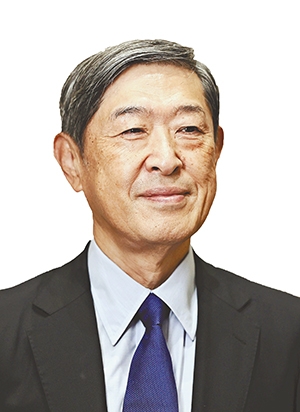
Shinichi Kitaoka
Shinichi Kitaoka is a professor emeritus at the University of Tokyo specializing in Japanese political and diplomatic history. His previous posts have included Japanese ambassador to the United Nations in 2004-06 and president of the Japan International Cooperation Agency in 2015-22.
The original article in Japanese appeared in the Dec. 21 issue of The Yomiuri Shimbun.



Most Read
Popular articles in the past 24 hours
-

Man Accused of Making Woman Drink 32 Shots of Tequila, Resulting ...
-
Japanese Shipping Giants Halt Strait of Hormuz Transit as Iran Co...
-

U.S. Launches Attacks on Iran: Avoid Escalation of Conflict by An...
-
Japan Police Told to Boost Security, Vigilance Around U.S., Israe...
-

Japan Shares and Yen Fall, Jgbs Rise as Iran Strikes Continue
-
Takaichi: Japan Striving to Ensure Safety of Japanese Nationals; ...
-
Japan Traditional Puppet Performance Held at Onsen Resort in Shiz...
-

Sawtooth Roof Factory Stands as Monument to Ashikaga Textile Hist...
Popular articles in the past week
-
Milano Cortina 2026: Japanese Gold Medalist Figure Skater Miura S...
-
Tokyo Spends Big on Children, Wins Over Parents
-

McDonald's Japan Raises Prices; Big Mac to Cost ¥500, Double Chee...
-
Japan’s Miura, Kihara Announce Withdrawal from Figure Skating Wor...
-

Exhibition Featuring Yoshiharu Tsuge’s Manga World Underway in Ch...
-

Yokohama to Test Out Renewable-Powered Offshore Floating Data Cen...
-
BOJ Keeping Eye on Economy and Takaichi's ‘Proactive Fiscal Polic...
-
20 Trapped in Tokyo Skytree Lift, Rescued 5½ Hours Later
Popular articles in the past month
-

Producer Behind Pop Group XG Arrested for Cocaine Possession
-

Japan PM Takaichi’s Cabinet Resigns en Masse
-

Man Infected with Measles Reportedly Dined at Restaurant in Tokyo...
-

Israeli Ambassador to Japan Speaks about Japan’s Role in the Reco...
-

Videos Plagiarized, Reposted with False Subtitles Claiming ‘Ryuky...
-

Man Infected with Measles May Have Come in Contact with Many Peop...
-

Prudential Life Insurance Plans to Fully Compensate for Damages C...
-

Woman with Measles Visited Hospital in Tokyo Multiple Times Befor...
Top Articles in Editorial & Columns
-

Riku-Ryu Pair Wins Gold Medal: Their Strong Bond Leads to Major Comeback Victory
-
Reciprocal Tariffs Ruled Illegal: Judiciary Would Not Tolerate President’s High-Handed Approach
-
China Provoked Takaichi into Risky Move of Dissolving House of Representatives, But It’s a Gamble She Just Might Win
-
Japan’s Plan for Investment in U.S.: Aim for Mutual Development by Ensuring Profitability
-
Flu Cases Surging Again: Infection Can Also Be Prevented by Humidifying Indoor Spaces
JN ACCESS RANKING
-
Producer Behind Pop Group XG Arrested for Cocaine Possession
-
Japan PM Takaichi’s Cabinet Resigns en Masse
-
Man Infected with Measles Reportedly Dined at Restaurant in Tokyo Station
-
Israeli Ambassador to Japan Speaks about Japan’s Role in the Reconstruction of Gaza
-
Videos Plagiarized, Reposted with False Subtitles Claiming ‘Ryukyu Belongs to China’; Anti-China False Information Also Posted in Japan