
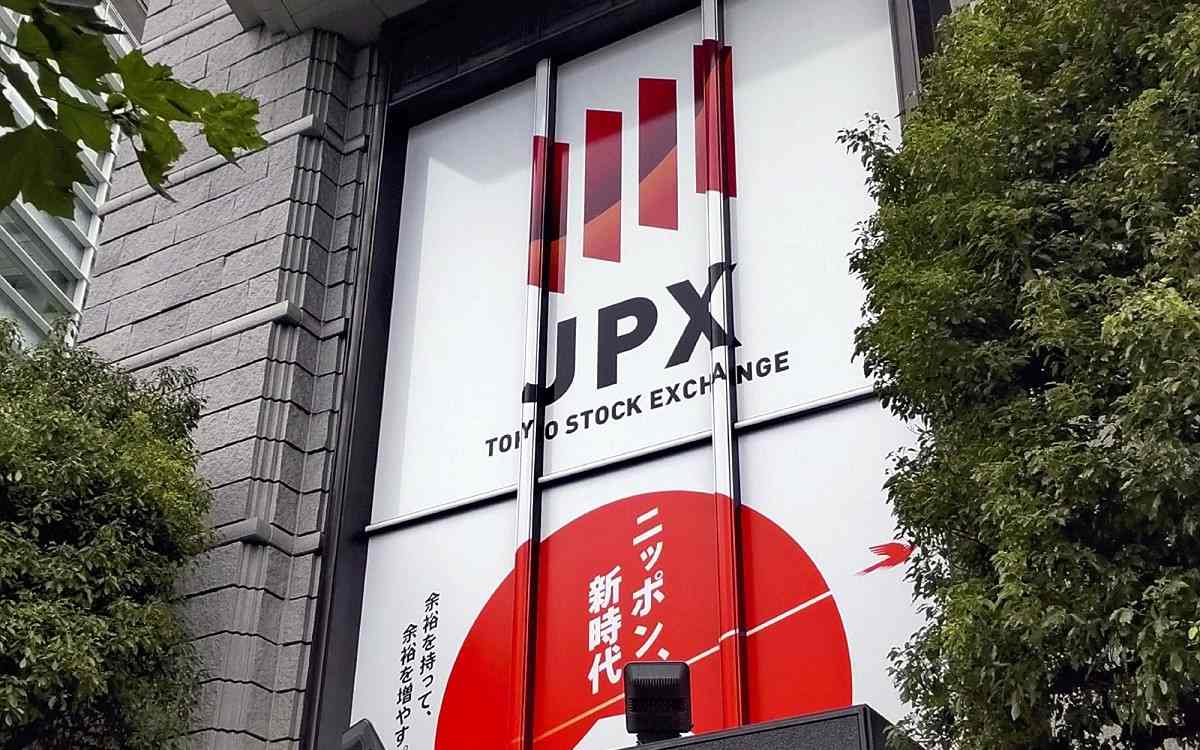
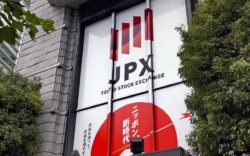
The Tokyo Stock Exchange
17:30 JST, April 3, 2025
TOKYO, April 3 (Reuters) – Japan’s Nikkei share average slumped to an eight-month low on Thursday after U.S. President Donald Trump revealed a broad set of reciprocal tariffs, including a larger-than-anticipated 24% levy on Japanese goods.
The Nikkei dropped as much as 4.6% in early trading, diving to 34,102.00, its lowest point since August 7. By the close, the losses had moderated, with the index finishing down 2.8% at 34,735.93.
The broader Topix lost as much as 4.3% before recovering slightly to end the day 3.1% lower.
“We thought tariffs would be 10%, maybe 20%, but instead they were a whopping 24%,” said Kazuo Kamitani, an equities strategist at Nomura Securities.
“Call it the Trump tariff shock,” he said. “The market is firmly in risk-off mode.”
Banks were the worst performers among the Tokyo Stock Exchange’s 33 industry groups, sliding 7.2%, as a sharp decline in bond yields darkened the outlook for income from lending and investing.
The potential impact of tariffs on both domestic and global growth also raised speculation that the Bank of Japan may need to delay further interest rate hikes.
Resona Holdings was the worst-performing lender in the Nikkei with an 8.7% slump.
An index of shippers declined 6%, and Nippon Yusen, Japan’s largest shipping line, dropped 5.6%. In an interview with Reuters this week, the company’s president expressed concerns that U.S. trade barriers could ultimately slow down cargo flows.
A rally in the safe-haven Japanese yen exacerbated losses for the country’s numerous exporters.
The Tokyo bourse’s automaker sub-index dropped 4.5%, with shares of Toyota Motor sliding 5.2%.
In a rare respite among Trump’s aggressive tariff measures, the latest levies will not be added on top of a separate 25% duty on car exports to the United States that is set to take effect later in the day.
Drugmakers were among the few stocks to rise as a group , following a White House white paper that included pharmaceuticals, along with semiconductors, on a short list of products exempted from reciprocal tariffs.
Japanese chip-sector heavyweights ended lower, but recovered from lows marked earlier in the session. Shares of Tokyo Electron dropped 3.7% while Advantest declined 4.5%.
Following Trump’s announcement, Japanese Prime Minister Shigeru Ishiba said he will continue to demand that the U.S. reconsider its tariff measures.
“Though some market participants are expecting quick deals (with Washington), negotiations could take time,” particularly since the White House has targeted non-tariff barriers to trade like VAT, said Norihiro Yamaguchi, an economist at Oxford Economics.
“The equity market is unlikely to bounce back given heightened uncertainties.”




Most Read
Popular articles in the past 24 hours
-

Milano Cortina 2026: Milano Cortina Olympic Athlete Villages Offe...
-

Japan, Thailand Bolster Cooperation to Combat Human Trafficking; ...
-

TEPCO’s Restructuring Plan: Develop Business Partnership Plans fo...
-
Sapporo Snow Festival Opens with 210 Snow and Ice Sculptures at 3...
-
74% of Japan's LDP Candidates Favor Tax Cut, But Caution Remains
-
Japan's Nikkei Stock Average Slips after Sharp Gain as Software F...
-
Shogi Star Sota Fujii Earns Record ¥200 Million Plus, Reigns as M...
-
Seeking Shelter from Trump's Fury, U.S. Trade Partners Reach Deal...
Popular articles in the past week
-
Australian Woman Dies After Mishap on Ski Lift in Nagano Prefectu...
-
Foreign Snowboarder in Serious Condition After Hanging in Midair ...
-
Chinese Embassy in Japan Reiterates Call for Chinese People to Re...
-

Man Infected with Measles May Have Come in Contact with Many Peop...
-
Narita Airport, Startup in Japan Demonstrate Machine to Compress ...
-

Toyota Motor Group Firm to Sell Clean Energy Greenhouses for Stra...
-

Beer Yeast Helps Save Labor, Water Use in Growing Rice; Govt Hope...
-
Japan Tourism Agency Calls for Strengthening Measures Against Ove...
Popular articles in the past month
-
Univ. in Japan, Tokyo-Based Startup to Develop Satellite for Disa...
-
JAL, ANA Cancel Flights During 3-day Holiday Weekend due to Blizz...
-

Japan Institute to Use Domestic Commercial Optical Lattice Clock ...
-
China Confirmed to Be Operating Drilling Vessel Near Japan-China ...
-
China Eyes Rare Earth Foothold in Malaysia to Maintain Dominance,...
-
M6.2 Earthquake Hits Japan's Tottori, Shimane Prefectures; No Tsu...
-
Japan, Qatar Ministers Agree on Need for Stable Energy Supplies; ...
-
Australian Woman Dies After Mishap on Ski Lift in Nagano Prefectu...
Top Articles in News Services
-

Prudential Life Expected to Face Inspection over Fraud
-

Arctic Sees Unprecedented Heat as Climate Impacts Cascade
-

South Korea Prosecutor Seeks Death Penalty for Ex-President Yoon over Martial Law (Update)
-
Trump Names Former Federal Reserve Governor Warsh as the Next Fed Chair, Replacing Powell
-

Suzuki Overtakes Nissan as Japan’s Third‑Largest Automaker in 2025
JN ACCESS RANKING
-
Univ. in Japan, Tokyo-Based Startup to Develop Satellite for Disaster Prevention Measures, Bears
-
JAL, ANA Cancel Flights During 3-day Holiday Weekend due to Blizzard
-
Japan Institute to Use Domestic Commercial Optical Lattice Clock to Set Japan Standard Time
-
China Confirmed to Be Operating Drilling Vessel Near Japan-China Median Line
-
China Eyes Rare Earth Foothold in Malaysia to Maintain Dominance, Counter Japan, U.S.