
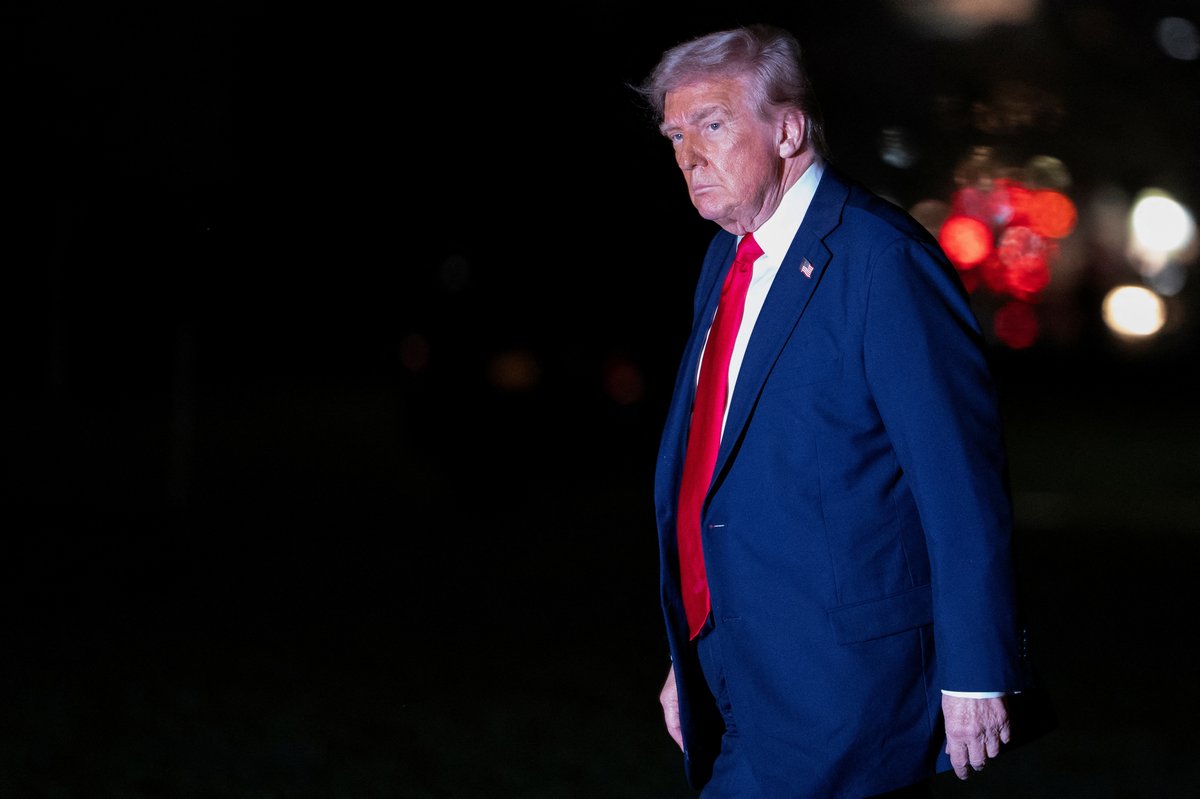
U.S. President Donald Trump walks across the South Lawn while returning to the White House in Washington, D.C., U.S., March 30, 2025.
11:56 JST, April 2, 2025
WASHINGTON, April 1 (Reuters) – U.S. President Donald Trump’s administration is planning an executive order that would ease rules governing exports of military equipment, and could announce it as soon as Tuesday or Wednesday, four sources familiar with the discussions said.
The sources, some in government and some in industry, said they expected the order would be similar to legislation proposed by Trump’s national security adviser, Michael Waltz, last year when he was a Republican member of the House of Representatives.
White House aides did not immediately respond to requests for comment.
An executive order could increase sales for big U.S. defense contractors like Lockheed Martin LMT.N, RTX Corp RTX.N and Boeing Co BA.N.
If it had become law, the bill backed by Waltz in 2024 would have amended the U.S. Arms Export Control Act to increase the minimum dollar amounts that trigger a congressional review of arms exports to other countries. They would increase to $23 million from $14 million for arms transfers, and rise to $83 million from $50 million for the sale of military equipment, upgrades, training and other services.
The thresholds are higher for members of NATO as well as for close U.S. partners Australia, Israel, Japan, South Korea and New Zealand. For those transactions, Congress must be notified 15 days in advance of a transfer, compared to 30 days for most other countries.
During his first term, Trump often expressed frustration with members of Congress delaying foreign arms sales over human rights or other concerns.
In 2019, he infuriated many lawmakers, including some fellow Republicans, by declaring a national emergency because of tensions with Iran. That allowed him to sweep aside a long-standing precedent for congressional review of major weapons sales and complete the sale of over $8 billion worth of weapons to Saudi Arabia, the United Arab Emirates and Jordan.
At the time, members of Congress had been blocking sales of military equipment to Saudi Arabia and the UAE for months, angry about the civilian toll from their air campaign in Yemen, as well as human rights abuses such as the murder of Saudi journalist Jamal Khashoggi at a Saudi consulate in Turkey.



Most Read
Popular articles in the past 24 hours
-

Milano Cortina 2026: Milano Cortina Olympic Athlete Villages Offe...
-

Japan, Thailand Bolster Cooperation to Combat Human Trafficking; ...
-

TEPCO’s Restructuring Plan: Develop Business Partnership Plans fo...
-

Sapporo Snow Festival Opens with 210 Snow and Ice Sculptures at 3...
-
74% of Japan's LDP Candidates Favor Tax Cut, But Caution Remains
-

Japan's Nikkei Stock Average Slips after Sharp Gain as Software F...
-

Shogi Star Sota Fujii Earns Record ¥200 Million Plus, Reigns as M...
-
Seeking Shelter from Trump's Fury, U.S. Trade Partners Reach Deal...
Popular articles in the past week
-

Australian Woman Dies After Mishap on Ski Lift in Nagano Prefectu...
-

Foreign Snowboarder in Serious Condition After Hanging in Midair ...
-
Chinese Embassy in Japan Reiterates Call for Chinese People to Re...
-

Man Infected with Measles May Have Come in Contact with Many Peop...
-
Narita Airport, Startup in Japan Demonstrate Machine to Compress ...
-

Toyota Motor Group Firm to Sell Clean Energy Greenhouses for Stra...
-

Beer Yeast Helps Save Labor, Water Use in Growing Rice; Govt Hope...
-

Japan Tourism Agency Calls for Strengthening Measures Against Ove...
Popular articles in the past month
-
Univ. in Japan, Tokyo-Based Startup to Develop Satellite for Disa...
-

JAL, ANA Cancel Flights During 3-day Holiday Weekend due to Blizz...
-

Japan Institute to Use Domestic Commercial Optical Lattice Clock ...
-
China Confirmed to Be Operating Drilling Vessel Near Japan-China ...
-

China Eyes Rare Earth Foothold in Malaysia to Maintain Dominance,...
-
M6.2 Earthquake Hits Japan's Tottori, Shimane Prefectures; No Tsu...
-
Japan, Qatar Ministers Agree on Need for Stable Energy Supplies; ...
-
Japan, Italy to Boost LNG Cooperation; Aimed at Diversifying Japa...
Top Articles in News Services
-

Prudential Life Expected to Face Inspection over Fraud
-

Arctic Sees Unprecedented Heat as Climate Impacts Cascade
-

South Korea Prosecutor Seeks Death Penalty for Ex-President Yoon over Martial Law (Update)
-
Trump Names Former Federal Reserve Governor Warsh as the Next Fed Chair, Replacing Powell
-

Suzuki Overtakes Nissan as Japan’s Third‑Largest Automaker in 2025
JN ACCESS RANKING
-
Univ. in Japan, Tokyo-Based Startup to Develop Satellite for Disaster Prevention Measures, Bears
-
JAL, ANA Cancel Flights During 3-day Holiday Weekend due to Blizzard
-
Japan Institute to Use Domestic Commercial Optical Lattice Clock to Set Japan Standard Time
-
China Confirmed to Be Operating Drilling Vessel Near Japan-China Median Line
-
China Eyes Rare Earth Foothold in Malaysia to Maintain Dominance, Counter Japan, U.S.