
30 Years After Sarin Attack / Doctor at Tokyo Hospital Recalls Flood of Patients; Many Still Suffering Aftereffects
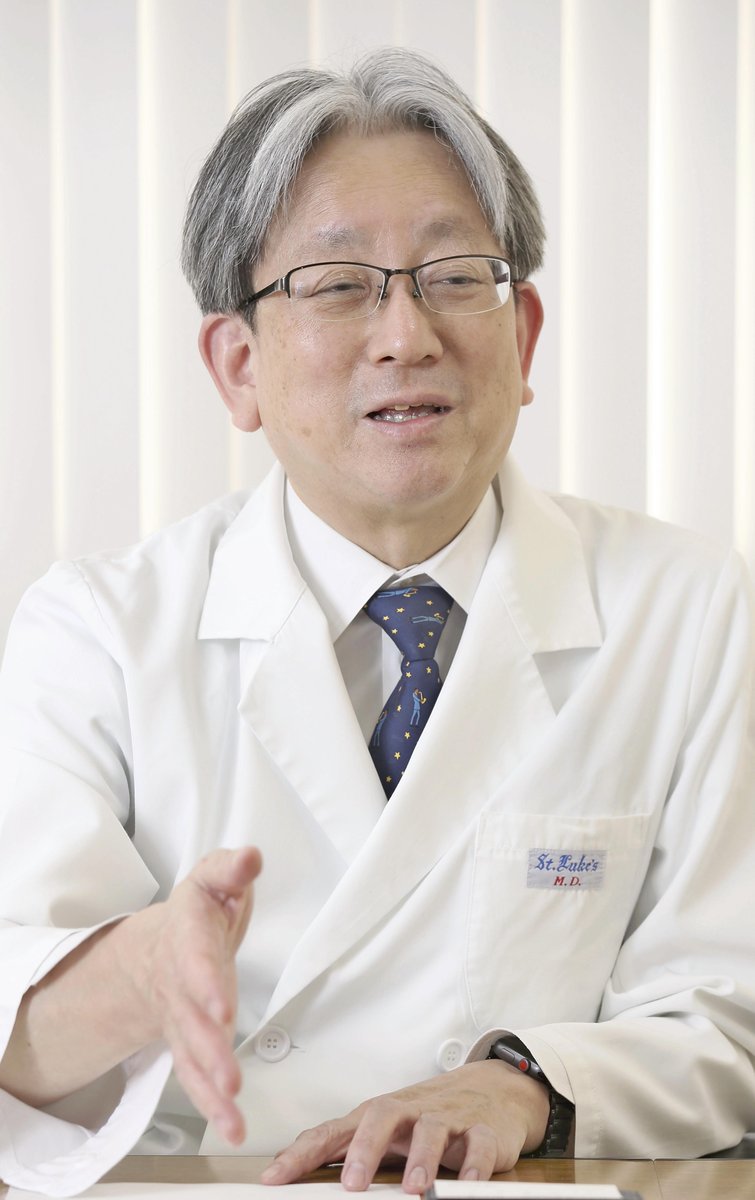
Shinichi Ishimatsu
2:00 JST, March 4, 2025
Shinichi Ishimatsu, 65, is the director of St. Luke’s International Hospital in Chuo Ward, Tokyo. He was the deputy chief of the hospital’s emergency department on March 20, 1995, the day the Aum Supreme Truth cult carried out the deadly sarin gas attack on the Tokyo subway system. Reflecting on treating patients in the confusion following the attack, he stressed the need for continued support for the victims in an interview with The Yomiuri Shimbun.
The following is excerpted from Ishimatsu’s comments during the interview.
The first ambulance arrived at the hospital at around 8:40 a.m. It was carrying a middle-aged man, and he was complaining of pain in his eyes and having difficulty breathing.
While we were trying to figure out what had happened to him, a young patient in cardiopulmonary arrest was brought in. After that, the patients just kept coming.
At around 10 a.m., we received information on sarin from several parties, including Shinshu University Hospital, which had treated patients after the sarin gas attack in Matsumoto, Nagano Prefecture, the previous year.
However, I couldn’t be sure that the same gas had been used in the attack on the subway system. It was feared that administering 2-PAM (2-pyridine aldoxime methiodide), a medicine effective in cases of sarin poisoning, might make the patients’ symptoms worse.
I had to consider whether I could take the responsibility of patients dying. I decided to administer 2-PAM, starting with seriously ill patients in the intensive care unit, as they could be immediately taken care of even if their condition got worse as a result of being given the treatment.
I was relieved when a young doctor told me soon after that the medicine had worked.
We received as many as 640 injured people on that day alone, and two women died at the hospital.
At the time, there were rumors that some of the perpetrators had fled to the hospital, and we were worried that sarin might be released inside.
What concerns me now is false information spread through social media. During times of disaster, we need to take measures to prevent false information from spreading, and the same is true during times of emergency.
A common aftereffect in many patients I have examined has been eye abnormalities. They have continued to struggle with blurred eyesight and difficulty focusing, among other symptoms. They also complain of feeling sluggish. The full extent of the injuries is still unknown.
I would have liked the national and local governments to have made efforts to ascertain the full extent of the damage, conducted follow-up surveys and provided mental and physical care to the victims from an early stage.
When I talk to medical professionals [about the attack], I always ask them whether they would be able to save as many people as possible if a similar attack took place tomorrow morning. I want to make use of what I learned in the past.
Implementing triage
Sarin is an extremely toxic organophosphorus nerve gas developed by Nazi Germany in the run-up to World War II. It can be inhaled or absorbed through contact with the skin and causes nerve and respiratory paralysis.
In the Tokyo subway sarin gas attack, senior members of the Aum Supreme Truth cult released the gas on subway trains running through the city center, injuring more than 6,000 people and causing medical institutions in Tokyo to be flooded with victims.
Medical institutions that accepted many patients in a short period of time were forced to carry out triage, in which the order in which patients are treated is based on the seriousness of their condition.
The idea of triage came to the fore in Japan following the Great Hanshin Earthquake in January 1995. However, it was still unfamiliar to many people during the sarin attacks just two months later. Some hospitals carried out triage for the first time in the aftermath of the subway attack.
Medical staff suffered secondary exposure as they dealt with patients before sarin was identified as the cause of the symptoms.
***
Shinichi Ishimatsu
Born in 1959, Ishimatsu graduated from the faculty of medicine at Kawasaki Medical School in 1985. He joined St. Luke’s International Hospital in 1993 as the deputy chief of the emergency department. In April 2021, he was appointed the hospital’s 11th director. He wrote “Sei to shi no genba kara” (From the frontline examining life and death), published by now-defunct Kairyusha.




Most Read
Popular articles in the past 24 hours
-

Voters Using AI to Choose Candidates in Japan's Upcoming General ...
-

Japan's Snow-Clad Beauty: Camellia Flowers Seen in Winter Bloom a...
-

Monkey Strikes Junior High School Girl from Behind in Japan's Yam...
-
Genichiro Inokuma's Mural in Ueno Station That Gave Hope in Postw...
-
Senior Japanese Citizens Return to University to Gain Knowledge, ...
-

Foreign and Security Policy: Political Parties Must Discuss How T...
-
Heavy Snow Linked to 30 Deaths across Japan since Late Jan.; JMA ...
-
Tokyo Police Arrest Head of Resignation Assistance Firm
Popular articles in the past week
-

Japan Institute to Use Domestic Commercial Optical Lattice Clock ...
-
Australian Woman Dies After Mishap on Ski Lift in Nagano Prefectu...
-
Foreign Snowboarder in Serious Condition After Hanging in Midair ...
-

Chinese Embassy in Japan Reiterates Call for Chinese People to Re...
-
Narita Airport, Startup in Japan Demonstrate Machine to Compress ...
-

Toyota Motor Group Firm to Sell Clean Energy Greenhouses for Stra...
-
Sakie Yokota, Last Surviving Parent of a North Korea Abductee, Ur...
-

Beer Yeast Helps Save Labor, Water Use in Growing Rice; Govt Hope...
Popular articles in the past month
-
Univ. in Japan, Tokyo-Based Startup to Develop Satellite for Disa...
-
JAL, ANA Cancel Flights During 3-day Holiday Weekend due to Blizz...
-
China Confirmed to Be Operating Drilling Vessel Near Japan-China ...
-

China Eyes Rare Earth Foothold in Malaysia to Maintain Dominance,...
-
M6.2 Earthquake Hits Japan's Tottori, Shimane Prefectures; No Tsu...
-
Japan Institute to Use Domestic Commercial Optical Lattice Clock ...
-

Japan, Qatar Ministers Agree on Need for Stable Energy Supplies; ...
-

Japan, Italy to Boost LNG Cooperation; Aimed at Diversifying Japa...
Top Articles in Society
-
JAL, ANA Cancel Flights During 3-day Holiday Weekend due to Blizzard
-
Record-Breaking Snow Cripples Public Transport in Hokkaido; 7,000 People Stay Overnight at New Chitose Airport
-
Australian Woman Dies After Mishap on Ski Lift in Nagano Prefecture
-
Foreign Snowboarder in Serious Condition After Hanging in Midair from Chairlift in Nagano Prefecture
-
Train Services in Tokyo Resume Following Power Outage That Suspended Yamanote, Keihin-Tohoku Lines (Update 4)
JN ACCESS RANKING
-
Univ. in Japan, Tokyo-Based Startup to Develop Satellite for Disaster Prevention Measures, Bears
-
JAL, ANA Cancel Flights During 3-day Holiday Weekend due to Blizzard
-
China Confirmed to Be Operating Drilling Vessel Near Japan-China Median Line
-
China Eyes Rare Earth Foothold in Malaysia to Maintain Dominance, Counter Japan, U.S.
-
Japan Institute to Use Domestic Commercial Optical Lattice Clock to Set Japan Standard Time