
Tokyo Button Store’s Retro Billboard Architecture Attracts Customers; Family Been in Clothing Business Since 1897
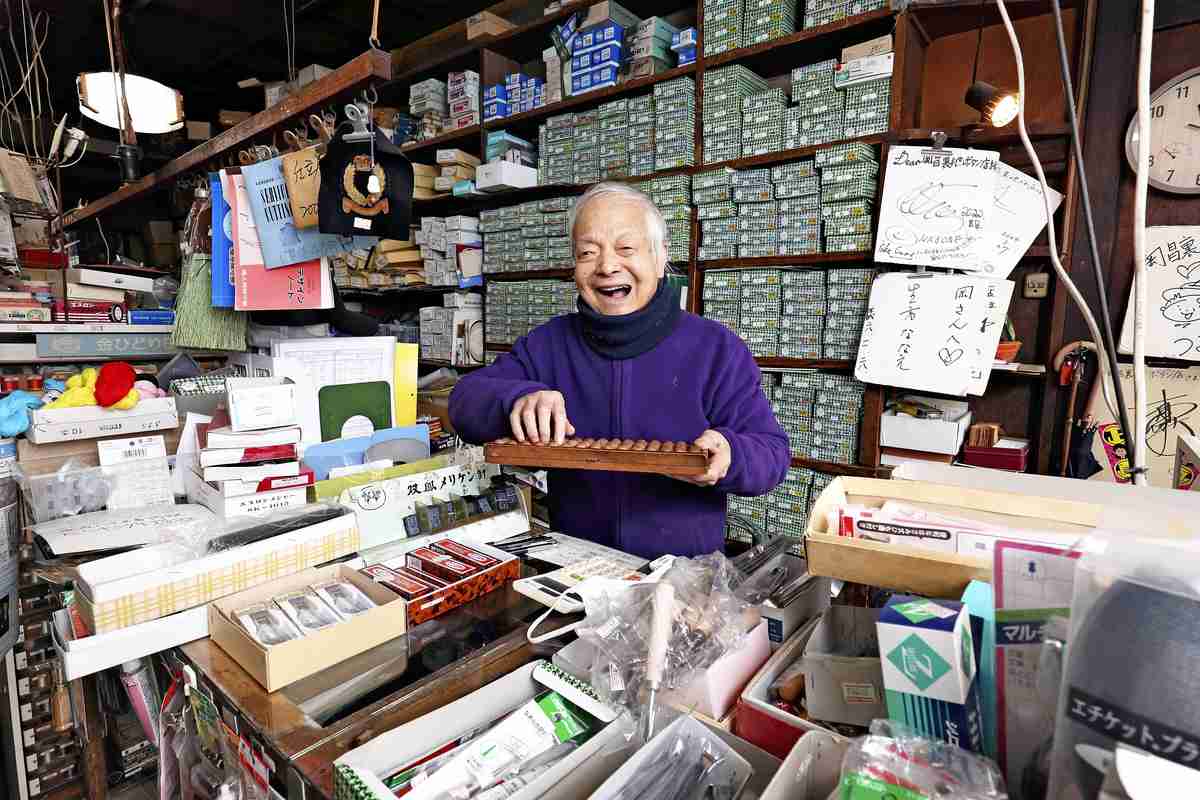
Takeo Oka holds an abacus at Okasho Uraji Botan Ten in Chiyoda Ward, Tokyo.
16:43 JST, February 17, 2025
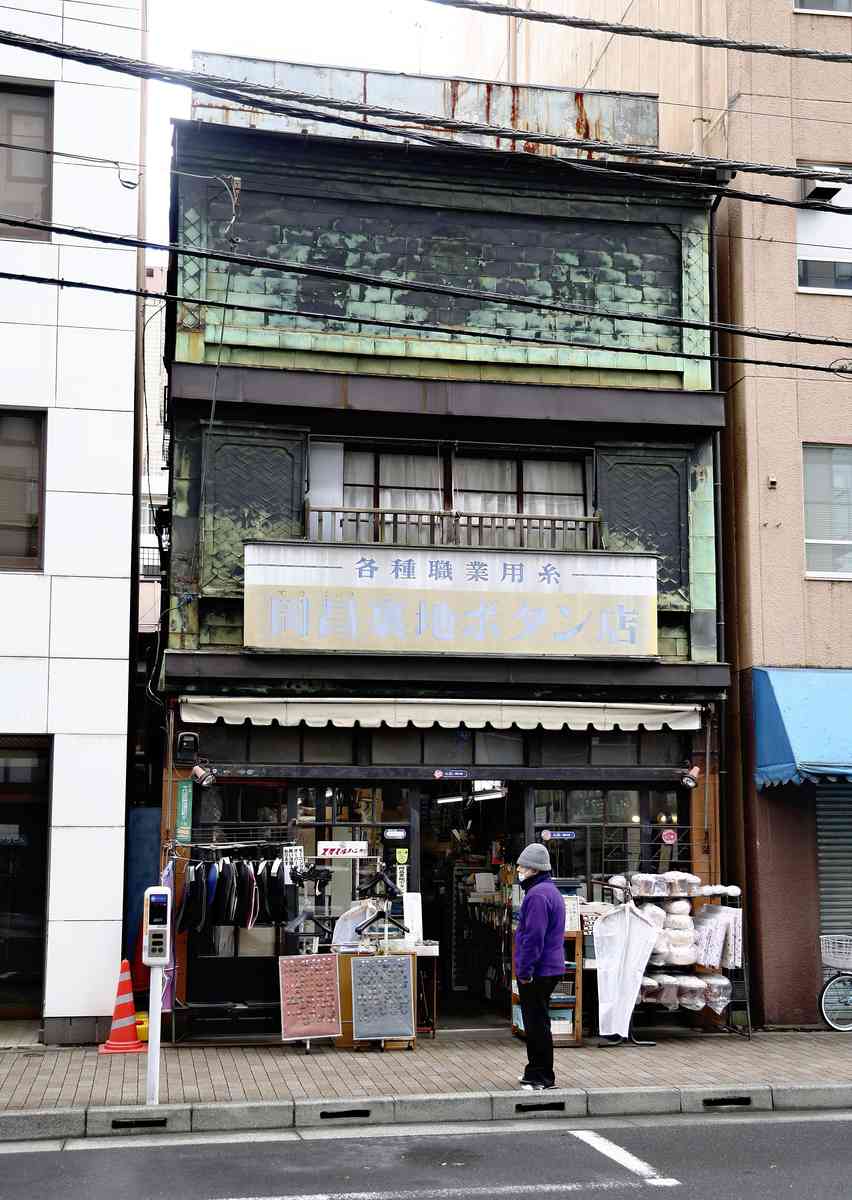
The exterior of Okasho Uraji Botan Ten
A distinctive building constructed in 1928 stands on the Yanagihara-dori street along the Kanda River, a few minutes’ walk south from JR Akihabara Station in Tokyo.
Copper plates and other materials cover the front of Okasho Uraji Botan Ten, a fabric and button store which doubles as a home.
“Kanban kenchiku” — which literally means “billboard architecture” — is an architectural style in which buildings are decorated like billboard. The style is rare in contemporary times but was common during reconstruction in the years following the Great Kanto Earthquake in 1923.
Thanks to its attractive appearance, Okasho Uraji Botan Ten has gained a lot of attention, even receiving requests to be a filming location for a movie.
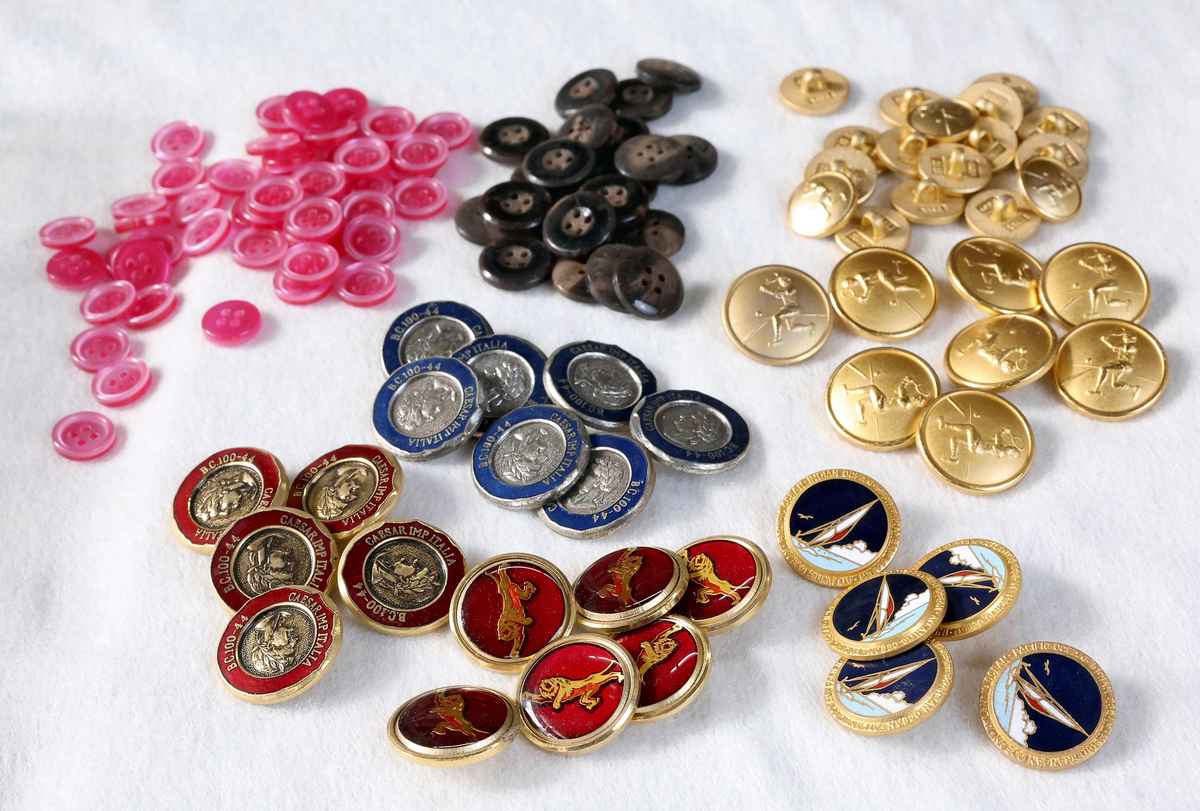
Buttons sold at the store
Inside the store, you will find a myriad of specialized materials for men’s clothing, such as buttons and spools of thread, some of which are out of production.
“Many customers come from as far as Chiba and Saitama prefectures to buy things they can’t find at other stores,” said Takeo Oka, 80, the owner of the store.
The Yanagihara-dori street is said to have been lined with stalls since the Edo period (1603-1867), when it became known as a “used clothing town.”
Oka’s grandfather opened a secondhand clothing store in 1897, in the middle of the Meiji era (1868-1912). After the building was severely damaged in the Great Kanto Earthquake, he rebuilt it with a fire-resistant form of billboard architecture and continued to run it.
The street eventually evolved into a “clothing town,” with custom-made suits becoming all the rage after World War II.
“It was a time when you were only considered a full-fledged member of society if you’d gotten a suit made with your starting salary,” Oka said.
Sellers of custom-made suits and material stores began businesses in the neighborhood, prompting Oka’s store to start dealing in buttons and threads.
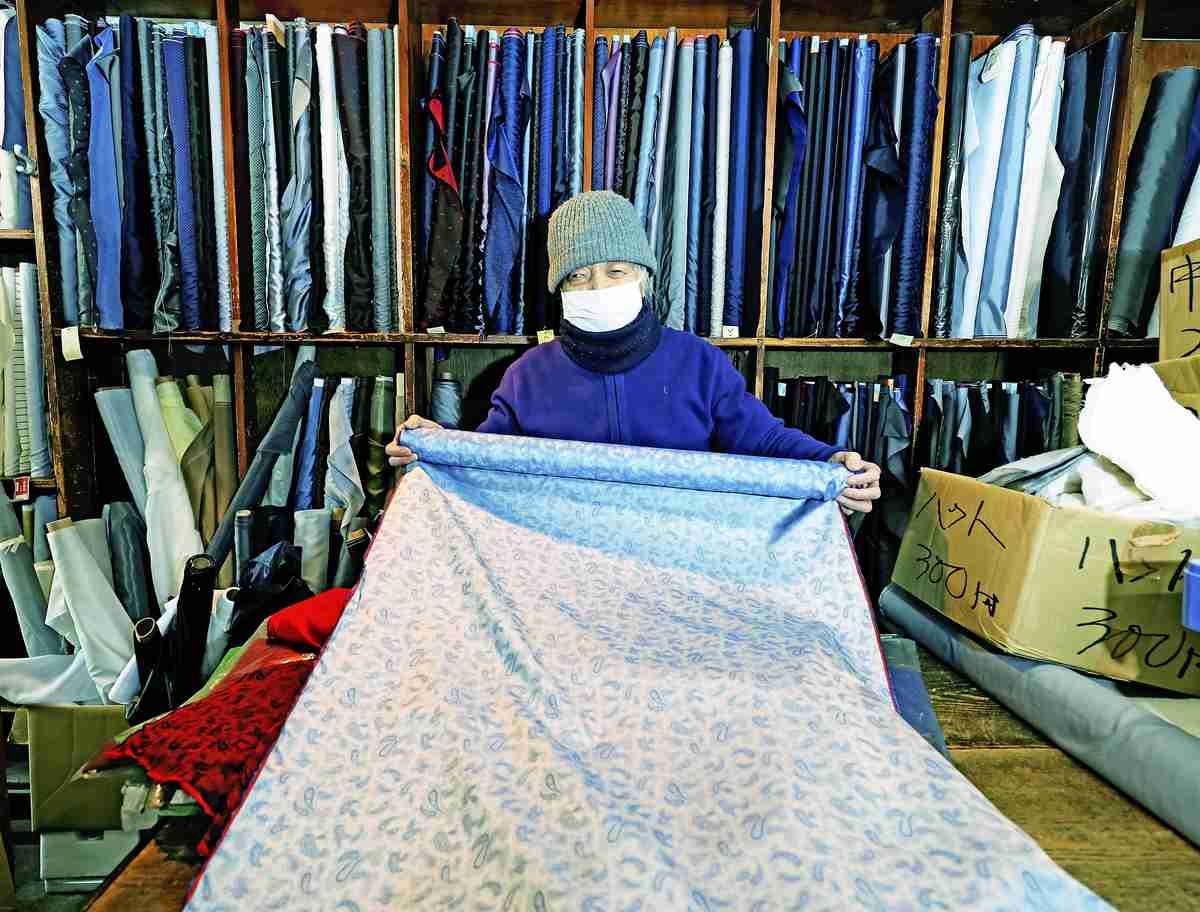
The shop has many suit linings.
As inexpensive, ready-made clothes became more popular, the number of tailor shops declined. But Oka, who has worked at the store since he was young, said he has never thought about getting another job.
He did not take over from his father until he was in his 60s. He continues to operate the small business with only a few customers a day.
He waits for customers while watching TV in the store, makes calls to purchase goods for his shop and introduces his products to visitors with a friendly smile. He has become a fixture of the town.
“I enjoy it because it’s a business that allows me to talk to all kinds of people in the town where I was born and raised,” he said. He intends to continue the business for as long as he can.
***
Okasho Uraji Botan Ten
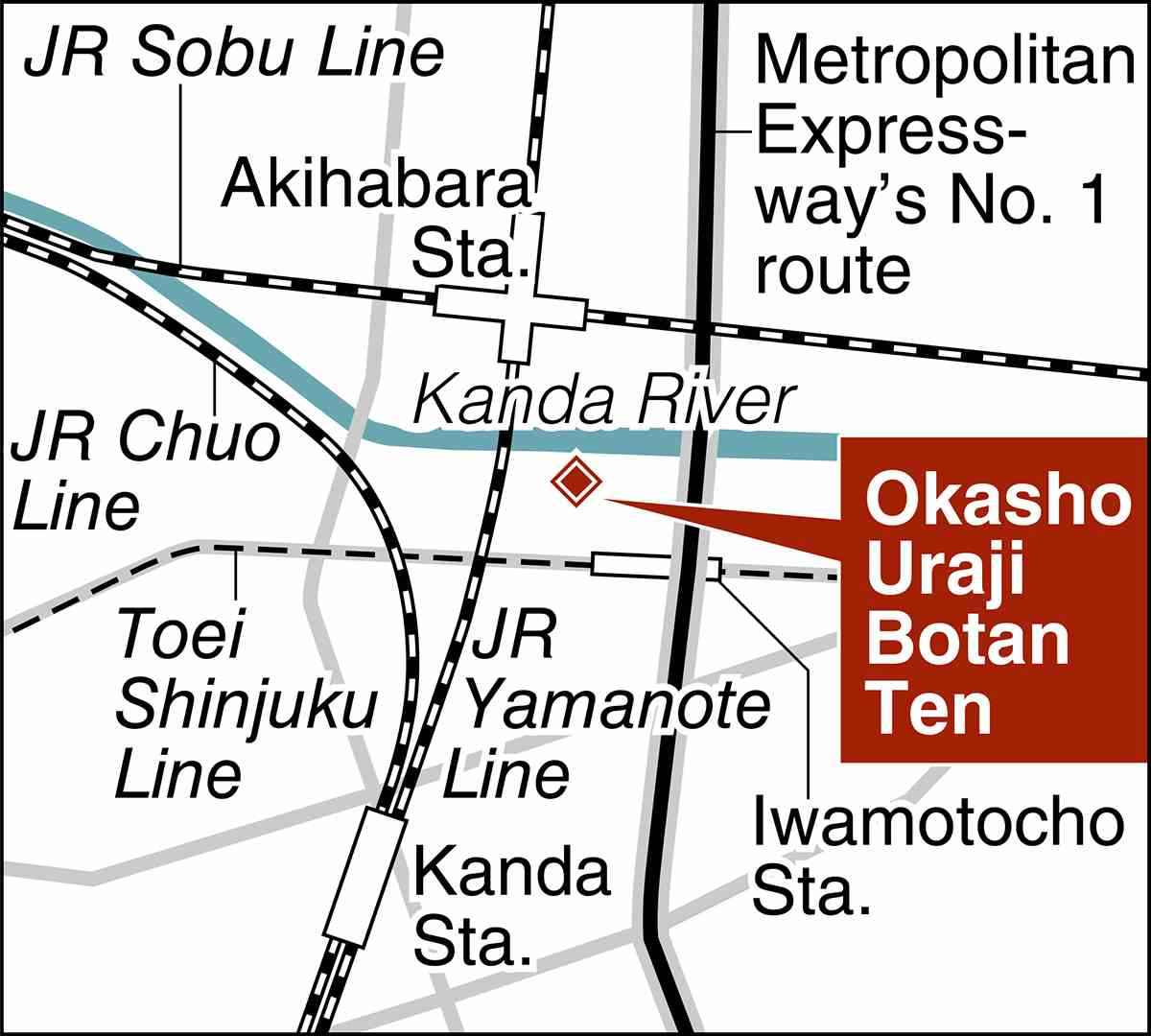
Address: 2-15 Kanda-Sudacho, Chiyoda Ward, Tokyo
Access: 2-minute walk from Iwamotocho Station on the Toei Shinjuku Line, 5-minute walk from JR Akihabara Station
Hours: 9 a.m.-6 p.m. on weekdays, 9 a.m.-5 p.m. on Saturdays. Closed on Sundays.


Related Tags




Most Read
Popular articles in the past 24 hours
-

Japan Figure Skating Legend Yuzuru Hanyu Is Proud Disaster Surviv...
-
Massive Sewer Pipe Found Jutting Out of Highway in Osaka
-

Japan-U.S. Summit Likely to Focus on Middle East; Takaichi to Fac...
-
Hawaii Museum on Tsunami Including Japan's 2011 Disaster at Risk ...
-

15 Years since Great East Japan Earthquake: How Can Affected Area...
-
Japan Holds Memorial Events to Mark 15th Anniversary of 2011 Eart...
-

Japan Train Company to Increase Fares, Including in Tokyo Metropo...
-

Japan’s Mitsui O.S.K. Lines Container Ship Anchored in Persian Gu...
Popular articles in the past week
-

Ibaraki Pref.'s 1st Foreign Bus Driver Hired in Tsukuba
-

Nippon Life Insurance's U.S. Arm Sues OpenAI Over Legal Assistanc...
-
Japan Figure Skating Legend Yuzuru Hanyu Is Proud Disaster Surviv...
-
Govt to Utilize ODA for Ensuring Economic Security; Securing Ener...
-
Massive Sewer Pipe Found Jutting Out of Highway in Osaka
-

Amid Strait of Hormuz Blockade, Shipping Companies Scramble to Ge...
-
Beckoning Cats Get Makeover to Fit Modern Lifestyles with Sleek D...
-
Japan Govt Survey Finds Just 10% of Workers Want Working Hours to...
Popular articles in the past month
-

Producer Behind Pop Group XG Arrested for Cocaine Possession
-

Japan PM Takaichi’s Cabinet Resigns en Masse
-

Man Infected with Measles Reportedly Dined at Restaurant in Tokyo...
-

Videos Plagiarized, Reposted with False Subtitles Claiming ‘Ryuky...
-

iPS Treatments Pass Key Milestone, but Broader Applications Far f...
-

Sanae Takaichi Elected Prime Minister of Japan; Keeps All Cabinet...
-

Nepal Bus Crash Kills 19 People, Injures 25 Including One Japanes...
-
South Korea Tightens Rules on Foreigners Buying Homes in Seoul Me...
Top Articles in Features
-

Tokyo’s New Record-Breaking Fountain Named ‘Tokyo Aqua Symphony’
-

High-Hydration Bread on the Rise, Seeing Increase in Specialty Shops, Recipe Searches
-
Japanese Students Use Traditional Pickle to Create Novel Wagashi Confectionery
-
Heirs to Kyoto Talent: Craftsman Works to Keep Tradition of ‘Kinran’ Brocade Alive Through Initiatives, New Creations
-

My Spendthrift Mother Constantly Asks Me for Money
JN ACCESS RANKING
-
Producer Behind Pop Group XG Arrested for Cocaine Possession
-
Japan PM Takaichi’s Cabinet Resigns en Masse
-
Man Infected with Measles Reportedly Dined at Restaurant in Tokyo Station
-
Videos Plagiarized, Reposted with False Subtitles Claiming ‘Ryukyu Belongs to China’; Anti-China False Information Also Posted in Japan
-
iPS Treatments Pass Key Milestone, but Broader Applications Far from Guaranteed