
Coffee Fans Offered New Ways to Enjoy Delicious Brews; Options Include Elaborate Meals and Making Your Own
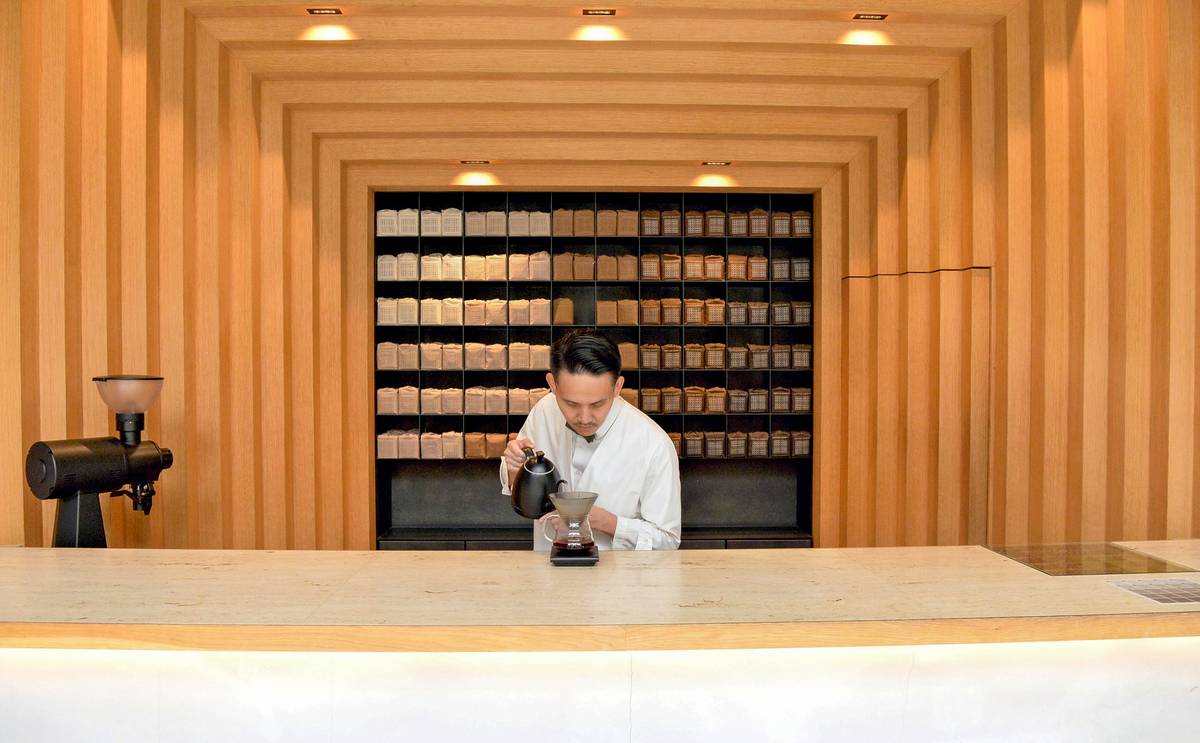
The luxurious interior of Koffee Mameya Kakeru in the Kiyosumi-Shirakawa district in Tokyo
15:30 JST, December 29, 2024
Just like wine, coffee can be paired with food based on the beans and brewing methods used. Being served delicious cups of coffee by skilled baristas, together with a prix fixe meal, is an enchanting experience.
The Koffee Mameya Kakeru shop is located in Tokyo’s Kiyosumi-Shirakawa district, which has recently gained attention as a stylish coffee mecca. Amid its wooden interior, baristas in white clothes and bow ties serve meals accompanied by coffee made with high-quality beans from around the world.
Owner Eiichi Kunitomo, a former waiter at a French restaurant, became a barista and opened Kakeru in 2021 “to provide an extraordinary, three-star restaurant-like experience with coffee.”
Kakeru’s signature offering is its ¥10,000 Seasonal Special featuring in-season coffee beans and foodstuffs. On my visit in late October, I was served a five-course menu with lightly roasted coffee made from “Geisha” beans, a rare variety grown in Panama.
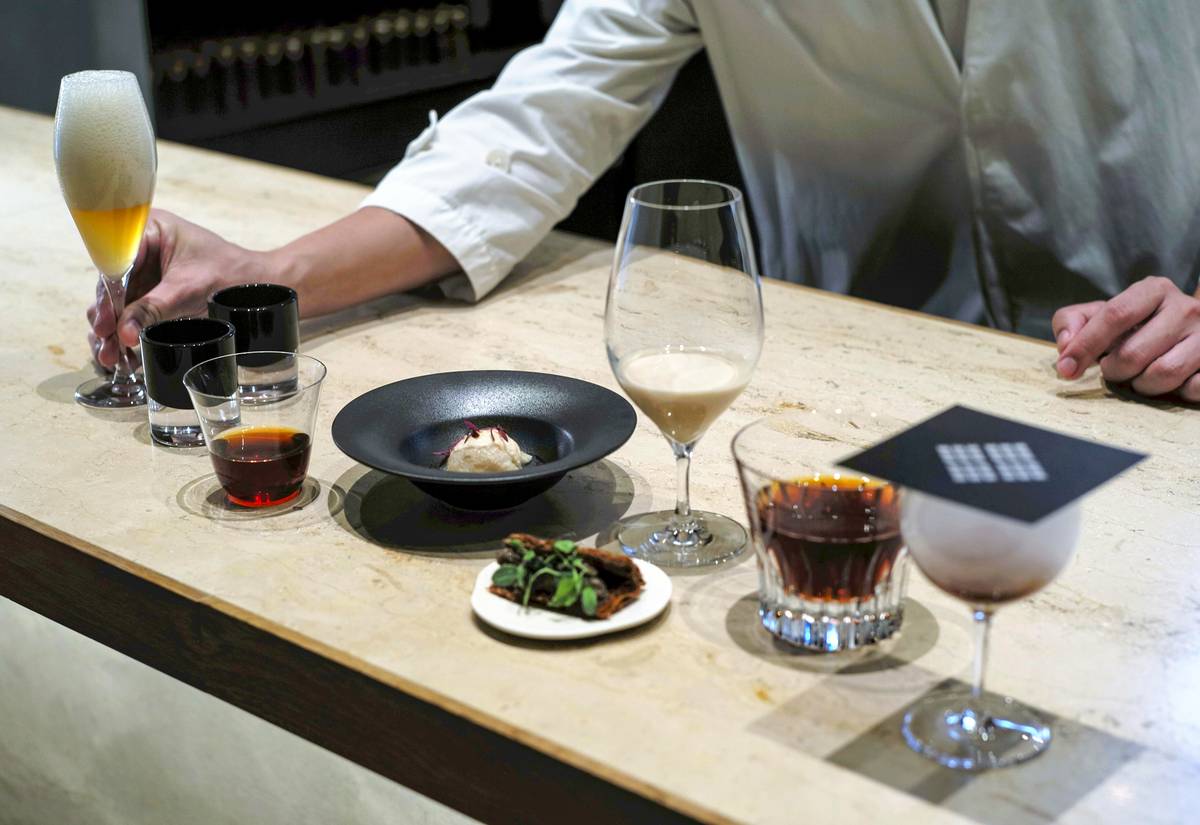
Kakeru’s Seasonal Special, which uses seasonal coffee beans and ingredients
The course started with a refreshing mocktail, in which coffee flowers and berries were dipped in carbonated water flavored with herbs. It was a unique, bean-free drink.
Coffee brewed with cold water was then paired with a dish of satoimo taro atop scallop mousse, and milk-brewed coffee with a mushroom and sardine pie. The savory dishes amplified the coffee’s rich aroma.
Hot coffee was then served, after which we finished with a mocktail made by pouring coffee brewed with cold water over sweet potato and persimmon.
I rarely have coffee with my meals, but I was surprised at how well the different elements went together.
“Because coffee is such a casual drink, I wanted to take an unprecedented approach to make it stand out, pairing coffee with food to provide a memorable experience,” Kunitomo said.
***
‘3rd-wave coffee’ movement
Ways to enjoy coffee are diversifying.
In Japan, blended or dark-roasted coffee has long been popular, according to UCC Coffee Academy President Hidefumi Sakae. Amid the current “third-wave coffee” movement, the trend has shifted to light-roasted coffee to enjoy the beans’ original flavor, or so-called traceable coffee that comes from a single, identifiable region, producer and variety.
“Just like food and wine, people, who are concerned about the safety, care more about the transparency [of the coffee production process], and are increasingly interested in the taste and how to appreciate it,” Sakae said. “A movement is expected to grow in which people want to learn about the various enticing aspects of coffee and pursue their preferences at elaborate shops that offer a variety of experiences, such as course meals.”
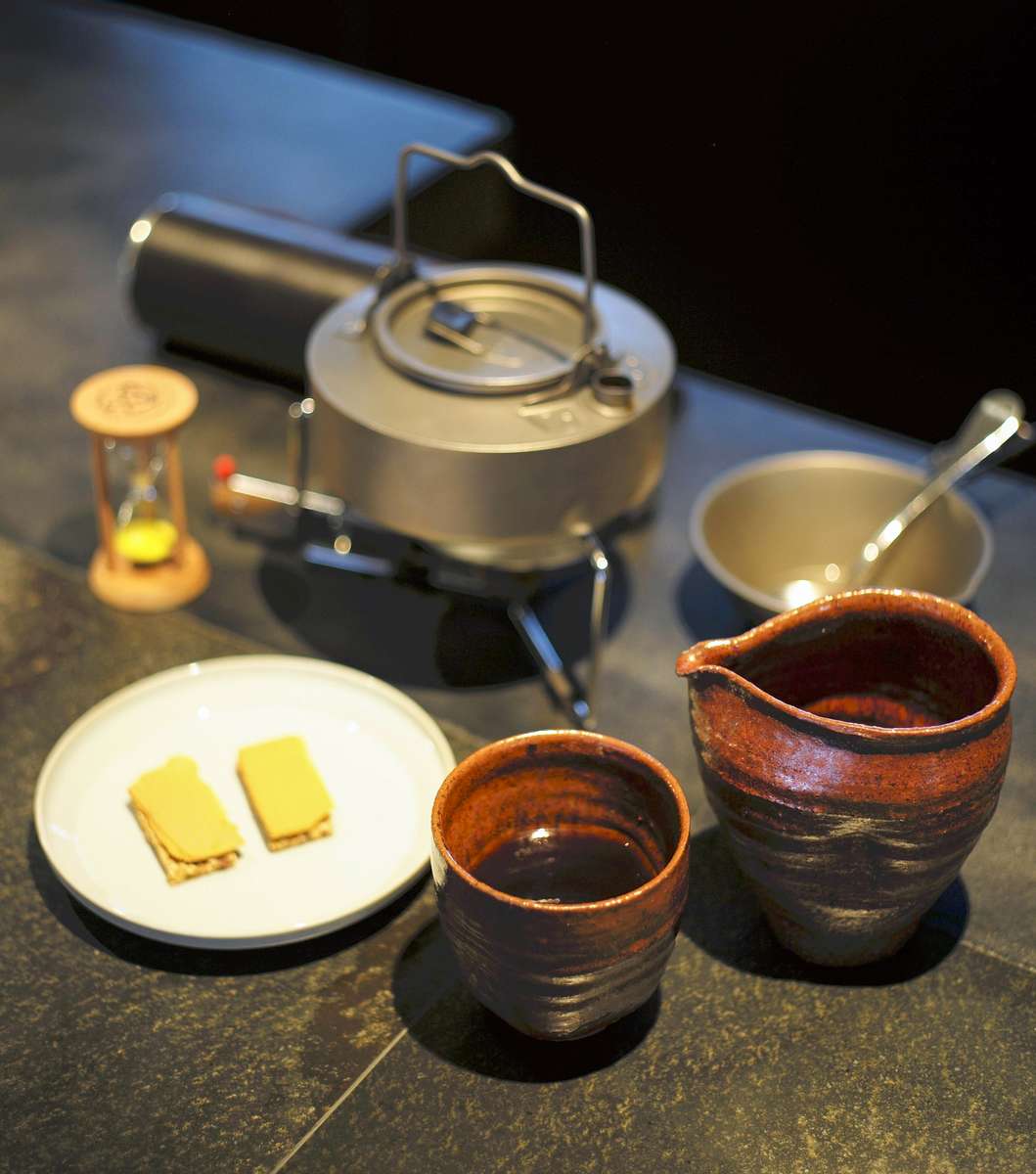
Kokekaffe is brewed by pouring coffee grounds directly into a kettle at the Fuglen Sangubashi in Tokyo.
Fuglen Coffee Roasters’ Fuglen Sangubashi in Shibuya Ward, Tokyo — part of a Norway-based chain — lets customers compare two types of coffee for ¥2,790. One is a hand-drip coffee with minimal off-flavors, made from beans grounded down to micro-grains of a uniform size, while the other is a traditional Scandinavian steeped coffee called kokekaffe, prepared in a kettle on the stove.
In contrast to the delicate hand-drip coffee, kokekaffe has a robust flavor. Customers can taste them in the quiet, lodge-like cafe.
“We want customers to enjoy chatting with the baristas and experience the coffee’s good quality, such as its fruity flavor and gentle sweetness,” Fuglen’s Takahide Sameshima said.
***
Experimenting with tools
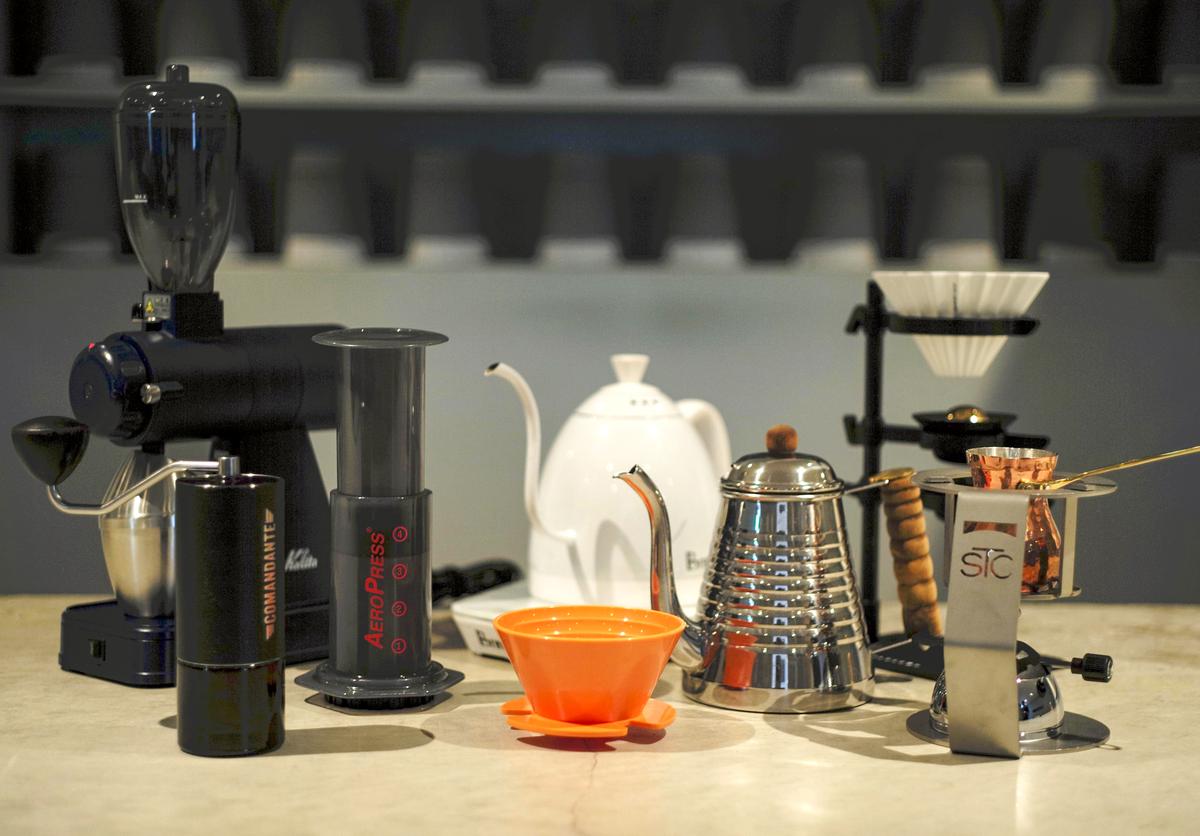
Some of the coffee-making tools available at Ogawa Coffee Laboratory Shimokitazawa
There is also a lab-like cafe where customers can experiment with different types of beans and tools to find the perfect taste.
At Ogawa Coffee Laboratory Shimokitazawa, in Setagaya Ward, Tokyo, run by Kyoto-based Ogawa Coffee Co., you make coffee by yourself while learning tips about extraction from baristas.
Customers purchase at least 100 grams of beans and choose from around 40 tools, including grinders, percolators and kettles, to make their coffee following a recipe.
“Just a little extra effort makes coffee much tastier,” manager Miya Namitoko said. “Please try the recipes at home, too.”




Most Read
Popular articles in the past 24 hours
-
Japanese High School Student Aims to Share Kaiten History Through...
-
PM Takaichi Spells out Plans to Advance Bold Policy Shifts in Spe...
-

Chronic Issues Erode Thailand’s Economy as Political Confusion Pe...
-

Japanese Version of Shohei Ohtani's Picture Book Published
-
Tottori: 95-Year-Old Japanese Descendent from Philippines Visits ...
-

Japan to Monitor Trump Administration's Response to U.S. Supreme ...
-

Milano Cortina 2026: Speed Skater Takagi Finishes 6th in the 1,50...
-
Osaka: 40 Ninjas Display Shuriken Throwing Skills at Japan Champi...
Popular articles in the past week
-

Japan PM Takaichi’s Cabinet Resigns en Masse
-

Man Infected with Measles Reportedly Dined at Restaurant in Tokyo...
-

Sanae Takaichi Elected Prime Minister of Japan; Keeps All Cabinet...
-

Japan's Govt to Submit Road Map for Growth Strategy in March, PM ...
-

Bus Carrying 40 Passengers Catches Fire on Chuo Expressway; All E...
-

Milano Cortina 2026: Figure Skaters Riku Miura, Ryuichi Kihara Pa...
-

Japan, U.S. Name 3 Inaugural Investment Projects; Reached Agreeme...
-
U.S. Firm to Build Training Hub in Fukushima N-plant for Debris R...
Popular articles in the past month
-
Japan PM Takaichi’s Cabinet Resigns en Masse
-

Japan Institute to Use Domestic Commercial Optical Lattice Clock ...
-

Israeli Ambassador to Japan Speaks about Japan’s Role in the Reco...
-
Man Infected with Measles Reportedly Dined at Restaurant in Tokyo...
-

Videos Plagiarized, Reposted with False Subtitles Claiming ‘Ryuky...
-

Man Infected with Measles May Have Come in Contact with Many Peop...
-

Prudential Life Insurance Plans to Fully Compensate for Damages C...
-

Woman with Measles Visited Hospital in Tokyo Multiple Times Befor...
Top Articles in Features
-
Tokyo’s New Record-Breaking Fountain Named ‘Tokyo Aqua Symphony’
-
Sapporo Snow Festival Opens with 210 Snow and Ice Sculptures at 3 Venues in Hokkaido, Features Huge Dogu
-

Tourists Flock to Ice Dome Lodge at Resort in Hokkaido, Japan; Facility Invites Visitors to Sleep on Beds Made of Ice
-
High-Hydration Bread on the Rise, Seeing Increase in Specialty Shops, Recipe Searches
-
Heirs to Kyoto Talent: Craftsman Works to Keep Tradition of ‘Kinran’ Brocade Alive Through Initiatives, New Creations
JN ACCESS RANKING
-
Japan PM Takaichi’s Cabinet Resigns en Masse
-
Japan Institute to Use Domestic Commercial Optical Lattice Clock to Set Japan Standard Time
-
Israeli Ambassador to Japan Speaks about Japan’s Role in the Reconstruction of Gaza
-
Man Infected with Measles Reportedly Dined at Restaurant in Tokyo Station
-
Videos Plagiarized, Reposted with False Subtitles Claiming ‘Ryukyu Belongs to China’; Anti-China False Information Also Posted in Japan