
First Conviction under Hong Kong’s New National Security Law for Wearing “seditious” T-shirt
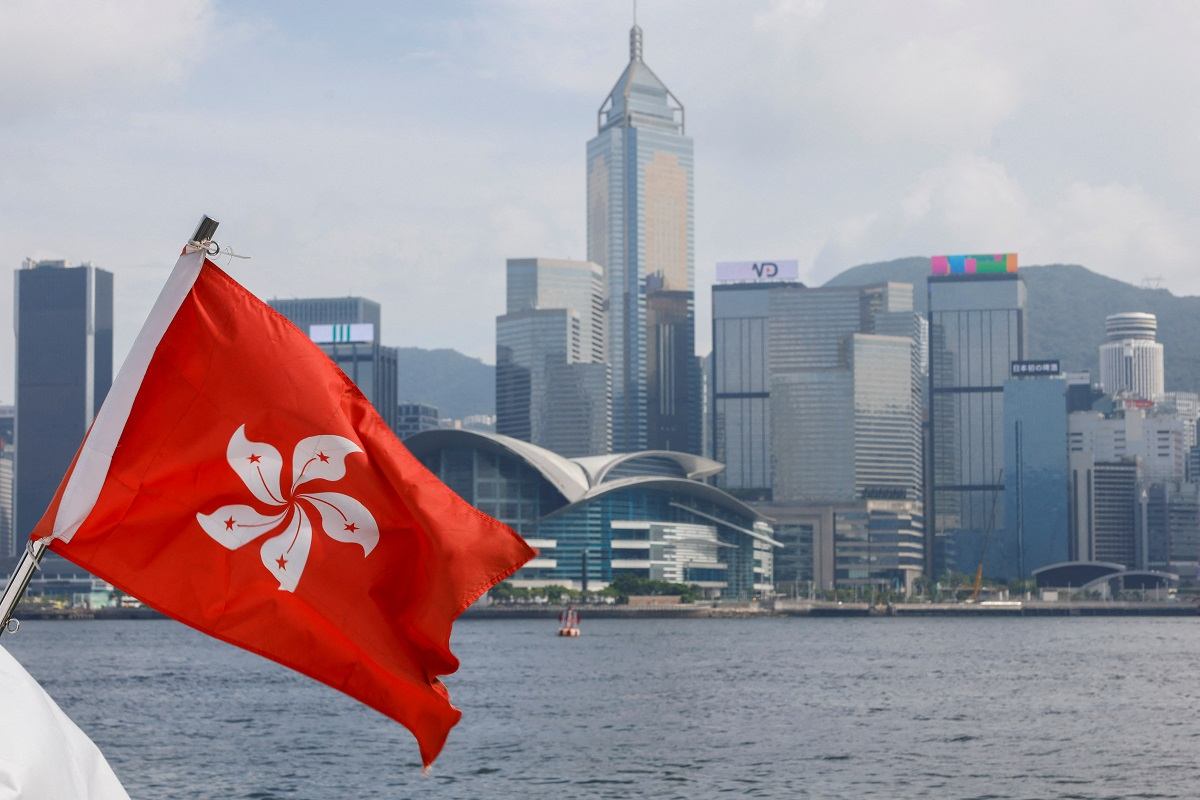
A Hong Kong flag is seen on a vessel at Victoria Harbour in Hong Kong, China August 30, 2024.
14:00 JST, September 17, 2024
HONG KONG (Reuters) – A Hong Kong man on Monday pleaded guilty to sedition for wearing a T-shirt with a protest slogan, becoming the first person convicted under the city’s new national security law passed in March.
Chu Kai-pong, 27, pleaded guilty to one count of “doing with a seditious intention an act”.
Under the new security law, the maximum sentence for the offence has been expanded from two years to seven years in prison and could even go up to 10 years if “collusion with foreign forces” was found involved.
Chu was arrested on June 12 at a MTR station wearing a T-shirt with the slogan “Liberate Hong Kong, revolution of our times” and a yellow mask printed with “FDNOL”- the shorthand of another slogan “five demands, not one less”.
Both slogans were frequently chanted in the huge, sometimes violent pro-democracy protests in 2019 and June 12 was a key kick-off day of the months-long unrests.
Chu told police that he wore the T-shirt to remind people of the protests, the court heard.
Chief Magistrate Victor So, handpicked by the city leader John Lee to hear national security cases, adjourned the case to Thursday for sentencing.
Hong Kong was returned from Britain to China in 1997 under Beijing’s promise of guaranteeing its freedoms, including freedom of speech, would be protected under a “one country, two systems” formula.
Beijing imposed a national security law in 2020 punishing secession, subversion, terrorism or collusion with foreign forces with up to life in prison, after the months-long protests in the financial hub.
In March 2024, Hong Kong passed a second new security law — a home-grown ordinance also known as “Article 23” according to its parent provision in the city’s mini constitution, the Basic Law.
Critics, including the U.S. government have expressed concerns over the new security law and said the vaguely defined provisions regarding “sedition” could be used to curb dissent.
Hong Kong and Chinese officials have said it was necessary to plug “loopholes” in the national security regime.






Most Read
Popular articles in the past 24 hours
-

Ishinomaki Man Plush Toy Offers Hope to Children in Times of Disa...
-

Microsoft Japan Raided by Antitrust Watchdog for Allegedly Blocki...
-
Japan Eyes Introducing Prescreening System for Foreign Travelers,...
-

Party Representatives’ Questions in Diet: Takaichi Says Consumpti...
-

Milano Cortina 2026: News in Pictures / Feats of Japanese Athlete...
-
Pokémon Celebrates 30 Years with Japanese Pro Baseball Collab
-
Nikkei Tops 59,000 for First Time
-
New U.S. Tariff Unlikely to Significantly Impact Japan, BOJ Gov. ...
Popular articles in the past week
-

Producer Behind Pop Group XG Arrested for Cocaine Possession
-

iPS Treatments Pass Key Milestone, but Broader Applications Far f...
-
Tokyo Skytree's Elevator Stops, Trapping 20 People; All Rescued (...
-
Milano Cortina 2026: Japanese Gold Medalist Figure Skater Miura S...
-

Japan’s Major Real Estate Firms Expanding Overseas Businesses to ...
-

Nepal Bus Crash Kills 19 People, Injures 25 Including One Japanes...
-

Baby Monkey Punch Captures Hearts at Chiba Pref. Zoo, on Social M...
-

Milano Cortina 2026: Japanese Figure Skater Kaori Sakamoto’...
Popular articles in the past month
-
Producer Behind Pop Group XG Arrested for Cocaine Possession
-

Japan PM Takaichi’s Cabinet Resigns en Masse
-

Japan Institute to Use Domestic Commercial Optical Lattice Clock ...
-

Man Infected with Measles Reportedly Dined at Restaurant in Tokyo...
-

Israeli Ambassador to Japan Speaks about Japan’s Role in the Reco...
-

Videos Plagiarized, Reposted with False Subtitles Claiming ‘Ryuky...
-

Man Infected with Measles May Have Come in Contact with Many Peop...
-

Prudential Life Insurance Plans to Fully Compensate for Damages C...
Top Articles in News Services
-
Survey Shows False Election Info Perceived as True
-
Hong Kong Ex-Publisher Jimmy Lai’s Sentence Raises International Outcry as China Defends It
-
Japan’s Nikkei Stock Average Touches 58,000 as Yen, Jgbs Rally on Election Fallout (UPDATE 1)
-
Japan’s Nikkei Stock Average Falls as US-Iran Tensions Unsettle Investors (UPDATE 1)
-
Trump Names Former Federal Reserve Governor Warsh as the Next Fed Chair, Replacing Powell
JN ACCESS RANKING
-
Producer Behind Pop Group XG Arrested for Cocaine Possession
-
Japan PM Takaichi’s Cabinet Resigns en Masse
-
Man Infected with Measles Reportedly Dined at Restaurant in Tokyo Station
-
Israeli Ambassador to Japan Speaks about Japan’s Role in the Reconstruction of Gaza
-
Videos Plagiarized, Reposted with False Subtitles Claiming ‘Ryukyu Belongs to China’; Anti-China False Information Also Posted in Japan