
China Announces Birth-Rate Boosting Measures Including Free Pre-School Education, Some Say More Needs to be Done
20:00 JST, August 16, 2025
SHENYANG, China — The Chinese government has announced plans to gradually make pre-school education free of charge and provide childcare subsidies, in an effort to reduce the burden on the child-rearing generation and improve the birth rate, which has undergone a period of significant decline.
Some companies seemingly view the subsidies as an opportunity to raise prices of their baby products, leading to call for more comprehensive measures.
According to an announcement by the Chinese government, tuitions fees for older students at public kindergartens will be waived from the start of the coming academic year this autumn. Private kindergartens also plan to reduce fees based on the level of waivers at public kindergartens.
The Chinese government revealed at the National People’s Congress, China’s parliament, in March that it would gradually make pre-school education free, with an estimated 12 million children to be made eligible this year.
Under the childcare subsidy, the government will provide 3,600 yuan (about ¥74,000) per year per child under 3, and applications for it are expected to be possible from as early as this month. According to the state-run Xinhua News Agency, some local governments have previously provided such subsidies, but most were targeted at second and third children.
A government official in charge of measures to combat the declining birth rate emphasized the significance of providing a uniform subsidy to parents nationwide regardless of the number of children and demonstrated the nation’s commitment to tackling the issue.
“By including only-child households in the subsidy program, benefits will be brought to all child-rearing households,” the official said at a press conference at the end of July.
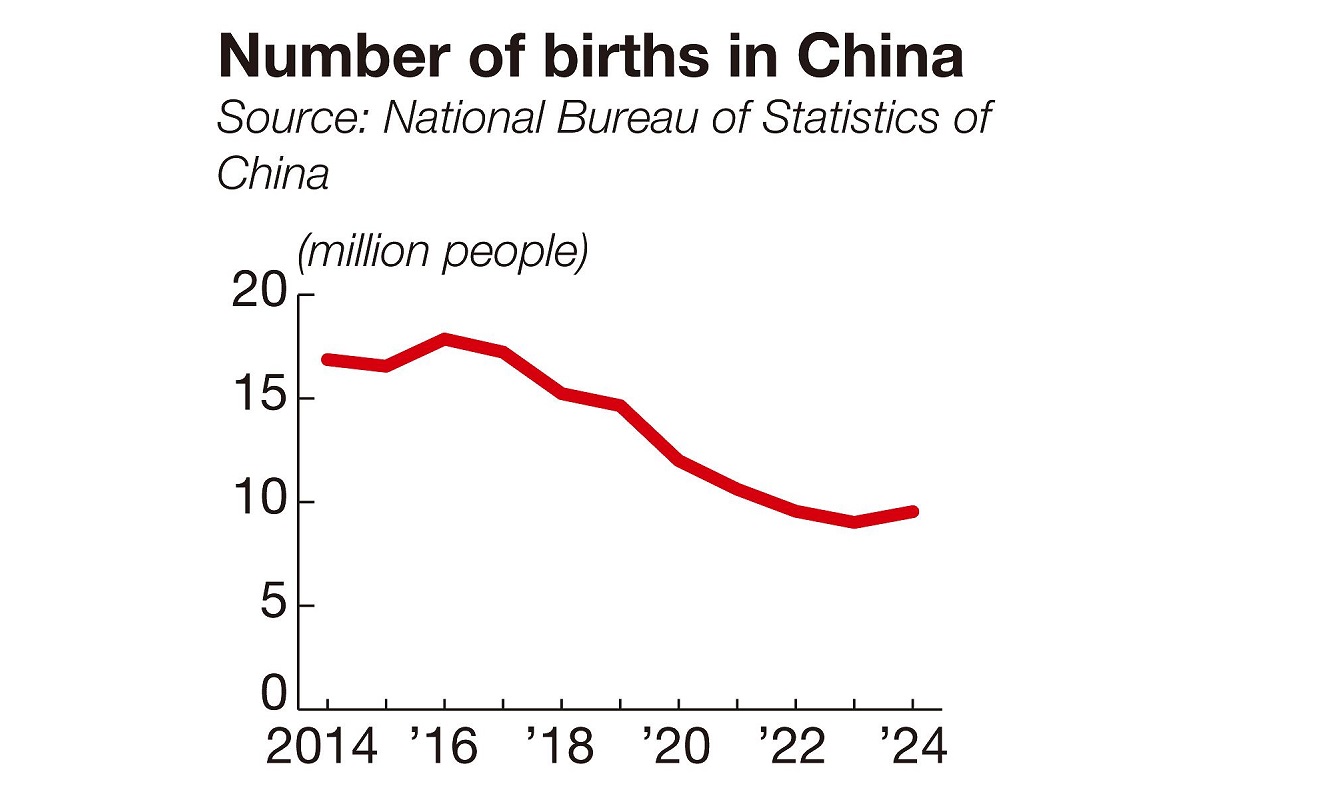
The Xi Jinping administration rush to implement such measure is drive by the rapid decline in China’s birth rate. The number of births in 2024 was 9.54 million, an increase of 520,000 from the previous year, but it is not even half the most recent peak in 2016. Rising education costs and a slowing economy are said to be behind the decline, making young people more reluctant to get married and have children.
Parents bemoan price hikes
While some have praised the government’s proposed measures as a way to better conserve household budgets, others have pointed out that it is not generous enough. The increasing number of elementary school children attending cram schools in preparation for university entrance exams is making the monetary burden of raising children more difficult to bear.
There have been a series of reports on social media that prices of powdered milk and diapers have risen. It is believed that some businesses have been raising the prices of their baby products in anticipation of the subsidies.
People who have children are expressing dissatisfaction, saying it makes the subsidies pointless.
Xinhua News Agency in an Aug. 9 article called for strict disciplinary action against businesses which unfairly inflate prices.




Most Read
Popular articles in the past 24 hours
-

Japan Train Company to Increase Fares, Including in Tokyo Metropo...
-
Japan Govt to Tighten Requirements to Receive Permanent Residency...
-

Tail of ANA Plane Struck Runway During Landing in Houston; No Inj...
-

Medical Care at Home and Disasters: Ensure Systems to Provide Con...
-

Samurai Japan Holds First Practice in Miami; Team Will Play again...
-

Iran Targets Busiest International Airport as Top UN Body Demands...
-

Japan to Face Venezuela in World Baseball Classic Quarterfinals
-

CARTOON OF THE DAY (March 12)
Popular articles in the past week
-

Japan Figure Skating Legend Yuzuru Hanyu Is Proud Disaster Surviv...
-

Nippon Life Insurance's U.S. Arm Sues OpenAI Over Legal Assistanc...
-

Ibaraki Pref.'s 1st Foreign Bus Driver Hired in Tsukuba
-
Govt to Utilize ODA for Ensuring Economic Security; Securing Ener...
-

Massive Sewer Pipe Found Jutting Out of Highway in Osaka
-

Beckoning Cats Get Makeover to Fit Modern Lifestyles with Sleek D...
-
Japan Govt Survey Finds Just 10% of Workers Want Working Hours to...
-
Japan's 2nd Round of U.S. Investments May Be Worth Over $100 Bill...
Popular articles in the past month
-

Producer Behind Pop Group XG Arrested for Cocaine Possession
-

Japan PM Takaichi’s Cabinet Resigns en Masse
-

Man Infected with Measles Reportedly Dined at Restaurant in Tokyo...
-

Videos Plagiarized, Reposted with False Subtitles Claiming ‘Ryuky...
-
Japan Figure Skating Legend Yuzuru Hanyu Is Proud Disaster Surviv...
-

iPS Treatments Pass Key Milestone, but Broader Applications Far f...
-

Sanae Takaichi Elected Prime Minister of Japan; Keeps All Cabinet...
-

Nepal Bus Crash Kills 19 People, Injures 25 Including One Japanes...
Top Articles in World
-
Videos Plagiarized, Reposted with False Subtitles Claiming ‘Ryukyu Belongs to China’; Anti-China False Information Also Posted in Japan
-
Nepal Bus Crash Kills 19 People, Injures 25 Including One Japanese National
-

South Korea Tightens Rules on Foreigners Buying Homes in Seoul Metro Area
-
Govt to Utilize ODA for Ensuring Economic Security; Securing Energy, Critical Minerals Sought
-

Ukrainian Ambassador Closely Watching Japan’s Revision of Defense Export Rules, Hopes for Future Arms Support
JN ACCESS RANKING
-
Producer Behind Pop Group XG Arrested for Cocaine Possession
-
Japan PM Takaichi’s Cabinet Resigns en Masse
-
Man Infected with Measles Reportedly Dined at Restaurant in Tokyo Station
-
Videos Plagiarized, Reposted with False Subtitles Claiming ‘Ryukyu Belongs to China’; Anti-China False Information Also Posted in Japan
-
Japan Figure Skating Legend Yuzuru Hanyu Is Proud Disaster Survivor and Gold Medalist, Vows to Continue Support Efforts