
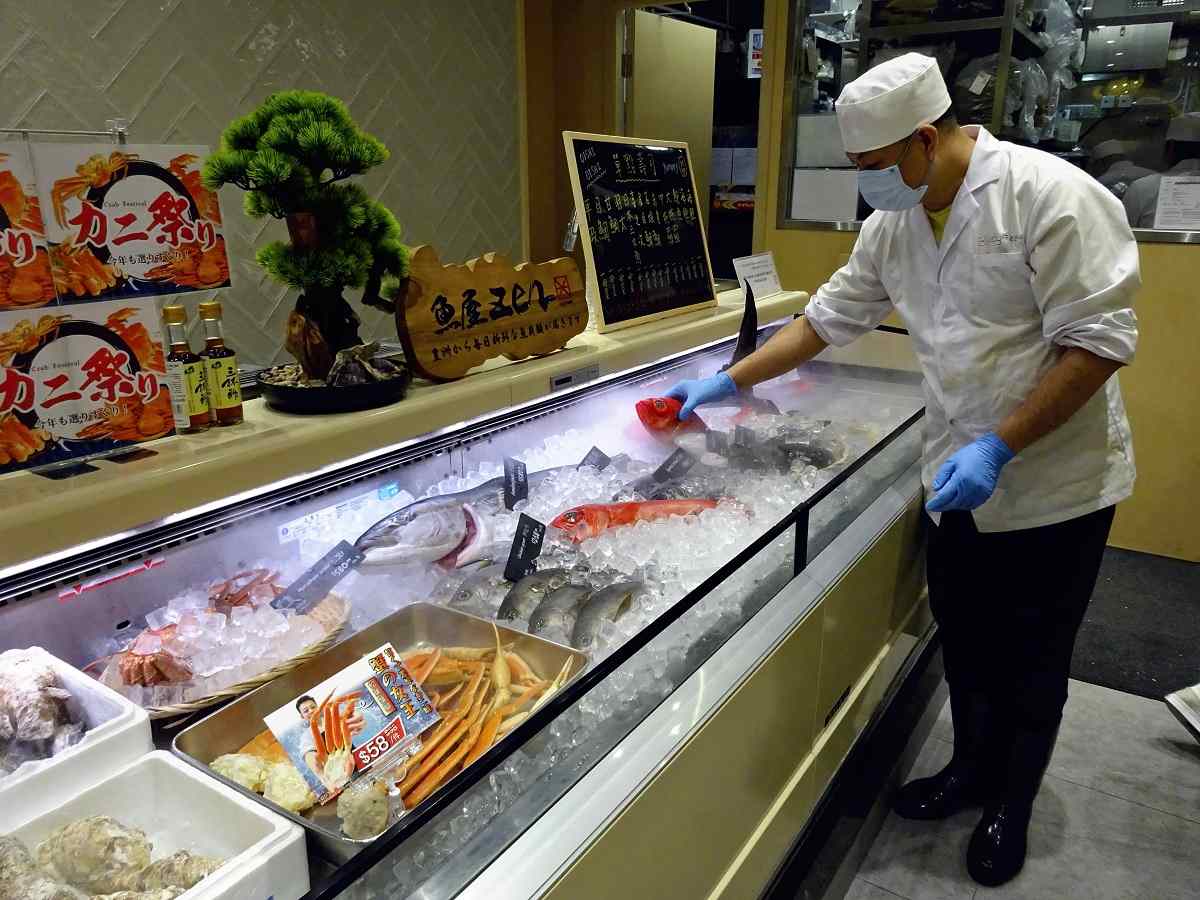
A chef selects fish at a Japanese restaurant in central Hong Kong on Aug. 30.
14:48 JST, September 2, 2023
HONG KONG — More than a week after the Hong Kong government banned imports of seafood from 10 Japanese prefectures, Japanese restaurants in the region are concerned that the situation could be drawn out.
Many Hong Kongers are taking an objective approach to claims by the Chinese government about the sea release of treated water from the Fukushima No.1 nuclear power plant that lack scientific evidence. Nevertheless, a Japanese restaurant association said the issue is being felt at some businesses operating in Hong Kong.
A constant stream of diners entered a Japanese seafood restaurant in central Hong Kong during a recent visit. A 43-year-old worker in the financial sector who bought sushi said there was no problem from a scientific perspective so he would continue to eat Japanese fish.
However, a 77-year-old who left without ordering anything said: “I last ate Japanese fish before the discharge. I came here because I was curious, but I won’t eat because I’m worried.”
Hong Kong was the top export destination for Japanese seafood from January to June this year, at ¥51.6 billion, dwarfing China at ¥45.6 billion.
According to the Hong Kong Japanese Restaurant Association, the number of Japanese restaurants in Hong Kong has more than doubled to about 2,000 over the past decade.
A Japanese restaurant offering fish from parts of Japan unaffected by the import ban has been full of customers since the treated water discharge began, but other establishments have seen a drop in visitors.
“Sales have fallen 30% on average,” an association official said.
After the meltdown at the Fukushima No.1 nuclear power plant in 2011, the Hong Kong government required certificates with radiation levels for seafood imports from five prefectures including Fukushima but did not impose an import ban. Now, Hong Kong has imposed an import ban, but it is limited to seafood from 10 prefectures including Tokyo and Fukushima, in comparison to China, which has banned all Japanese seafood imports.
The widespread popularity of Japanese food in Hong Kong is believed to be behind the Hong Kong government’s decision not to implement a blanket ban.
However, as long as Beijing takes a hardline stance against Japan, Hong Kong has no choice but to stay in step with it, which could result in an extention of the ban.
Simon Wong, chairman of the Hong Kong Federation of Restaurants & Related Trades, expressed an understanding of the Hong Kong government’s measure.
“It’s important to ensure safety for citizens,” Wong said. “I hope the situation calms down soon. But if high radiation levels are detected, the effects would be immeasurable.”





Most Read
Popular articles in the past 24 hours
-

Japan Train Company to Increase Fares, Including in Tokyo Metropo...
-
Japan Govt to Tighten Requirements to Receive Permanent Residency...
-

Tail of ANA Plane Struck Runway During Landing in Houston; No Inj...
-

Samurai Japan Holds First Practice in Miami; Team Will Play again...
-

Medical Care at Home and Disasters: Ensure Systems to Provide Con...
-

Iran Targets Busiest International Airport as Top UN Body Demands...
-

Japan to Face Venezuela in World Baseball Classic Quarterfinals
-

North Korean Leader Kim and His Daughter Try out New Pistols at S...
Popular articles in the past week
-

Japan Figure Skating Legend Yuzuru Hanyu Is Proud Disaster Surviv...
-

Nippon Life Insurance's U.S. Arm Sues OpenAI Over Legal Assistanc...
-

Ibaraki Pref.'s 1st Foreign Bus Driver Hired in Tsukuba
-
Govt to Utilize ODA for Ensuring Economic Security; Securing Ener...
-
Massive Sewer Pipe Found Jutting Out of Highway in Osaka
-

Beckoning Cats Get Makeover to Fit Modern Lifestyles with Sleek D...
-
Japan Govt Survey Finds Just 10% of Workers Want Working Hours to...
-
Japan's 2nd Round of U.S. Investments May Be Worth Over $100 Bill...
Popular articles in the past month
-

Producer Behind Pop Group XG Arrested for Cocaine Possession
-

Japan PM Takaichi’s Cabinet Resigns en Masse
-

Man Infected with Measles Reportedly Dined at Restaurant in Tokyo...
-

Videos Plagiarized, Reposted with False Subtitles Claiming ‘Ryuky...
-

iPS Treatments Pass Key Milestone, but Broader Applications Far f...
-
Japan Figure Skating Legend Yuzuru Hanyu Is Proud Disaster Surviv...
-

Sanae Takaichi Elected Prime Minister of Japan; Keeps All Cabinet...
-

Nepal Bus Crash Kills 19 People, Injures 25 Including One Japanes...
Top Articles in World
-
Videos Plagiarized, Reposted with False Subtitles Claiming ‘Ryukyu Belongs to China’; Anti-China False Information Also Posted in Japan
-
Nepal Bus Crash Kills 19 People, Injures 25 Including One Japanese National
-
South Korea Tightens Rules on Foreigners Buying Homes in Seoul Metro Area
-
Govt to Utilize ODA for Ensuring Economic Security; Securing Energy, Critical Minerals Sought
-

Ukrainian Ambassador Closely Watching Japan’s Revision of Defense Export Rules, Hopes for Future Arms Support
JN ACCESS RANKING
-
Producer Behind Pop Group XG Arrested for Cocaine Possession
-
Japan PM Takaichi’s Cabinet Resigns en Masse
-
Man Infected with Measles Reportedly Dined at Restaurant in Tokyo Station
-
Videos Plagiarized, Reposted with False Subtitles Claiming ‘Ryukyu Belongs to China’; Anti-China False Information Also Posted in Japan
-
iPS Treatments Pass Key Milestone, but Broader Applications Far from Guaranteed