
Inclusive Society / Muslim Residents in Japan Aim to Gain Understanding About Mosques, Burial Rules
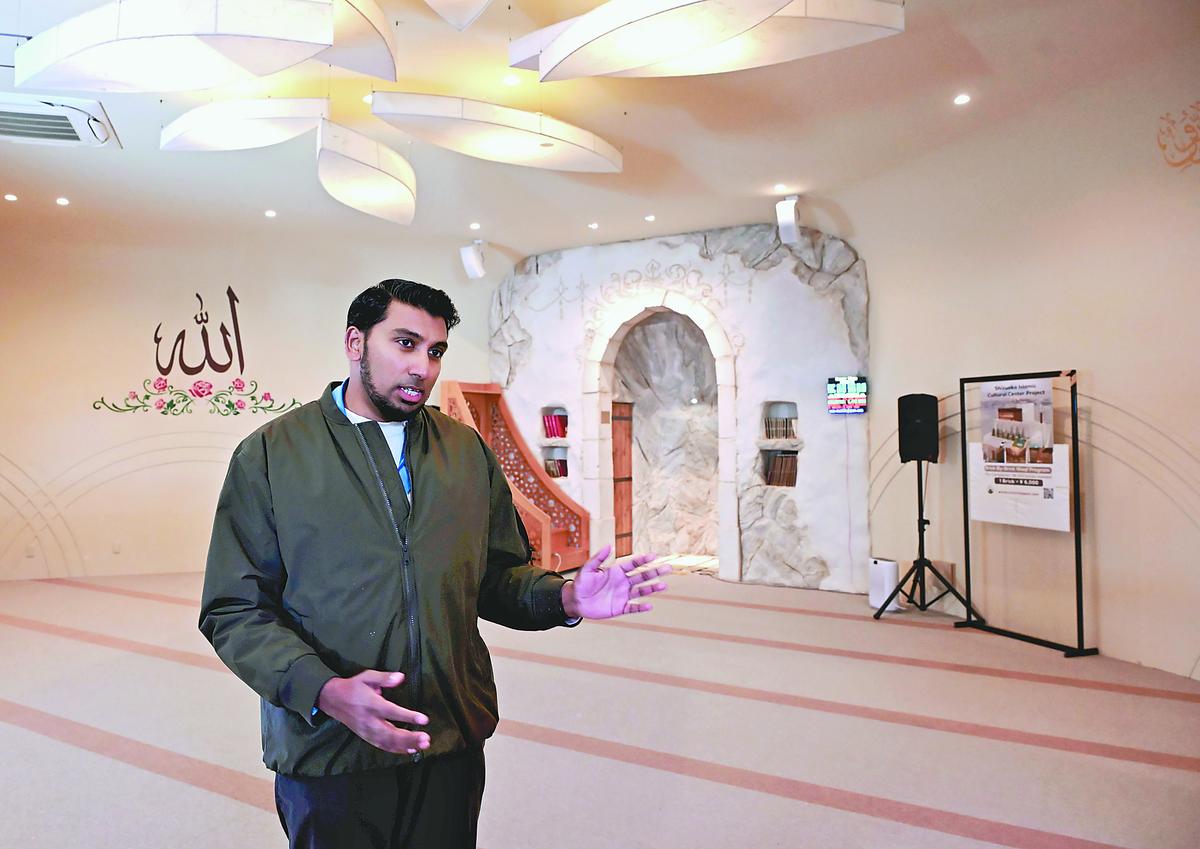
Nuhman Nazeem speaks at a mosque in Shizuoka.
7:00 JST, January 16, 2026
This is the sixth installment in a series of articles on coexistence with foreign residents and visitors.
***
The increase in facilities for foreigners has led to some friction with Japanese people. Places of worship for Muslims, or mosques, are one example.
Last autumn, opposition to the construction of a nine-story building near Okachimachi Station in Tokyo’s bustling Taito Ward spread online under the slogan of “Oppose the construction of a giant mosque.” Fears were stirred up that “a large number of Muslims will move in” and the Tokyo metropolitan government and Taito Ward government received emails and phone calls opposing the construction.
The building project has been promoted for about five years by the Islamic religious corporation As-Salaam Foundation in Tokyo.
“It is not huge. There will also be a restaurant floor, and the mosque will only occupy three floors of the building,” said Mohamed Nazeer, a representative of the foundation. He said the current mosque nearby has become too small due to a rapid increase in Muslim tourists, prompting the relocation.
He said the foundation explained the plan to the neighborhood and received no opposition. Last month, the foundation posted an explanation in Japanese at the site. “We will continue our efforts to gain understanding,” Nazeer said.
Opposition to a nonexistent plan for a mosque in Shizuoka spread online. Japan Dahwa Foundation, named in the posts, said it was forced to issue a denial on its website in October that “There is absolutely no such plan.”
It appears that a fundraising campaign for the future reconstruction of a mosque that was opened six years ago was misunderstood as “building a new mosque.”
A foundation official said, “We were taken aback by this unexpected situation.”
When constructing the current mosque, they discussed with local residents for nearly two years, mutually confirming agreements such as “no broadcasting outside the building” and “no street parking.” Nuhman Nazeem, 34, a Sri Lankan office worker who uses the mosque, emphasized its importance. “It often teaches Japan’s rules to newcomers and serves as both a place of prayer and communication,” he said.
Cemeteries for foreign residents in Japan are also an issue. Islam prohibits cremation and requires interment.
Since 2019, the Honjo Kodama Cemetery in Honjo, Saitama Prefecture, has accepted burials for Muslims. To date, 179 foreigners have been buried there.
A 52-year-old man, who has worked in the prefecture for over 20 years, buried his oldest daughter there. She died at age nine in 2022 due to illness.
“My daughter was born and raised in Japan. I wanted to bury her in a familiar place,” he said. Every time he has a day off, he offers prayers for his daughter.
Interment is not prohibited under the Cemetery and Burial Law. However, some residents express concerns about environmental impacts, prompting the city to conduct annual water quality surveys of a nearby irrigation pond.
According to statistics from the Immigration Services Agency, the number of foreign residents aged 65 and over reached a record high of 235,817 as of the end of June 2025. However, there are only about ten cemeteries permitting burial.
“What happens to those who worked for Japanese society after they die?” said Sosuke Hayakawa, 78, the cemetery’s manager.
Hidenori Ukai, a Buddhist priest and journalist knowledgeable about funeral issues, said, “The government needs to address this from a human rights perspective as well.”
Issues surrounding burial grounds have come up elsewhere. In Hiji Town, Oita Prefecture, an Islamic religious group planned to purchase town-owned land to establish a burial ground. However, a candidate opposing the cemetery won the 2024 mayoral election, effectively halting the plan. Miyagi Prefecture, which had also considered establishing a burial ground, scrapped the plan in September.
Professor Emeritus Hirofumi Tanada of Waseda University, an expert on Muslims in Japan, emphasizes the importance of mutual exchange.
“It is necessary to create opportunities for local residents and Muslims to meet face-to-face to understand each other’s daily lives and make efforts to accept one another,” he said.






Most Read
Popular articles in the past 24 hours
-

Toronto Blue Jays’ Kazuma Okamoto Blasts 1st HR of Spring
-
20 Trapped in Tokyo Skytree Lift, Rescued 5½ Hours Later
-
Japan Seeks to Counter China's Expanding Influence in Pacific by ...
-
Japan's Diet Begins Debate on Takaichi's Budget Plans, ‘Proactive...
-
Japan Asks U.S. Not to Worsen Tariffs; Chief Cabinet Secretary Ki...
-

Exhibition Featuring Yoshiharu Tsuge’s Manga World Underway in Ch...
-

CARTOON OF THE DAY (February 24)
-
Nikkei Rises Over 700 Points to Hit New Intraday High
Popular articles in the past week
-

Producer Behind Pop Group XG Arrested for Cocaine Possession
-

Japan, U.S. Name 3 Inaugural Investment Projects; Reached Agreeme...
-

iPS Treatments Pass Key Milestone, but Broader Applications Far f...
-
Tokyo Skytree's Elevator Stops, Trapping 20 People; All Rescued (...
-

Director Naomi Kawase's New Film Explores Heart Transplants in Ja...
-

Japan’s Major Real Estate Firms Expanding Overseas Businesses to ...
-
Survey Shows False Election Info Perceived as True
-

Milano Cortina 2026: Japan’s Mari Fukada Wins Gold in Women’s Sno...
Popular articles in the past month
-
Producer Behind Pop Group XG Arrested for Cocaine Possession
-

Japan PM Takaichi’s Cabinet Resigns en Masse
-

Japan Institute to Use Domestic Commercial Optical Lattice Clock ...
-

Man Infected with Measles Reportedly Dined at Restaurant in Tokyo...
-

Israeli Ambassador to Japan Speaks about Japan’s Role in the Reco...
-

Videos Plagiarized, Reposted with False Subtitles Claiming ‘Ryuky...
-

Man Infected with Measles May Have Come in Contact with Many Peop...
-

Prudential Life Insurance Plans to Fully Compensate for Damages C...
Top Articles in Society
-
Producer Behind Pop Group XG Arrested for Cocaine Possession
-
Man Infected with Measles Reportedly Dined at Restaurant in Tokyo Station
-
Man Infected with Measles May Have Come in Contact with Many People in Tokyo, Went to Store, Restaurant Around When Symptoms Emerged
-

Woman with Measles Visited Hospital in Tokyo Multiple Times Before Being Diagnosed with Disease
-
Australian Woman Dies After Mishap on Ski Lift in Nagano Prefecture
JN ACCESS RANKING
-
Producer Behind Pop Group XG Arrested for Cocaine Possession
-
Japan PM Takaichi’s Cabinet Resigns en Masse
-
Man Infected with Measles Reportedly Dined at Restaurant in Tokyo Station
-
Israeli Ambassador to Japan Speaks about Japan’s Role in the Reconstruction of Gaza
-
Videos Plagiarized, Reposted with False Subtitles Claiming ‘Ryukyu Belongs to China’; Anti-China False Information Also Posted in Japan