
Japan, EU to Cooperate on Battery Supply Chain, With an Eye on Reducing Dependence on China
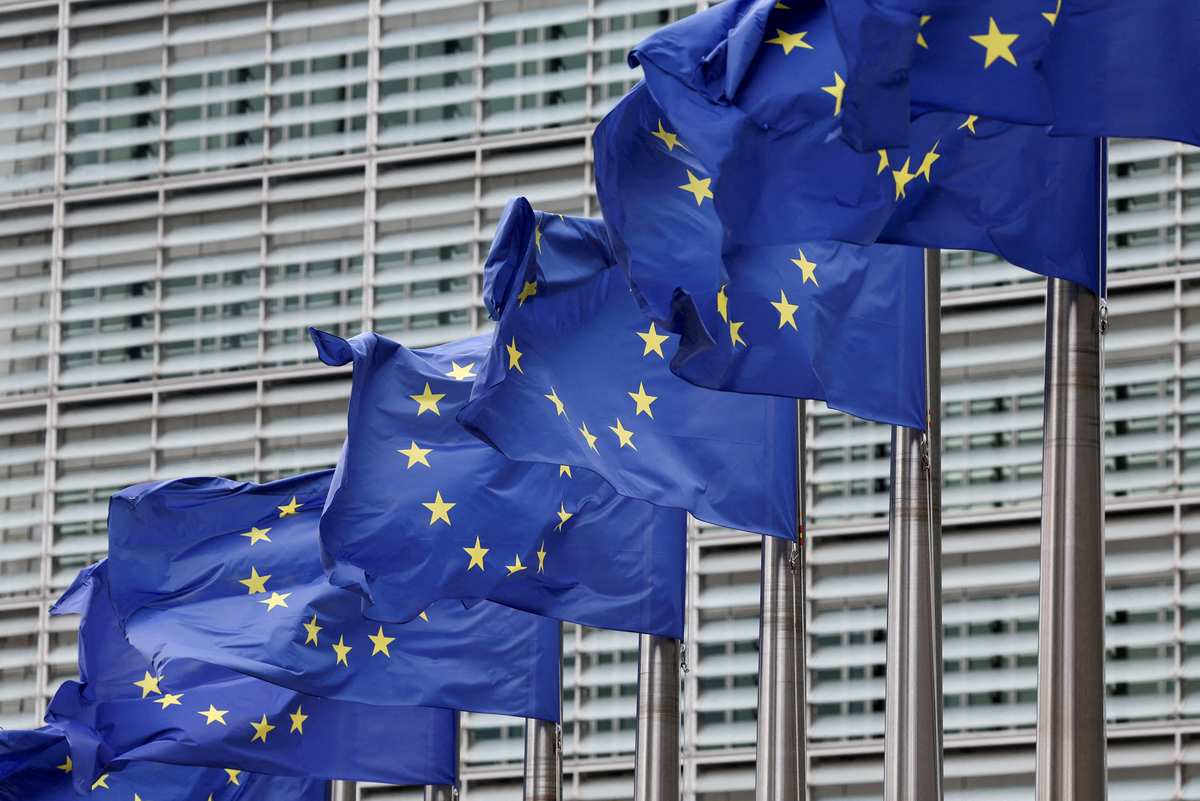
European Union flags flutter outside the EU Commission headquarters in Brussels.
15:54 JST, September 14, 2025
Japan and the European Union (EU) will begin a comprehensive partnership aimed at strengthening the supply chain for rechargeable batteries. Coinciding with European Commission Executive Vice President Stephane Sejourne’s visit to Japan, industry groups from Japan and Europe will sign a memorandum of understanding on Monday, according to government sources.
Including such items as cooperation on promoting recycling, the memorandum signals Japan and the EU’s intent to make progress in “reducing dependence on China” for rechargeable batteries from an economic security perspective.
The memorandum will include cooperative measures for battery recycling to promote raw material reuse. It also aims to advance data sharing on battery supply chains and foster company-to-company exchanges between Japan and Europe through exhibitions and information sharing to develop human resources for the battery industry.
This marks the first cooperative measures under the Japan-EU Competitiveness Alliance agreed upon by Japan and EU leaders in July.
On Tuesday, Prime Minister Shigeru Ishiba is expected to meet with Sejourne and reaffirm cooperation to strengthen Japan-EU supply chains, including for batteries.
Japan boasts advanced technology in the rechargeable battery field, particularly lithium-ion batteries. In 2015, Japan held half the global market share for automotive batteries used in electric vehicles and other items.
However, Chinese manufacturers have dominated the market in recent years. In 2023, China held about 60% of the market share, while Japanese companies accounted for only about 8%.
China began to impose export restrictions on graphite, essential for lithium-ion battery production, in 2023. Europe, where the adoption of EVs has rapidly been expanding, is increasingly concerned that a continued dependence on batteries produced by Chinese manufacturers poses higher economic security risks.
Therefore, Europe aims to enhance production capacity through collaboration between Japanese and European manufacturers. By reviewing subsidies and public procurement practices to prevent excessive price competition, Japan and Europe seek to foster an environment in which high-performance, safe batteries will receive market recognition while also promoting industry cooperation.



Most Read
Popular articles in the past 24 hours
-

3,000 Accounts Posting, Spreading Content Critical of Japan on X;...
-
My Spendthrift Mother Constantly Asks Me for Money
-
Japanese Students Use Traditional Pickle to Create Novel Wagashi ...
-

‘Dry Bonsai’ Gives New Life to Withered Trees, Allows Free Artist...
-
A Packed Bus Plunges off a Nepal Highway, Killing 19 and Injuring...
-
Dozens of Jewelry, Other Items Stolen After Glass Door, Showcases...
-

1.2 Mil. Rapeseed Flowers Attract Cute Birds, People in Aichi Pre...
-

Mexican Army Kills Leader of Powerful Jalisco New Generation Cart...
Popular articles in the past week
-

Japan PM Takaichi’s Cabinet Resigns en Masse
-

Man Infected with Measles Reportedly Dined at Restaurant in Tokyo...
-

Sanae Takaichi Elected Prime Minister of Japan; Keeps All Cabinet...
-
Japan's Govt to Submit Road Map for Growth Strategy in March, PM ...
-
Bus Carrying 40 Passengers Catches Fire on Chuo Expressway; All E...
-
U.S. Firm to Build Training Hub in Fukushima N-plant for Debris R...
-
Japan, U.S. Name 3 Inaugural Investment Projects; Reached Agreeme...
-

Riku-Ryu Pair Wins Gold Medal: Their Strong Bond Leads to Major C...
Popular articles in the past month
-
Japan PM Takaichi’s Cabinet Resigns en Masse
-

Japan Institute to Use Domestic Commercial Optical Lattice Clock ...
-

Israeli Ambassador to Japan Speaks about Japan’s Role in the Reco...
-
Man Infected with Measles Reportedly Dined at Restaurant in Tokyo...
-

Videos Plagiarized, Reposted with False Subtitles Claiming ‘Ryuky...
-

Man Infected with Measles May Have Come in Contact with Many Peop...
-

Prudential Life Insurance Plans to Fully Compensate for Damages C...
-
Woman with Measles Visited Hospital in Tokyo Multiple Times Befor...
Top Articles in Society
-

Producer Behind Pop Group XG Arrested for Cocaine Possession
-
Man Infected with Measles Reportedly Dined at Restaurant in Tokyo Station
-
Man Infected with Measles May Have Come in Contact with Many People in Tokyo, Went to Store, Restaurant Around When Symptoms Emerged
-
Woman with Measles Visited Hospital in Tokyo Multiple Times Before Being Diagnosed with Disease
-
Australian Woman Dies After Mishap on Ski Lift in Nagano Prefecture
JN ACCESS RANKING
-
Japan PM Takaichi’s Cabinet Resigns en Masse
-
Japan Institute to Use Domestic Commercial Optical Lattice Clock to Set Japan Standard Time
-
Israeli Ambassador to Japan Speaks about Japan’s Role in the Reconstruction of Gaza
-
Man Infected with Measles Reportedly Dined at Restaurant in Tokyo Station
-
Videos Plagiarized, Reposted with False Subtitles Claiming ‘Ryukyu Belongs to China’; Anti-China False Information Also Posted in Japan