
Stand-ins Found Taking Japanese Language Tests for Foreigners Seeking ‘Specified Skilled Worker’ Status
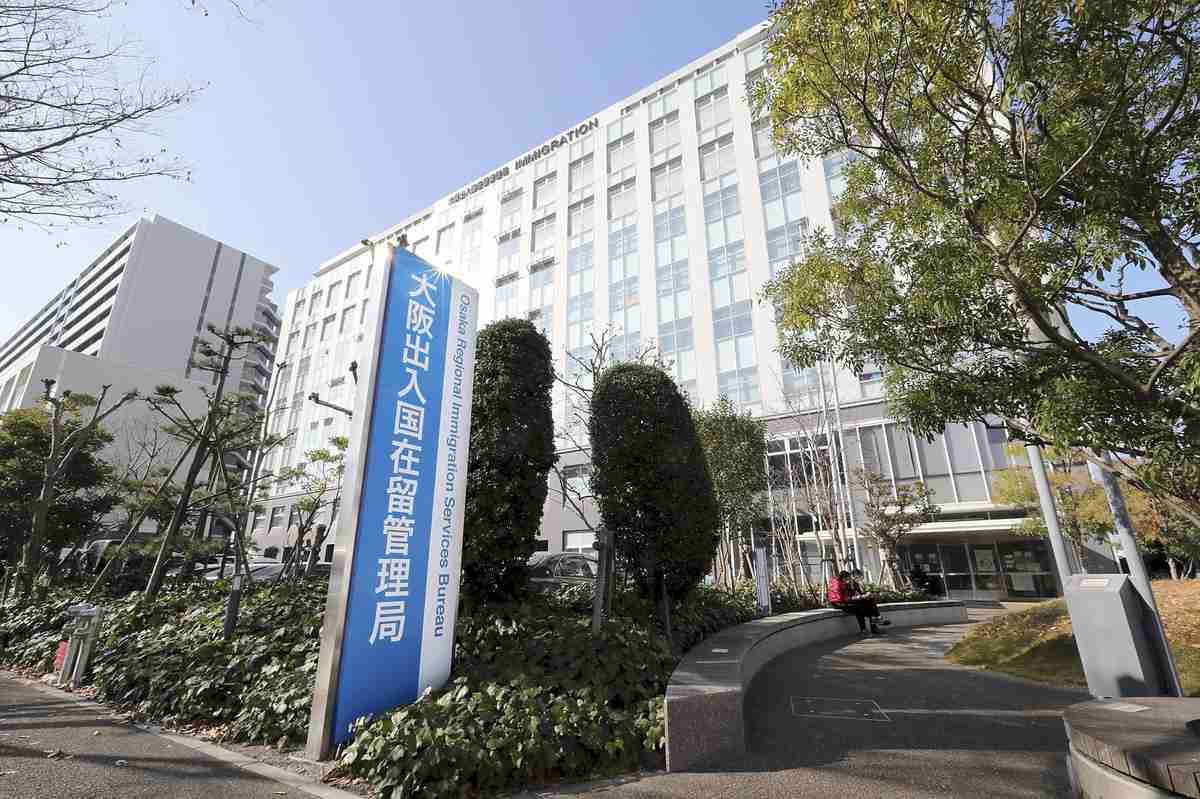
The Osaka Regional Immigration Bureau
2:00 JST, November 9, 2025
The Osaka prefectural police have uncovered a series of proxy test-taking cases in connection with Japanese language tests required for foreign workers to obtain the “specified skilled worker” residence status.
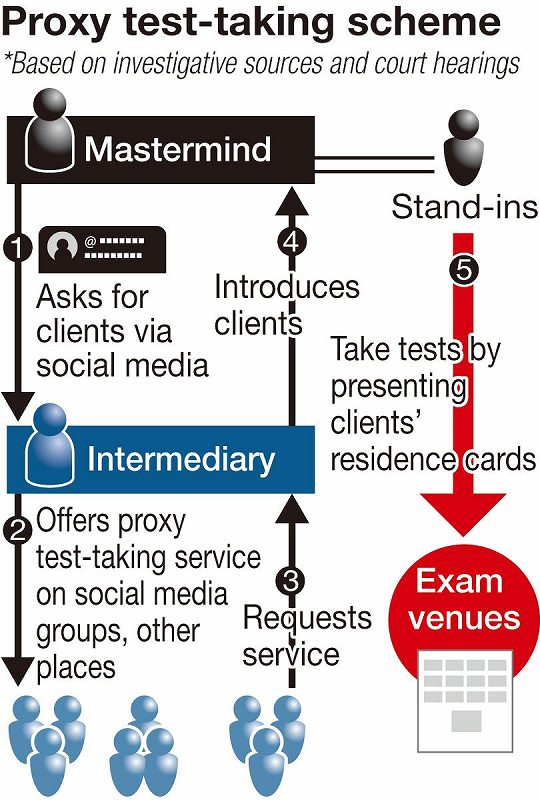
Investigations have revealed that proxy test-taking for the language exams has become a business on social media.
The mastermind behind the scheme looked for intermediaries through such messages posted in Vietnamese as: “We will pay ¥20,000 just for being introduced to a client.”
A 25-year-old Vietnamese man saw this post. He contacted a woman who had posted in a Vietnamese social media group that she “didn’t know what to do after failing the exam.” He offered to arrange for someone to take the test on her behalf.
The 31-year-old woman who served as the stand-in was provided by the mastermind. The remuneration for passing the exam was reportedly about ¥80,000 for the mastermind, about ¥20,000 for the intermediary and about ¥60,000 for the stand-in.
The intermediary was arrested in June and is currently on trial for violations of the Immigration Control and Refugee Recognition Law and other laws. He reportedly confessed to police that he had “organized the proxy test-taking for over 10 people via social media and received several tens of thousands of yen each time.”
Both the woman who requested the arrangement and the woman who acted as stand-in have been convicted over violations of the same law, among others.
The specified skilled worker system was established in 2019 to accept foreign nationals to work in sectors facing labor shortages. The workers under the system earn higher average monthly wages than the technical intern training program, which is aimed at transferring skills and technologies to developing countries.
All five Vietnamese women arrested by the Osaka prefectural police since December for requesting proxy test-takers were technical intern trainees. They reportedly confessed to police that they sought “to have their visa status changed to specified skilled worker.”
One of the five, aged 34, spoke to The Yomiuri Shimbun at the Osaka Regional Immigration Bureau in July before her deportation. She had married in Vietnam in 2019 but came to Japan as a technical intern trainee in January last year to help pay the high cost of medical treatment for her daughter, who has a disability.
While earning over ¥100,000 per month at a dry cleaner’s in Chiba Prefecture, she took a Japanese language test that would allow her to obtain specified skilled worker status, and a higher wage, for the third time last autumn. But she failed the test.
A Vietnamese acquaintance she had asked for advice introduced her to someone who asked if she would be willing to “hire someone to take the test for you for ¥160,000.” She agreed to do so.
She said that she was able to “pass the test” simply by mailing her residence card to a specified location.
The woman had her residence status converted to specified skilled worker and began working at a confectionery factory in Niigata Prefecture in March. Although she could hardly speak Japanese, her monthly wage doubled to ¥270,000. The following month, she was arrested.
According to the Immigration Services Agency, the number of foreign nationals staying in Japan under the specified skilled worker status was 1,621 in 2019, the year of launch. It exceeded 100,000 in 2022 and reached 284,466 last year.
There are two routes to obtain the specified skilled worker status.
One requires the person to pass both a Japanese language test and a skills test. In the other, a person who has successfully completed approximately three years of technical intern training can have their status converted.
The proportion of those who had obtained the status via the examination route was about 7% (115 people) in 2019. But that proportion had climbed to about 42% (118,630) last year.
“If exam fraud becomes rampant, it will lead to distrust in the entire policy on accepting foreign nationals. Relevant agencies must thoroughly implement countermeasures to ensure the exam’s fairness,” said Yu Korekawa, director of the Department of International Research and Cooperation at the National Institute of Population and Social Security Research.


Related Tags


Most Read
Popular articles in the past 24 hours
-

Japanese Shipping Giants Halt Strait of Hormuz Transit as Iran Co...
-

U.S. Launches Attacks on Iran: Avoid Escalation of Conflict by An...
-

Sawtooth Roof Factory Stands as Monument to Ashikaga Textile Hist...
-

Parents of Japanese Teen Shot in U.S. Strive for Gun Control
-

Disinformation Spreads About Team Mirai, Ballot Readers; Online P...
-

Asahi Breweries to Stage Comeback with New Product in April; Comp...
-

Bank of Japan Deputy Governor Says Rate Hikes Likely to Continue
-

Japanese Government Bonds Rally, Yields Tumble as Iran Strikes Sp...
Popular articles in the past week
-

Nepal Bus Crash Kills 19 People, Injures 25 Including One Japanes...
-

Milano Cortina 2026: Japanese Gold Medalist Figure Skater Miura S...
-

Tokyo Spends Big on Children, Wins Over Parents
-

McDonald's Japan Raises Prices; Big Mac to Cost ¥500, Double Chee...
-

Japan’s Miura, Kihara Announce Withdrawal from Figure Skating Wor...
-

Exhibition Featuring Yoshiharu Tsuge’s Manga World Underway in Ch...
-

Yokohama to Test Out Renewable-Powered Offshore Floating Data Cen...
-

BOJ Keeping Eye on Economy and Takaichi's ‘Proactive Fiscal Polic...
Popular articles in the past month
-

Producer Behind Pop Group XG Arrested for Cocaine Possession
-

Japan PM Takaichi’s Cabinet Resigns en Masse
-

Man Infected with Measles Reportedly Dined at Restaurant in Tokyo...
-

Israeli Ambassador to Japan Speaks about Japan’s Role in the Reco...
-

Videos Plagiarized, Reposted with False Subtitles Claiming ‘Ryuky...
-

Man Infected with Measles May Have Come in Contact with Many Peop...
-

Prudential Life Insurance Plans to Fully Compensate for Damages C...
-

Woman with Measles Visited Hospital in Tokyo Multiple Times Befor...
Top Articles in Society
-
Producer Behind Pop Group XG Arrested for Cocaine Possession
-
Man Infected with Measles Reportedly Dined at Restaurant in Tokyo Station
-
Man Infected with Measles May Have Come in Contact with Many People in Tokyo, Went to Store, Restaurant Around When Symptoms Emerged
-
Woman with Measles Visited Hospital in Tokyo Multiple Times Before Being Diagnosed with Disease
-

Bus Carrying 40 Passengers Catches Fire on Chuo Expressway; All Evacuate Safely
JN ACCESS RANKING
-
Producer Behind Pop Group XG Arrested for Cocaine Possession
-
Japan PM Takaichi’s Cabinet Resigns en Masse
-
Man Infected with Measles Reportedly Dined at Restaurant in Tokyo Station
-
Israeli Ambassador to Japan Speaks about Japan’s Role in the Reconstruction of Gaza
-
Videos Plagiarized, Reposted with False Subtitles Claiming ‘Ryukyu Belongs to China’; Anti-China False Information Also Posted in Japan