
Supreme Court to decide on constitutionality of gender reassignment surgery requirement
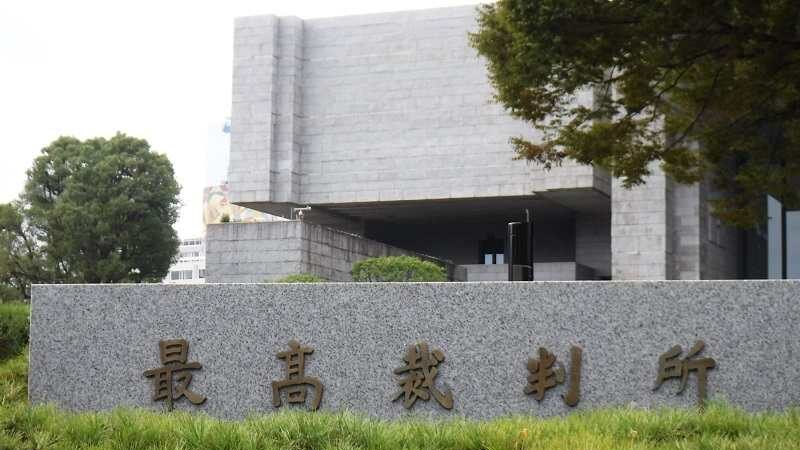
The Supreme Court
2:00 JST, December 9, 2022
The Supreme Court is poised to decide on the constitutionality of a legal provision that effectively requires people to undergo surgical sterilization if they want to change the gender recorded on their family registers.
A person diagnosed with gender identity disorder is seeking to change the gender on official family records from male to female without undergoing gender reassignment surgery.
The Supreme Court ruled that the provision was “constitutional” in 2019.
The inability to reproduce based on the original gender is a requirement for changing gender on family registers under a law that came into effect in 2004. As a result, people have undergone surgery to remove their reproductive organs in order to change their gender on family registers, enabling them to get official documents under their preferred gender.
In the latest case, the person is claiming that gender reassignment surgery imposes a heavy burden physically, financially and socially, and that the provisions of the related law violate the Constitution, which guarantees equality under the law and states that all people should be respected as individuals.
The Okayama Family Court rejected the person’s petition in May 2020, and the Okayama Branch of the Hiroshima High Court rejected the appeal in September 2020. The person subsequently filed a special appeal to the Supreme Court.
In the 2019 case, the Supreme Court ruled that the provision was constitutional, noting that it is based on considerations to avoid problems with parent-child relationships and confusion in society if a child is born according to the reproductive function of a parent before a gender change, for example.
However, the court also noted that “the conformity of the provision to the Constitution requires constant examination. In a supplemental opinion, two judges stated that doubts exist about the constitutionality of the provision, pointing out that whether or not people undergo surgery should essentially be a matter of free will.
Normally, the Supreme Court’s hearings are conducted by a petty bench of five judges. However, when a new constitutional decision is necessary, the case is referred to the Grand Bench attended by all 15 Supreme Court judges.
The 2019 ruling was made by a petty bench, but the Supreme Court decided Wednesday to refer the latest case to the Grand Bench.



Most Read
Popular articles in the past 24 hours
-

National Intelligence Council: Proposed Body Must Be Utilized To ...
-
Japan's Defense Ministry: North Korea Appears to Have Fired Balli...
-

Aichi Fisheries Cooperatives Use Smart Tech to Farm Triploid Oyst...
-

CARTOON OF THE DAY (March 14)
-
Japan's Lower House Passes Budget Proposal; Could Be Delayed in U...
-

Fukuoka: American Beavers at Japan's Zoo Create Sculptures; Visit...
-
Hyogo: Family in Japan Produces Traditional Charcoal to Help Pres...
-

Election Fraud in Tokyo’s Ota Ward: Use Incident As Catalyst for ...
Popular articles in the past week
-
Japan Figure Skating Legend Yuzuru Hanyu Is Proud Disaster Surviv...
-
Govt to Utilize ODA for Ensuring Economic Security; Securing Ener...
-

15 Measles Patients Confirmed in Tokyo in Past 6 Days; 1 May Have...
-

Massive Sewer Pipe Found Jutting Out of Highway in Osaka
-
Japan Govt to Tighten Requirements to Receive Permanent Residency...
-
JR Tokai Breaks Ground on Yamanashi Maglev Station; Will Be Part ...
-

Power Outage Forces About 980 Passengers in Yokohama to Walk to T...
-

Beckoning Cats Get Makeover to Fit Modern Lifestyles with Sleek D...
Popular articles in the past month
-

Producer Behind Pop Group XG Arrested for Cocaine Possession
-

Japan PM Takaichi’s Cabinet Resigns en Masse
-

Man Infected with Measles Reportedly Dined at Restaurant in Tokyo...
-
Japan Figure Skating Legend Yuzuru Hanyu Is Proud Disaster Surviv...
-

iPS Treatments Pass Key Milestone, but Broader Applications Far f...
-

Sanae Takaichi Elected Prime Minister of Japan; Keeps All Cabinet...
-

South Korea Tightens Rules on Foreigners Buying Homes in Seoul Me...
-

Nepal Bus Crash Kills 19 People, Injures 25 Including One Japanes...
Top Articles in Society
-
Producer Behind Pop Group XG Arrested for Cocaine Possession
-
Man Infected with Measles Reportedly Dined at Restaurant in Tokyo Station
-
15 Measles Patients Confirmed in Tokyo in Past 6 Days; 1 May Have Come into Contact with Many in Shibuya
-

Bus Carrying 40 Passengers Catches Fire on Chuo Expressway; All Evacuate Safely
-

Ibaraki Pref.’s 1st Foreign Bus Driver Hired in Tsukuba
JN ACCESS RANKING
-
Producer Behind Pop Group XG Arrested for Cocaine Possession
-
Japan PM Takaichi’s Cabinet Resigns en Masse
-
Man Infected with Measles Reportedly Dined at Restaurant in Tokyo Station
-
Japan Figure Skating Legend Yuzuru Hanyu Is Proud Disaster Survivor and Gold Medalist, Vows to Continue Support Efforts
-
iPS Treatments Pass Key Milestone, but Broader Applications Far from Guaranteed