
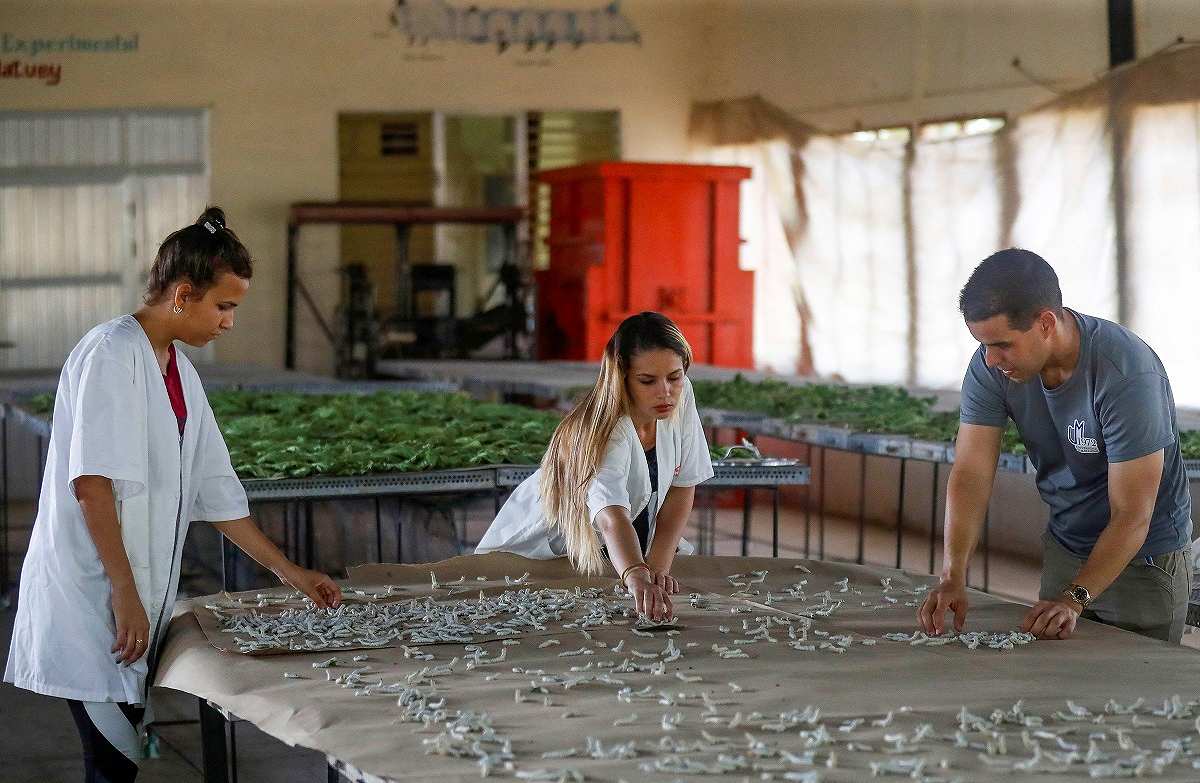
Workers prepare silkworms to be fed at a farm in Matanzas, Cuba, on May 16.
16:24 JST, June 6, 2024
INDIO HATUEY, Cuba (Reuters) — Cuban biochemist Dayron Martin, dressed in a white lab coat and jeans, looks over a table swarming with silkworms with the admiration of a proud father.
Hundreds of the cream-colored caterpillars squiggle across a bed of dark green mulberry leaves — the worm’s preferred food — freshly plucked from bushes just outside his laboratory.
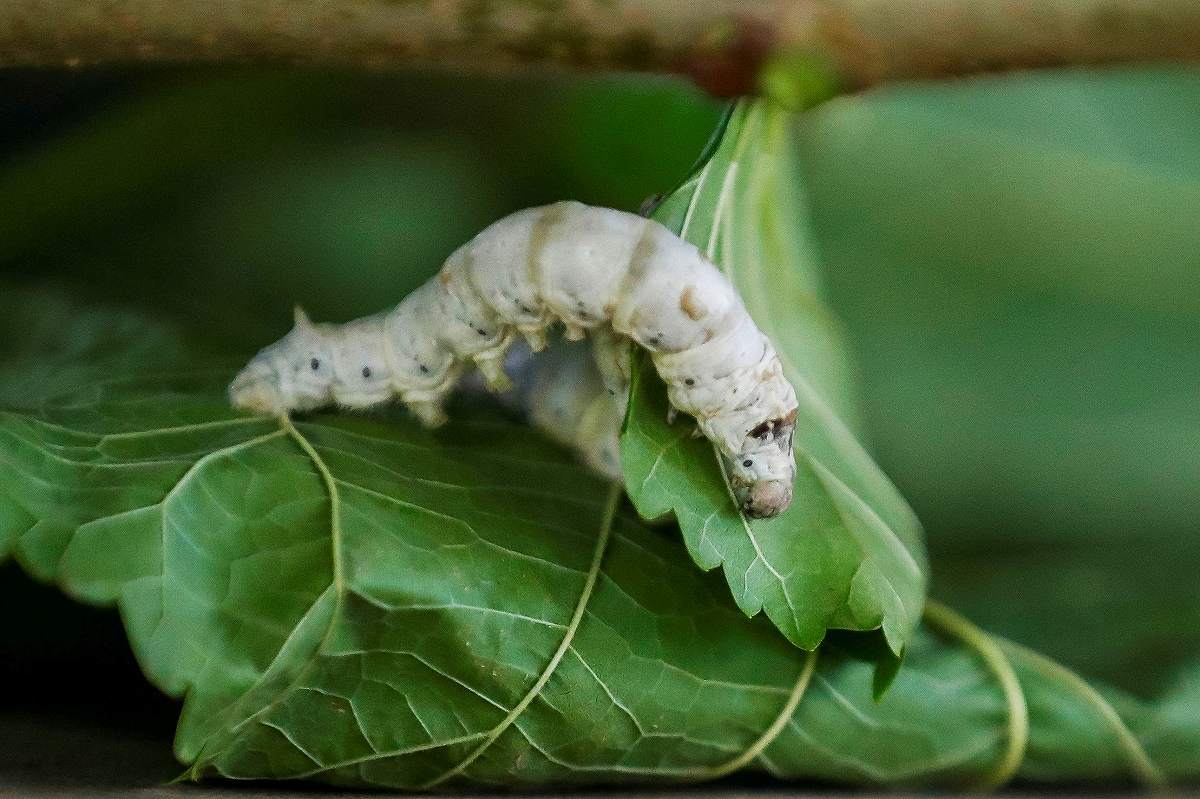
A silkworm eats mulberry leaves at a farm.
This is the payoff, he says: The worms — native to Asia but happily transplanted to Cuba — are spinning a fine, lustrous white fiber that he hopes will be used by Cuban artisans to create products ranging from dresses to blouses, shirts and even cosmetics.
Martin, who heads the ArteSeda project at the “Indio Hatuey Experimental Station” in western Cuba, oversees the process start to finish, from rearing the caterpillars to producing their preferred food and then harvesting their silk.
“It’s an ancestral process more than 5,000 years old,” Martin says of the traditional Chinese practice, though he notes that it has only recently been adopted in Cuba.
“[The worms] need very specific conditions,” he said.
Cuba fits the bill. Balmy temperatures, airy trade winds and a year-round growing season assure a happy home and plenty of feed for the worms, which have made the transition to their new home.
Silkworms are the larva of a moth (Bombyx mori) native to Asia. They spin a cocoon of silk fiber that has long been used as the source of commercial silk.
The Cuban project, which began with funding from the European Union, the Cuban government and more recently from the French government, aims to teach artisans the process and allow them to raise their own worms from scratch.
Artisans then use their silk to create home-grown products to sell to tourists and locals alike, said Dalgi Chaviano, who owns a small shop in Havana that produces cosmetics, crafts, soaps, fabrics and prints.
Chaviano said she recently received authorization from the local government to raise mulberry plants and silkworms in Havana, allowing her to produce her own raw material.
“Every day I discover something new to do with the silk,” Chaviano said as she put the finishing touches on a pair of red silk earrings.
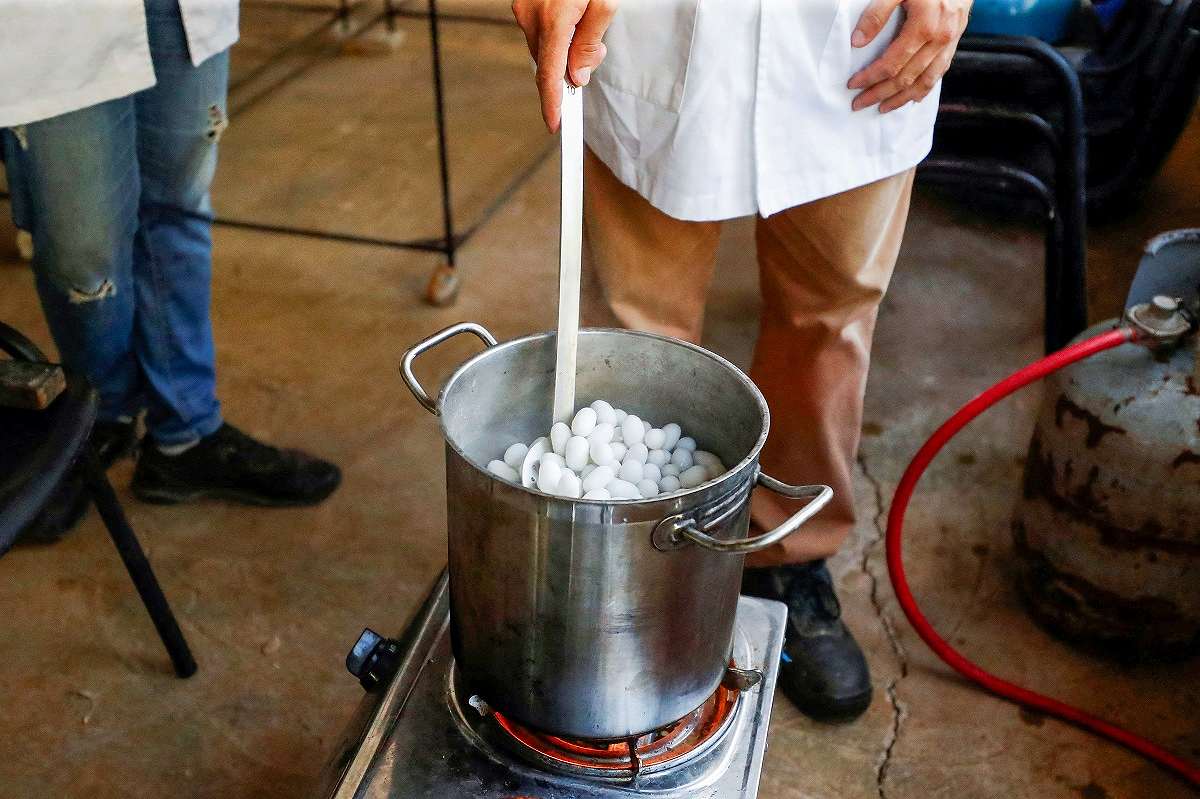
Workers prepare cocoons for silk production.
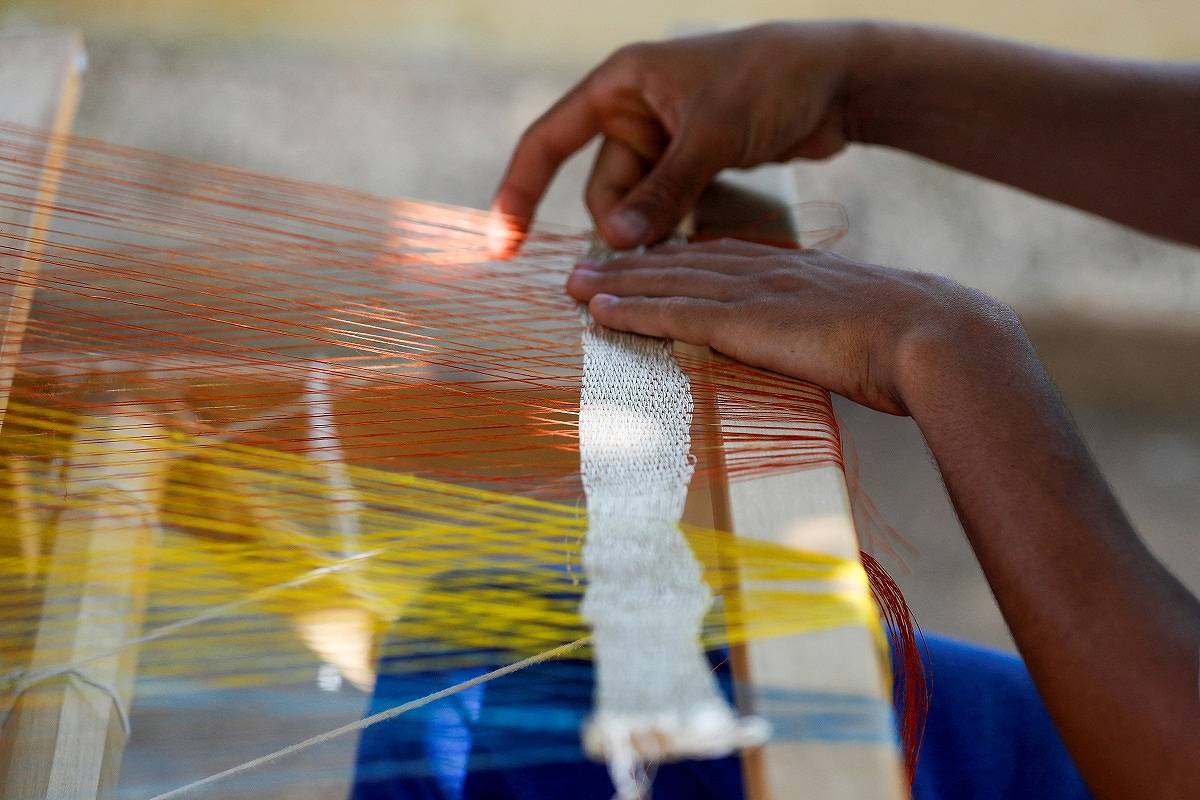
A person weaves a silk cloth.






Most Read
Popular articles in the past 24 hours
-

Young People in Japan Grapple with Social Media Addiction
-

Ruling Coalition Calls for Opposition Participation in ‘National ...
-

Japan’s Updated ‘Free and Open Indo-Pacific’ Initiative to Streng...
-
Takaichi Chats with Tunku Tunku, Interactive Mascot for Internati...
-

Myaku-Myaku Fan Event Held in Osaka; ‘Its Butt is so Cute!’ Says ...
-

Milano Cortina 2026: Riku Miura and Ryuichi Kihara Win Japan̵...
-

Ginza West Confectionery Store Staying True to Its Roots
-

Munich Security Conference: Japan Has Growing Role To Play in Reb...
Popular articles in the past week
-

Videos Plagiarized, Reposted with False Subtitles Claiming ‘Ryuky...
-

Woman with No Overseas Travel History Infected with Measles in Na...
-

Milano Cortina 2026: Kokomo Murase Comes Out on Top After Overcom...
-

CRA Leadership Election Will Center on Party Rebuilding; Lower Ho...
-

Tokyo’s New Record-Breaking Fountain Named ‘Tokyo Aqua Symphony’
-

Crime in Japan Ticks Up for 4th Straight Year
-

Japanese Constitutional Revision Debate Expected to be Revived Af...
-

Chemical Tanker Collides with Fishing Boat off Kobe with No Fuel ...
Popular articles in the past month
-

Japan Institute to Use Domestic Commercial Optical Lattice Clock ...
-

Israeli Ambassador to Japan Speaks about Japan’s Role in the Reco...
-

Man Infected with Measles May Have Come in Contact with Many Peop...
-

China Eyes Rare Earth Foothold in Malaysia to Maintain Dominance,...
-

Prudential Life Insurance Plans to Fully Compensate for Damages C...
-

Woman with Measles Visited Hospital in Tokyo Multiple Times Befor...
-

Australian Woman Dies After Mishap on Ski Lift in Nagano Prefectu...
-

Foreign Snowboarder in Serious Condition After Hanging in Midair ...
Top Articles in Science & Nature
-
Japan Institute to Use Domestic Commercial Optical Lattice Clock to Set Japan Standard Time
-

Space Mission Demonstrates Importance of International Cooperation, Astronaut Kimiya Yui Says
-
Japan to Face Shortfall of 3.39 Million Workers in AI, Robotics in 2040; Clerical Workers Seen to Be in Surplus
-

Record 700 Startups to Gather at SusHi Tech Tokyo in April; Event Will Center on Themes Like Artificial Intelligence and Robotics
JN ACCESS RANKING
-
Japan Institute to Use Domestic Commercial Optical Lattice Clock to Set Japan Standard Time
-
Israeli Ambassador to Japan Speaks about Japan’s Role in the Reconstruction of Gaza
-
Man Infected with Measles May Have Come in Contact with Many People in Tokyo, Went to Store, Restaurant Around When Symptoms Emerged
-
Prudential Life Insurance Plans to Fully Compensate for Damages Caused by Fraudulent Actions Without Waiting for Third-Party Committee Review
-
Woman with Measles Visited Hospital in Tokyo Multiple Times Before Being Diagnosed with Disease