
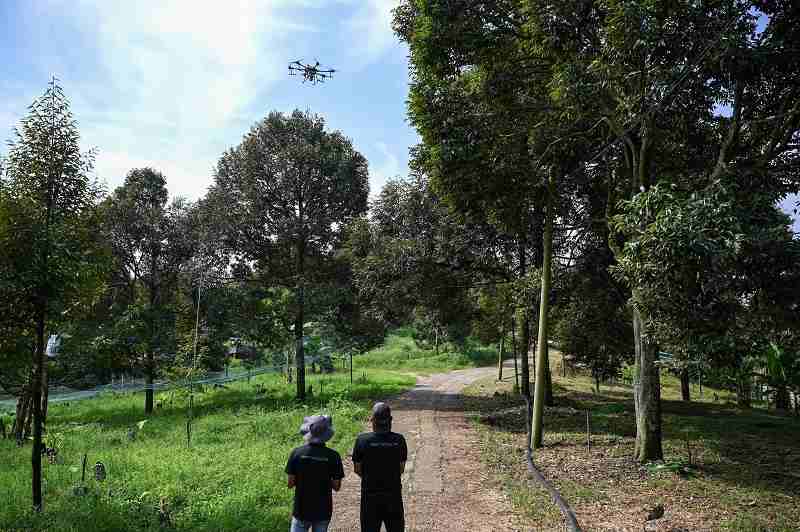
Workers use a drone to spray pesticide on durian trees at the Top Fruit durian farm in Batu Pahat, Johor State, Malaysia, on April 26.
19:40 JST, June 8, 2022
BATU, Malaysia (AFP-Jiji) — Drones spraying pesticide, sensors taking soil readings, sprinklers that squirt fertilizer at the touch of a button — a Malaysian plantation is using high-tech methods to boost its crop of pungent durians.
Grown across Southeast Asia, fans hail the spiky durian as the “king of fruit” due to its bittersweet flavors and creamy golden flesh, and it is particularly popular in China.
But to its detractors it is the world’s smelliest fruit, with an overpowering stench like rotting food that has seen it banned in hotels and on public transport across the region.
In a competitive market, Malaysian grower Top Fruits Plantations has turned to high-tech methods to lift its output.
“It’s a much faster way to get more consistent results,” managing director Tan Sue Sian told AFP during a recent tour of one of the company’s plantations in Batu Pahat, southern Johor state.
Using technology allows farmers to gauge more precisely how much fertilizer and water the trees need, he said.
“When you give what is needed, the fruit will be much more consistent. The shape will be better, and the aroma will be better,” added Tan, who has more than 30 years’ experience growing durians.
Key in the drive are sensors spread across 160 hectares of Top Fruits’ 283-hectare Batu Pahat plantation, relaying data on soil quality and content to workers’ handheld devices.
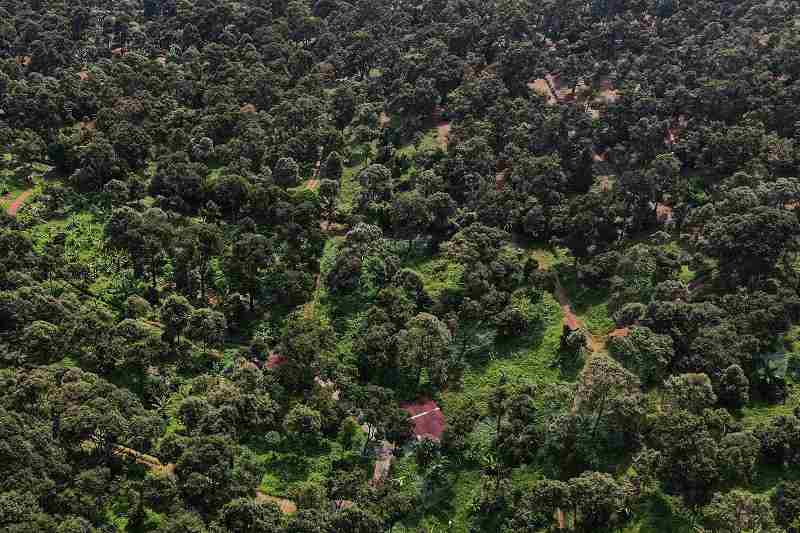
Durian fruit trees
The sensors are boxes mounted on poles, connected to the soil by a series of cables. By 2024, the entire plantation should be kitted out with them.
Sprinklers attached to a network of pipes are remotely activated to spray fertilizer onto the trees, while drones hover over the plantation squirting pesticide.
Such methods are unheard of on Malaysian durian farms, where growers typically rely on a large labor force, instinct and educated guesses.
The investment has been hefty — Top Fruits has spent about four million ringgit ($900,000) over the past three years on the technology.
But it has led to an increase in yields of 40%, while its workforce has shrunk by 30%.
The company is now able to produce 800 tons of durians from its farms every year, with more than 80% of its crop frozen in factories to be exported overseas, much of it to China.
In a bid to further boost their crop, Top Fruits is getting into research by setting up a lab and collaborating with local universities.
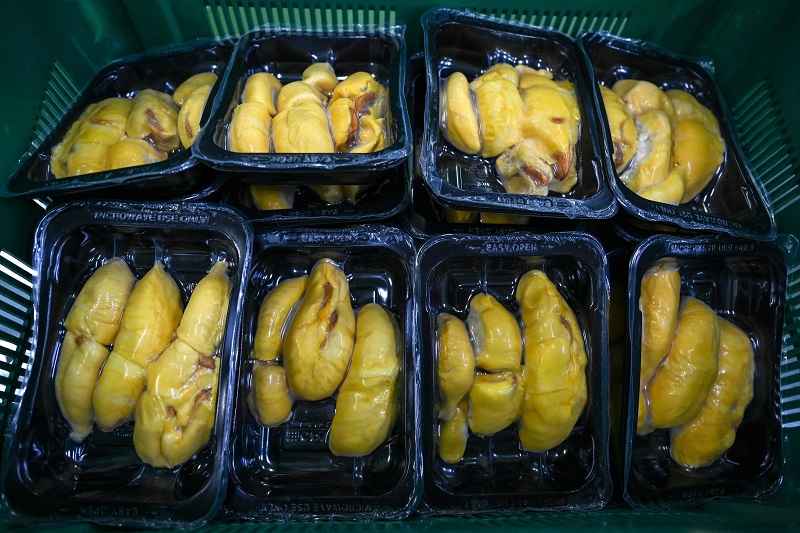
Packs of vacuum-sealed durian fruit





Most Read
Popular articles in the past 24 hours
-

Japan Train Company to Increase Fares, Including in Tokyo Metropo...
-

Japan Govt to Tighten Requirements to Receive Permanent Residency...
-

Tail of ANA Plane Struck Runway During Landing in Houston; No Inj...
-

Samurai Japan Holds First Practice in Miami; Team Will Play again...
-

Medical Care at Home and Disasters: Ensure Systems to Provide Con...
-

Iran Targets Busiest International Airport as Top UN Body Demands...
-

Japan to Face Venezuela in World Baseball Classic Quarterfinals
-

CARTOON OF THE DAY (March 12)
Popular articles in the past week
-

Japan Figure Skating Legend Yuzuru Hanyu Is Proud Disaster Surviv...
-

Nippon Life Insurance's U.S. Arm Sues OpenAI Over Legal Assistanc...
-

Ibaraki Pref.'s 1st Foreign Bus Driver Hired in Tsukuba
-
Govt to Utilize ODA for Ensuring Economic Security; Securing Ener...
-
Massive Sewer Pipe Found Jutting Out of Highway in Osaka
-

Beckoning Cats Get Makeover to Fit Modern Lifestyles with Sleek D...
-
Japan Govt Survey Finds Just 10% of Workers Want Working Hours to...
-
Japan's 2nd Round of U.S. Investments May Be Worth Over $100 Bill...
Popular articles in the past month
-

Producer Behind Pop Group XG Arrested for Cocaine Possession
-

Japan PM Takaichi’s Cabinet Resigns en Masse
-

Man Infected with Measles Reportedly Dined at Restaurant in Tokyo...
-

Videos Plagiarized, Reposted with False Subtitles Claiming ‘Ryuky...
-
Japan Figure Skating Legend Yuzuru Hanyu Is Proud Disaster Surviv...
-

iPS Treatments Pass Key Milestone, but Broader Applications Far f...
-

Sanae Takaichi Elected Prime Minister of Japan; Keeps All Cabinet...
-

Nepal Bus Crash Kills 19 People, Injures 25 Including One Japanes...
Top Articles in Science & Nature
-
iPS Treatments Pass Key Milestone, but Broader Applications Far from Guaranteed
-

Record 700 Startups to Gather at SusHi Tech Tokyo in April; Event Will Center on Themes Like Artificial Intelligence and Robotics
-
iPS Cell Products for Parkinson’s, Heart Disease OK’d for Commercialization by Japan Health Ministry Panel
-
Japan to Ban Use of Power Banks on Airplanes
-
Japan Govt Aims for 10-Fold Increase in Computing Power of Supercomputers for AI Use at Universities, Research Institutions
JN ACCESS RANKING
-
Producer Behind Pop Group XG Arrested for Cocaine Possession
-
Japan PM Takaichi’s Cabinet Resigns en Masse
-
Man Infected with Measles Reportedly Dined at Restaurant in Tokyo Station
-
Videos Plagiarized, Reposted with False Subtitles Claiming ‘Ryukyu Belongs to China’; Anti-China False Information Also Posted in Japan
-
Japan Figure Skating Legend Yuzuru Hanyu Is Proud Disaster Survivor and Gold Medalist, Vows to Continue Support Efforts