
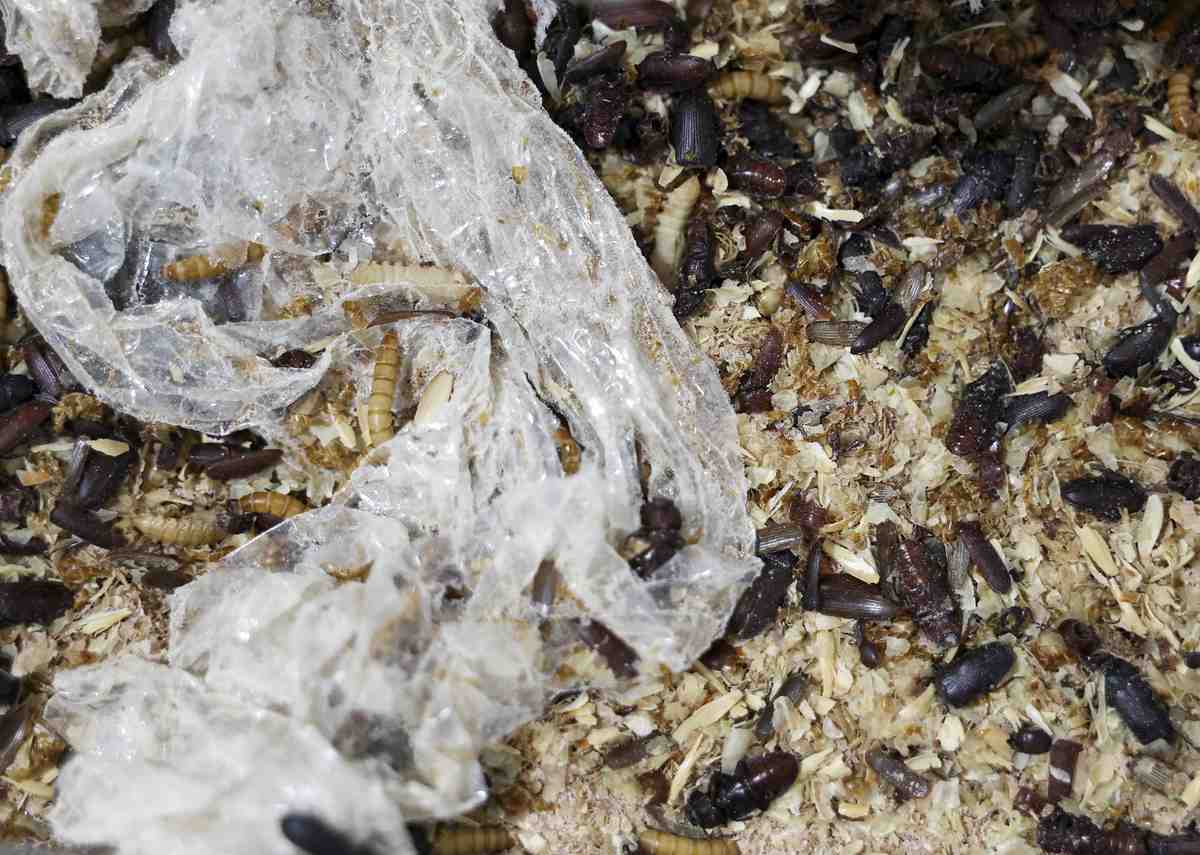
Mealworms are seen with plastic. Photos were taken in a research facility of the Institute for Biology in Belgrade on Aug. 18.
17:58 JST, September 3, 2025
BELGRADE (Reuters) — Serbian scientists have been experimenting with mealworms as a way to break down polystyrene.
Larisa Ilijin, a principal research fellow at Belgrade’s Institute for Biology, said the scientists had discovered that mealworms can digest various plastics, including polystyrene, which is used in packaging, insulation and food containers.
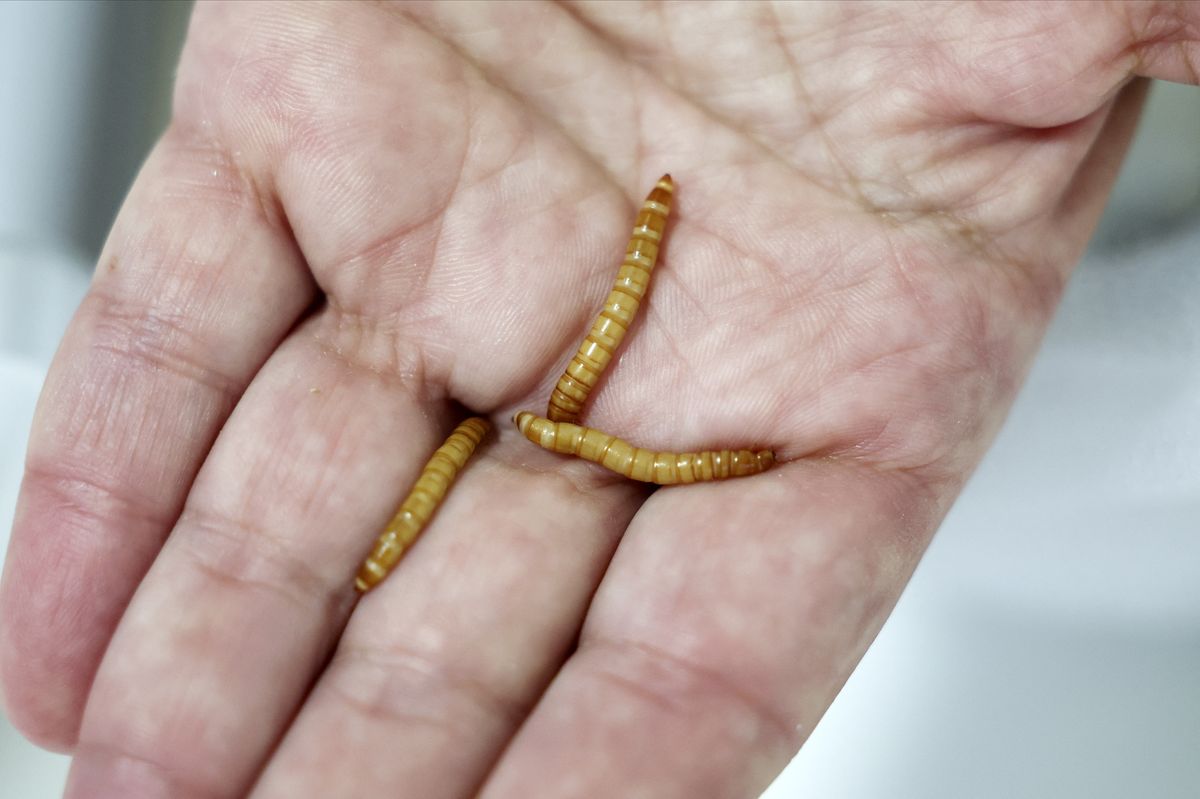
Larisa Ilijin, a principal research fellow, shows mealworms.
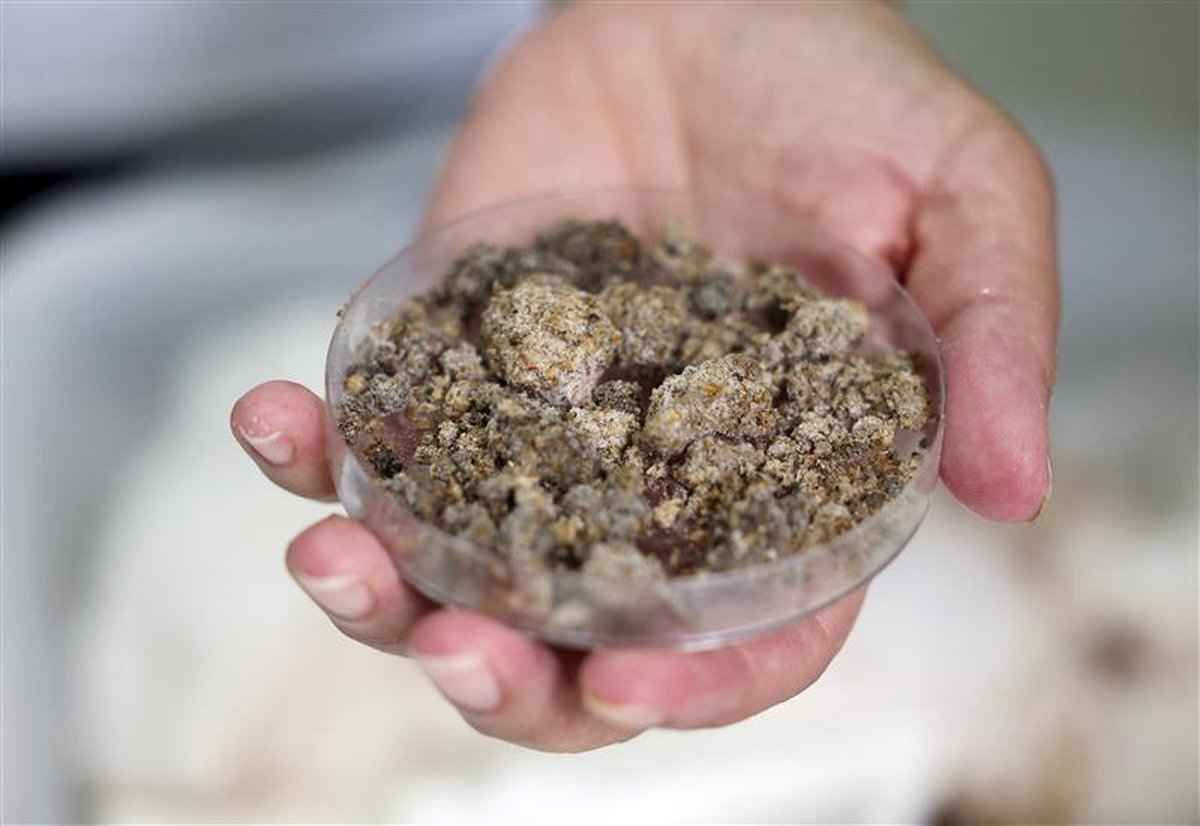
Larisa Ilijin shows raw protein material obtained from mealworms.
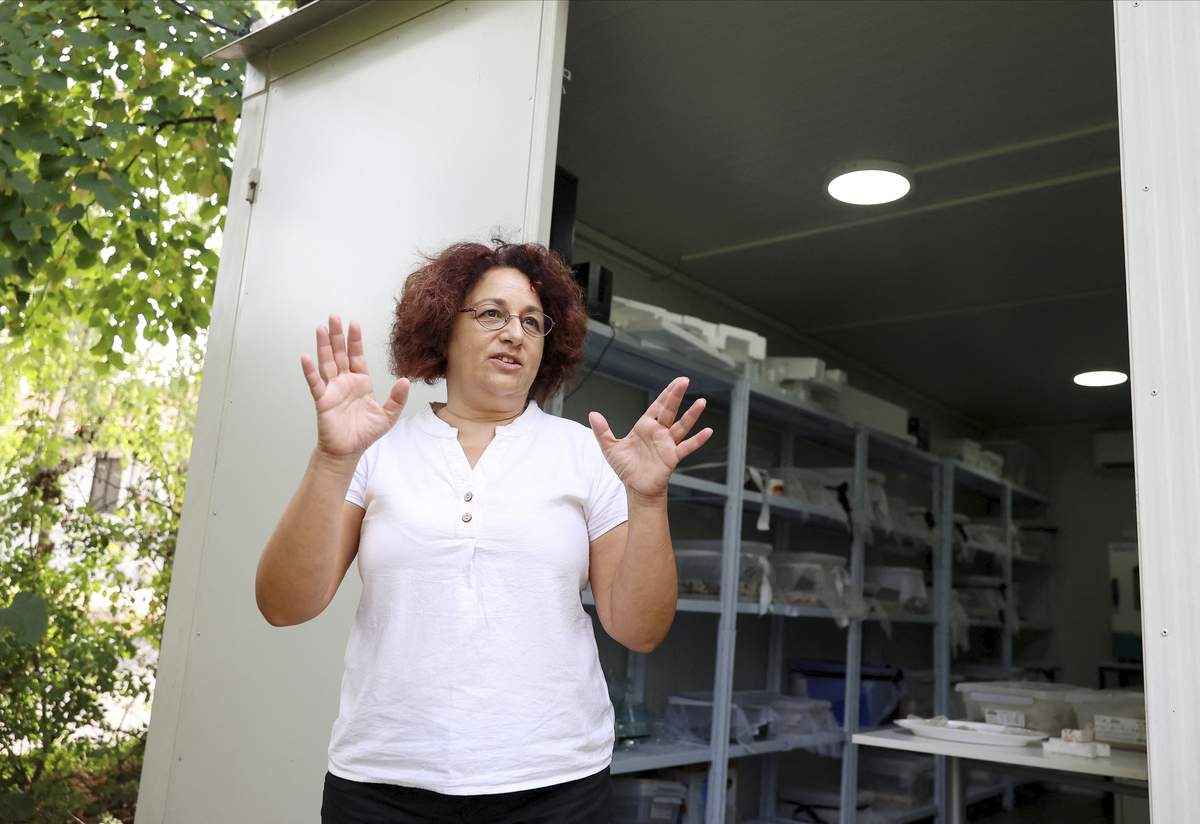
Larisa Ilijin speaks to Reuters about mealworms.
In the project, endorsed by the government and the United Nations’ agency for international development, UNDP, and other international donors, they have been including the polystyrene in the regular food of the larval form of the yellow mealworm beetle, or Tenebrio molitor.
They habitually eat more or less anything, but need training to eat the plastic products.
“We have larvae that have been adapted over a long time to biodegrade plastic, to be as efficient as possible in the process,” Ilijin told Reuters.
She said the bacteria living in their guts break down the plastic into carbon dioxide and water, and showed no evidence of leaving microplastic residue in their innards or feces.
The work builds on similar research projects in the U.S. and Africa.
Serbia, which hopes to join the EU, recycles only 15% of municipal waste, far below the EU’s 55% target, and less than 2% of household waste.
Over 84% of waste ends up in about 3,000 landfill sites, often unregulated and filled with plastic, cardboard, paper and organic waste. It is looking for ways to meet EU waste treatment standards.
“Styrofoam takes over 500 years to decompose in nature … this would be one of the good ways for solving the problem of plastic waste in nature,” Ilijin said.
The institute has given Belgrade-based Belinda Animals several containers of the mealworms. It is now breeding them and hoping to attract a network of similar farms.
“When breaking down 1 kilogram of Styrofoam, larvae emit one to two grams of carbon dioxide … If we incinerate it … [Styrofoam] emits over 4,000 times more,” owner Boris Vasiljev said.
He also envisages the larvae being used as animal feed, should it reach a large commercial scale.
The use of mealworms is still in its infancy, Ilijin said, as Serbia still needs to adopt regulations that would allow the use and sale of insect products for animal fodder.








Most Read
Popular articles in the past 24 hours
-

Hawaii Museum on Tsunami Including Japan's 2011 Disaster at Risk ...
-

Japan Train Company to Increase Fares, Including in Tokyo Metropo...
-

Tail of ANA Plane Struck Runway During Landing in Houston; No Inj...
-

Samurai Japan Holds First Practice in Miami; Team Will Play again...
-

Iran Targets Busiest International Airport as Top UN Body Demands...
-

Japan to Face Venezuela in World Baseball Classic Quarterfinals
-

North Korean Leader Kim and His Daughter Try out New Pistols at S...
-

Japan Govt to Tighten Requirements to Receive Permanent Residency...
Popular articles in the past week
-

Japan Figure Skating Legend Yuzuru Hanyu Is Proud Disaster Surviv...
-

Nippon Life Insurance's U.S. Arm Sues OpenAI Over Legal Assistanc...
-

Ibaraki Pref.'s 1st Foreign Bus Driver Hired in Tsukuba
-
Govt to Utilize ODA for Ensuring Economic Security; Securing Ener...
-

Massive Sewer Pipe Found Jutting Out of Highway in Osaka
-

Amid Strait of Hormuz Blockade, Shipping Companies Scramble to Ge...
-

Beckoning Cats Get Makeover to Fit Modern Lifestyles with Sleek D...
-
Japan Govt Survey Finds Just 10% of Workers Want Working Hours to...
Popular articles in the past month
-

Producer Behind Pop Group XG Arrested for Cocaine Possession
-

Japan PM Takaichi’s Cabinet Resigns en Masse
-

Man Infected with Measles Reportedly Dined at Restaurant in Tokyo...
-

Videos Plagiarized, Reposted with False Subtitles Claiming ‘Ryuky...
-

iPS Treatments Pass Key Milestone, but Broader Applications Far f...
-

Sanae Takaichi Elected Prime Minister of Japan; Keeps All Cabinet...
-

Nepal Bus Crash Kills 19 People, Injures 25 Including One Japanes...
-

South Korea Tightens Rules on Foreigners Buying Homes in Seoul Me...
Top Articles in Science & Nature
-
iPS Treatments Pass Key Milestone, but Broader Applications Far from Guaranteed
-

Record 700 Startups to Gather at SusHi Tech Tokyo in April; Event Will Center on Themes Like Artificial Intelligence and Robotics
-
iPS Cell Products for Parkinson’s, Heart Disease OK’d for Commercialization by Japan Health Ministry Panel
-

Japan to Ban Use of Power Banks on Airplanes
-
Japan Govt Aims for 10-Fold Increase in Computing Power of Supercomputers for AI Use at Universities, Research Institutions
JN ACCESS RANKING
-
Producer Behind Pop Group XG Arrested for Cocaine Possession
-
Japan PM Takaichi’s Cabinet Resigns en Masse
-
Man Infected with Measles Reportedly Dined at Restaurant in Tokyo Station
-
Videos Plagiarized, Reposted with False Subtitles Claiming ‘Ryukyu Belongs to China’; Anti-China False Information Also Posted in Japan
-
iPS Treatments Pass Key Milestone, but Broader Applications Far from Guaranteed