
Takaichi Leverages Motives of Defunct, Extant Factions to Gain Votes to Win LDP Presidency, Runoff Strategy Pays Off
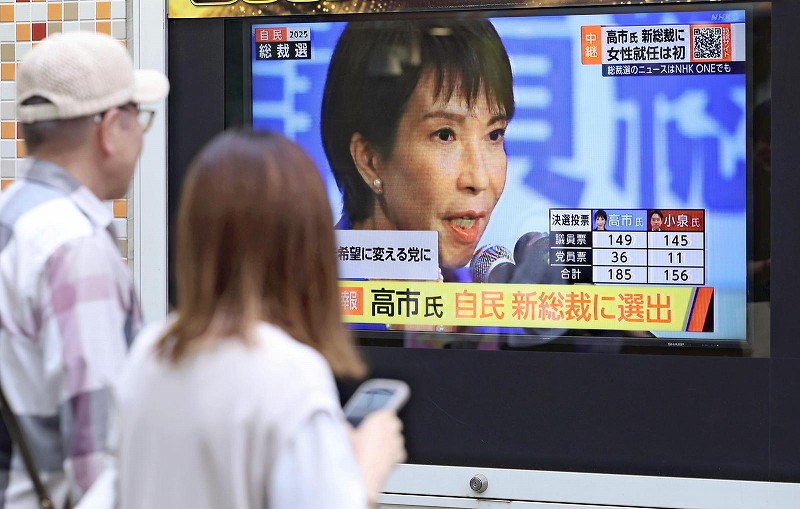
Passersby look at a TV screen showing the news of Sanae Takaichi winning the Liberal Democratic Party presidential election in Tokyo on Saturday.
6:00 JST, October 6, 2025
Former economic security minister Sanae Takaichi leveraged hidden motives to rake in votes to win the runoff of Saturday’s Liberal Democratic Party presidential election.
Takaichi, 64, garnered substantial support from rank-and-file party members and members of LDP-affiliated bodies, defeating Agriculture, Forestry and Fisheries Minister Shinjiro Koizumi, 44, who had been considered to be favored among LDP Diet members.
As the party is facing declining momentum, many LDP lawmakers felt the need to follow the wishes of rank-and-file party members and members of LDP-affiliated bodies. Also, the motives and rivalries of defunct and extant factions ultimately helped Takaichi drive to victory.
During the campaign, Takaichi lagged behind in securing the votes of LDP lawmakers, so her camp placed more emphasis on gathering votes from rank-and-file party members and members of LDP-affiliated bodies, groups among which she had strength. Her camp also worked to persuade Diet members — in the event of a runoff — to vote for the candidate who garnered the most votes from rank-and-file members and members of LDP-affiliated bodies.
In the final stretch of the campaign, lawmakers in her camp launched a phone blitz targeting Diet members in the other candidates’ camps, persistently stressing that rank-and-file party members hold views that are closer to those of voters in the public.
In the first round of voting, Takaichi secured a decisive 35-vote lead over Koizumi among rank-and-file party members and members of LDP-affiliated bodies, a result that aligned with her aim.
In her pre-runoff speech, Takaichi said, “Rank-and-file party members and people across the nation are watching [this race] with bated breath,” stirring up LDP lawmakers keenly aware of future elections.
One lawmaker who voted for Takaichi said: “If you ignore the will of the people, you’ll get a backlash at elections. That’s the way many lawmakers would think.”
Aso’s revenge
Within the party, many did not see Takaichi’s victory coming. Behind it lay intense maneuvering among a still-extant faction and now-defunct factions.
“We must properly spread our conservative wings,” LDP Supreme Adviser Taro Aso said in phone calls to his faction members on Saturday morning. As the leader of the only remaining LDP faction, he informed members of the faction’s intention to vote for Takaichi in the runoff.
The decision stemmed from his belief that the LDP needs to hold onto its conservative supporters. The fact that Koizumi’s camp had several lawmakers who were not on good terms with Aso also affected the decision, according to a source in the faction.
Aso, who supported Takaichi in the runoff of the leadership race last September, got his revenge this time and left the venue with a beaming smile.
Even a defunct faction, which was seen as distancing itself from conservative Takaichi, experienced an unexpected development.
Former LDP Secretary General Toshimitsu Motegi, 69, who also ran in the race, believed Koizumi would gain the upper hand in the runoff and saw strong support within his own camp for the agricultural minister.
However, in reality, many in Motegi’s camp expressed support for Takaichi, who has strong backing among rank-and-file party members, and in the end, the majority of the now-defunct faction led by Motegi shifted their support to Takaichi.
In addition, votes also flowed to Takaichi from members of the now-defunct faction led by former Prime Minister Fumio Kishida, which rallied behind Prime Minister Shigeru Ishiba under Kishida’s instruction in the previous LDP leadership race’s runoff.
Dysfunctional sign
“The signal was to use the right hand, but I followed what rank-and-file party members wanted,” a lawmaker in Chief Cabinet Secretary Yoshimasa Hayashi’s camp revealed after the runoff. Several other lawmakers in his camp echoed the remarks.
The lawmaker was referring to a planned signal meant to unify the Hayashi camp for the runoff. If House of Representatives member Masatoshi Ishida — the first one from the Hayashi camp to vote in the runoff — cast his vote with his right hand, it meant a ballot for Koizumi, and with his left hand, for Takaichi. However, several lawmakers in his camp decided to support Takaichi in the end, and the signal did not function effectively.
Hayashi, 64, was a senior member of the defunct Kishida faction. However, Kishida distanced himself from Hayashi during the campaign, and dissatisfaction with his stance contributed to the defections in the runoff voting.
Kishida did not make it clear about who to support, but many in Hayashi’s camp saw the former prime minister as leaning toward Koizumi. Kishida and Hayashi are rivals vying for influence among former members of the defunct Kishida faction.
“If Kishida had properly supported Hayashi, we could have united and acted together in the runoff,” said a senior member of the Hayashi camp.


Related Tags




Most Read
Popular articles in the past 24 hours
-

Voters Using AI to Choose Candidates in Japan's Upcoming General ...
-

Japan's Snow-Clad Beauty: Camellia Flowers Seen in Winter Bloom a...
-

Monkey Strikes Junior High School Girl from Behind in Japan's Yam...
-
Genichiro Inokuma's Mural in Ueno Station That Gave Hope in Postw...
-

Senior Japanese Citizens Return to University to Gain Knowledge, ...
-
Heavy Snow Linked to 30 Deaths across Japan since Late Jan.; JMA ...
-
Tokyo Police Arrest Head of Resignation Assistance Firm
-

Foreign and Security Policy: Political Parties Must Discuss How T...
Popular articles in the past week
-

Japan Institute to Use Domestic Commercial Optical Lattice Clock ...
-
Australian Woman Dies After Mishap on Ski Lift in Nagano Prefectu...
-
Foreign Snowboarder in Serious Condition After Hanging in Midair ...
-

Chinese Embassy in Japan Reiterates Call for Chinese People to Re...
-

Narita Airport, Startup in Japan Demonstrate Machine to Compress ...
-

Toyota Motor Group Firm to Sell Clean Energy Greenhouses for Stra...
-

Sakie Yokota, Last Surviving Parent of a North Korea Abductee, Ur...
-

Beer Yeast Helps Save Labor, Water Use in Growing Rice; Govt Hope...
Popular articles in the past month
-

Univ. in Japan, Tokyo-Based Startup to Develop Satellite for Disa...
-

JAL, ANA Cancel Flights During 3-day Holiday Weekend due to Blizz...
-
China Confirmed to Be Operating Drilling Vessel Near Japan-China ...
-

China Eyes Rare Earth Foothold in Malaysia to Maintain Dominance,...
-
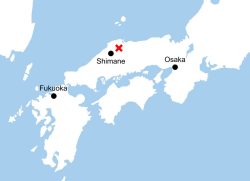
M6.2 Earthquake Hits Japan's Tottori, Shimane Prefectures; No Tsu...
-
Japan Institute to Use Domestic Commercial Optical Lattice Clock ...
-

Japan, Qatar Ministers Agree on Need for Stable Energy Supplies; ...
-

Japan, Italy to Boost LNG Cooperation; Aimed at Diversifying Japa...
Top Articles in Politics
-
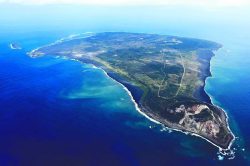
Japan Seeks to Enhance Defense Capabilities in Pacific as 3 National Security Documents to Be Revised
-

Japan Tourism Agency Calls for Strengthening Measures Against Overtourism
-

Japan’s Prime Minister: 2-Year Tax Cut on Food Possible Without Issuing Bonds
-
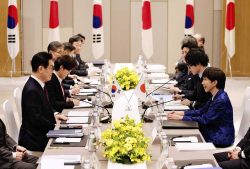
Japan-South Korea Leaders Meeting Focuses on Rare Earth Supply Chains, Cooperation Toward Regional Stability
-

Japanese Government Plans New License System Specific to VTOL Drones; Hopes to Encourage Proliferation through Relaxed Operating Requirements
JN ACCESS RANKING
-
Univ. in Japan, Tokyo-Based Startup to Develop Satellite for Disaster Prevention Measures, Bears
-
JAL, ANA Cancel Flights During 3-day Holiday Weekend due to Blizzard
-
China Confirmed to Be Operating Drilling Vessel Near Japan-China Median Line
-
China Eyes Rare Earth Foothold in Malaysia to Maintain Dominance, Counter Japan, U.S.
-
Japan Institute to Use Domestic Commercial Optical Lattice Clock to Set Japan Standard Time