
Govt to Offer Cybersecurity for Infrastructure Operators; Hospitals, Water Utilities to be Protected from Malware
Computer code is projected onto a hooded man in this illustration made on May 13, 2017.
15:15 JST, May 15, 2024
The government will begin offering a free cybersecurity service to medical institutions and other operators of critical infrastructure as well as universities and research institutes, according to government sources.
The service is intended to prevent connections to malicious websites, which contain malware designed to steal information. The government aims to create a system to protect infrastructure that directly affects people’s lives.
The government has judged it necessary to take new measures against cyber-attacks as it is becoming increasingly wary of attacks aimed at stealing information related to advanced technologies.
The National center of Incident readiness and Strategy for Cybersecurity (NISC) has allocated ¥4.93 billion in this fiscal year’s budget to strengthen cybersecurity at government agencies and other bodies. NISC plans to implement the envisaged free cybersecurity service as part of specific measures.
While critical infrastructure operators as well as universities and research institutes have taken measures to defend against cyber-attacks, the government will provide more capable services to raise the overall level of cybersecurity in Japan, which is said to be vulnerable. Through these measures, the government also aims to prevent the outflow of cutting-edge technology to outside parties.
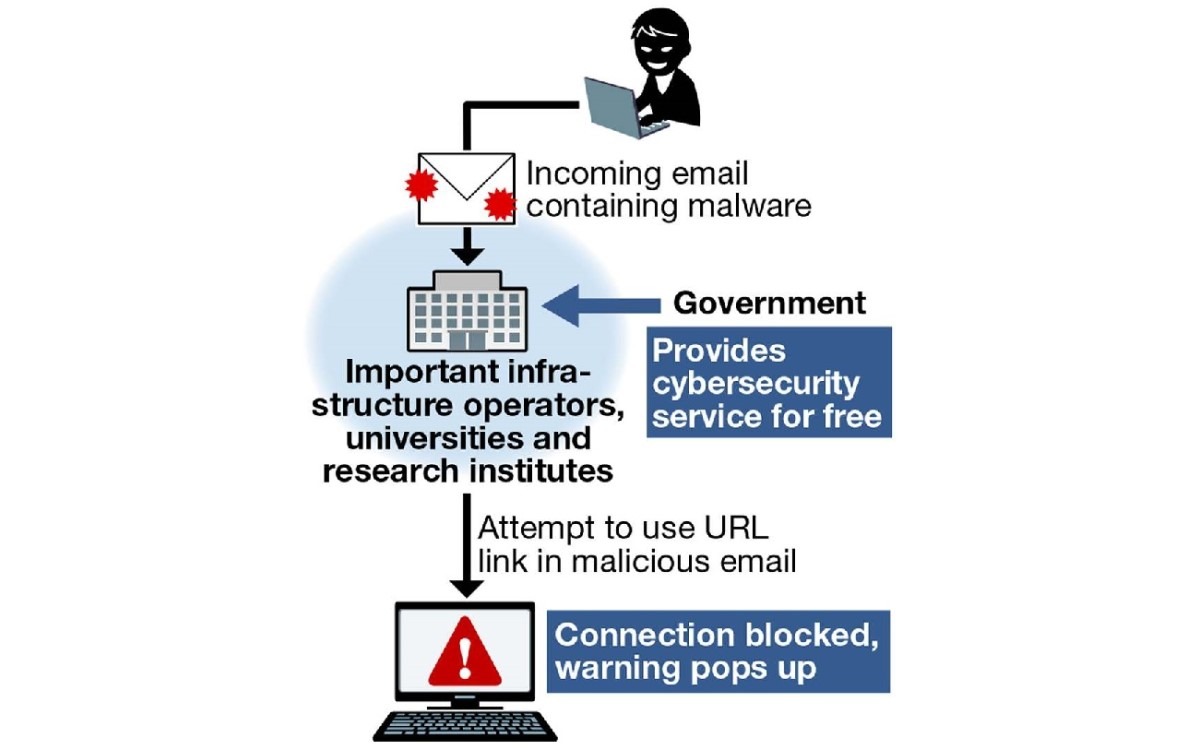
Cybersecuirity service to be offered by govt
The planned service, called the Protective Domain Name System, or Protective DNS, is already being introduced in the United States, the United Kingdom and other countries. If a user is mistakenly going to connect to a phishing site that steals personal information through a URL sent by email or other means, the system will block the connection or issue a warning. A warning is also displayed if a user tries to download a suspicious file likely to contain malware.
The service is expected to be provided to operators of infrastructure such as medical institutions and water utilities, in which malfunctions would have a significant impact on people’s lives. It will also likely be offered to universities, research institutes and independent administrative institutions engaged in advanced technology research. The government will call for the use of the service through the Cabinet Office, the Education, Culture, Sports, Science and Technology Ministry and other relevant ministries and agencies.
Information on malicious sites obtained through the use of the service will be accumulated and analyzed by NISC and will also be used to further improve the service’s capabilities.
In recent years, there have been a series of cyber-attacks on medical institutions, universities and research institutes. In March, a medical institution in Kagoshima Prefecture was attacked and was forced to restrict some of its medical services.






Popular Articles
Popular articles in the past 24 hours
-

Bank of Japan Considered U.S. Tariffs, Coming Shunto Wage Hike Ta...
-
Ruling Parties Finalize Tax System Reform Outline, with Hike of T...
-

Bullet Train Bento Features Herring, Salmon, Squid to Celebrate H...
-

Japan to Support Central Asia in Developing Logistic Network, Foc...
-

Kumamoto: Trams to Continue Accepting IC Cards after Strong Oppos...
-

Loan to Ukraine: Risk of Kyiv Exhausting Its War Funds Averted
-

Govt Eyes 20 Measures to Curb Mega Solar Power Plants, Plans to E...
-

Kochi: Hopes Rise For Shoebill Baby Birth; Pair Seen Enacting Cou...
Popular articles in the past week
-
Israeli Tourists Refused Accommodation at Hotel in Japan’s Nagano...
-

Tsukiji Market Urges Tourists to Avoid Visiting in Year-End
-
China to Impose Sanctions on Shigeru Iwasaki, Former Head of Japa...
-
U.S. Senate Resolution Backs Japan, Condemns China's Pressure
-

Japan to Support Central Asian Logistics Route That Bypasses Russ...
-

Speed Skater Yukino Yoshida Clinches Ticket to Milan
-

Kenta Maeda Joins Rakuten Eagles; Returns from American MLB to Ja...
-

Sharp Decline in Number of Chinese Tourists But Overall Number of...
Popular articles in the past month
-
Keidanren Chairman Yoshinobu Tsutsui Visits Kashiwazaki-Kariwa Nu...
-
Imports of Rare Earths from China Facing Delays, May Be Caused by...
-
University of Tokyo Professor Discusses Japanese Economic Securit...
-
Japan Pulls out of Vietnam Nuclear Project, Complicating Hanoi's ...
-

Govt Aims to Expand NISA Program Lineup, Abolish Age Restriction
-
Blanket Eel Trade Restrictions Rejected
-

Key Japan Labor Group to Seek Pay Scale Hike
-
M4.9 Earthquake Hits Tokyo, Neighboring Prefectures
"Politics" POPULAR ARTICLE
-
Japan to Support Central Asian Logistics Route That Bypasses Russia, Plan to Be Part of Upcoming Summit in Tokyo
-
Japan to Tighten Screening of Foreigners’ Residential Status by Providing Information of Nonpayment of Taxes
-
Takaichi Cabinet Approval Holds at 72% as Voters Back Aggressive Fiscal Stimulus, Child Benefits
-

Chinese, Russian Bombers Flew Unusual Path by Heading Toward Tokyo; Move Likely Meant to Intimidate Japan
-

Takaichi Meets Many World Leaders at G20 Debut in Johannesburg; Speaks with Heads of Countries Including Italy, U.K., Germany, India
JN ACCESS RANKING
-
Keidanren Chairman Yoshinobu Tsutsui Visits Kashiwazaki-Kariwa Nuclear Power Plant; Inspects New Emergency Safety System
-
Imports of Rare Earths from China Facing Delays, May Be Caused by Deterioration of Japan-China Relations
-
University of Tokyo Professor Discusses Japanese Economic Security in Interview Ahead of Forum
-
Japan Pulls out of Vietnam Nuclear Project, Complicating Hanoi’s Power Plans
-
Govt Aims to Expand NISA Program Lineup, Abolish Age Restriction