
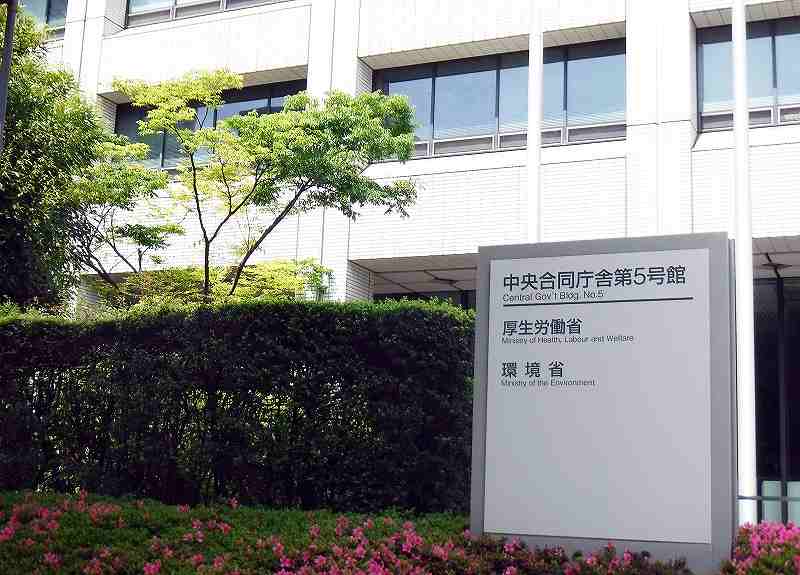
The Health, Labor and Welfare Ministry in Chiyoda ward, Tokyo.
17:47 JST, October 27, 2022
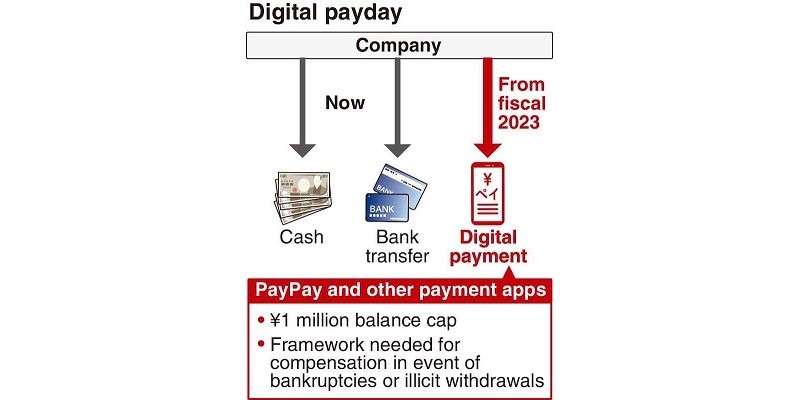
Workers will soon be able to get their salaries paid directly into digital wallet apps without the funds going through banks, following a government decision to lift a ban on e-money salary payments.
The ministry is set to screen prospective service providers from April next year, and the selected companies are expected to launch services as soon as necessary procedures have been completed.
User balances will be capped at ¥1 million yen, and the operators of money transfer services will be required to have a system in place to protect user deposits in the event of bankruptcies or illicit withdrawals.
Under the Payment Services Law, money transfer companies that provide financial services outside of banks have to register with finance bureaus. As of September, 85 firms operating payment apps such as PayPay were registered with finance bureaus nationwide
On Wednesday, the Labor Policy Council, an advisory body to the health, labor and welfare minister, approved a draft revision of related ministerial ordinances that will take effect in April next year.
Under the Labor Standards Law, employee salary payments must be paid in cash, in principle, with remittances into bank accounts or other financial institutions permitted as an exception. With the latest change, payments to digital wallet apps will also be approved.
This will give workers more options for where to deposit their salaries. In addition, foreign workers may benefit from lower fees for overseas remittances, compared to the fees offered by banks.
Employers may also benefit from lower transfer fees, compared to the current fees incurred when processing salary payments via banks.
To gain approval to process salary payments, money transfer service operators will have to establish a system to fully compensate for losses incurred in the event of bankruptcy or unauthorized withdrawals, and report financial conditions to the labor ministry, among other conditions.
Meanwhile, companies that want to introduce digital salary payment systems will have to reach agreements with labor unions and other parties regarding which workers will be included and which service operators will be utilized.
If workers agree to the scheme, part or all of their salaries will be transferred to digital wallets, but the balance of the wallets will be capped at ¥1 million.
The Cabinet had given the green light for the establishment in fiscal 2020 of a system for salary payments to digital wallets, but discussions on the matter have continued as concerns were raised by labor unions at a Labor Policy Council meeting over how to respond in the event of bankruptcies.
Hironari Nozaki, a professor of financial theory at Toyo University, said: ”It is important to screen money transfer operators at the time of designating them as service providers. Cross-ministerial efforts, including those by the Financial Services Agency, are required to designate and supervise operators.”
However, Nozaki noted that as “a system already exists that moves funds automatically from bank accounts into digital wallets, it may limit the spread of salary transfers via payment apps.”






Most Read
Popular articles in the past 24 hours
-

3,000 Accounts Posting, Spreading Content Critical of Japan on X;...
-

My Spendthrift Mother Constantly Asks Me for Money
-

Japanese Students Use Traditional Pickle to Create Novel Wagashi ...
-

‘Dry Bonsai’ Gives New Life to Withered Trees, Allows Free Artist...
-

A Packed Bus Plunges off a Nepal Highway, Killing 19 and Injuring...
-

Dozens of Jewelry, Other Items Stolen After Glass Door, Showcases...
-

1.2 Mil. Rapeseed Flowers Attract Cute Birds, People in Aichi Pre...
-

Kofu Records 25.3 C; Ome in Western Tokyo Sees 25.1 C
Popular articles in the past week
-

Japan PM Takaichi’s Cabinet Resigns en Masse
-

Man Infected with Measles Reportedly Dined at Restaurant in Tokyo...
-

Sanae Takaichi Elected Prime Minister of Japan; Keeps All Cabinet...
-

Japan's Govt to Submit Road Map for Growth Strategy in March, PM ...
-

Bus Carrying 40 Passengers Catches Fire on Chuo Expressway; All E...
-

U.S. Firm to Build Training Hub in Fukushima N-plant for Debris R...
-

Japan, U.S. Name 3 Inaugural Investment Projects; Reached Agreeme...
-

Riku-Ryu Pair Wins Gold Medal: Their Strong Bond Leads to Major C...
Popular articles in the past month
-
Japan PM Takaichi’s Cabinet Resigns en Masse
-

Japan Institute to Use Domestic Commercial Optical Lattice Clock ...
-

Israeli Ambassador to Japan Speaks about Japan’s Role in the Reco...
-
Man Infected with Measles Reportedly Dined at Restaurant in Tokyo...
-

Videos Plagiarized, Reposted with False Subtitles Claiming ‘Ryuky...
-

Man Infected with Measles May Have Come in Contact with Many Peop...
-

Prudential Life Insurance Plans to Fully Compensate for Damages C...
-

Woman with Measles Visited Hospital in Tokyo Multiple Times Befor...
Top Articles in Politics
-
Japan PM Takaichi’s Cabinet Resigns en Masse
-
Sanae Takaichi Elected Prime Minister of Japan; Keeps All Cabinet Appointees from Previous Term
-
Japan’s Govt to Submit Road Map for Growth Strategy in March, PM Takaichi to Announce in Upcoming Policy Speech
-

LDP Wins Historic Landslide Victory
-

LDP Wins Landslide Victory, Secures Single-party Majority; Ruling Coalition with JIP Poised to Secure Over 300 seats (UPDATE 1)
JN ACCESS RANKING
-
Japan PM Takaichi’s Cabinet Resigns en Masse
-
Japan Institute to Use Domestic Commercial Optical Lattice Clock to Set Japan Standard Time
-
Israeli Ambassador to Japan Speaks about Japan’s Role in the Reconstruction of Gaza
-
Man Infected with Measles Reportedly Dined at Restaurant in Tokyo Station
-
Videos Plagiarized, Reposted with False Subtitles Claiming ‘Ryukyu Belongs to China’; Anti-China False Information Also Posted in Japan