
Govt Plans to Establish ‘Joint Operations Command’ in SDF, Looks to Prepare for Challenges in ‘Complex Security Environment’
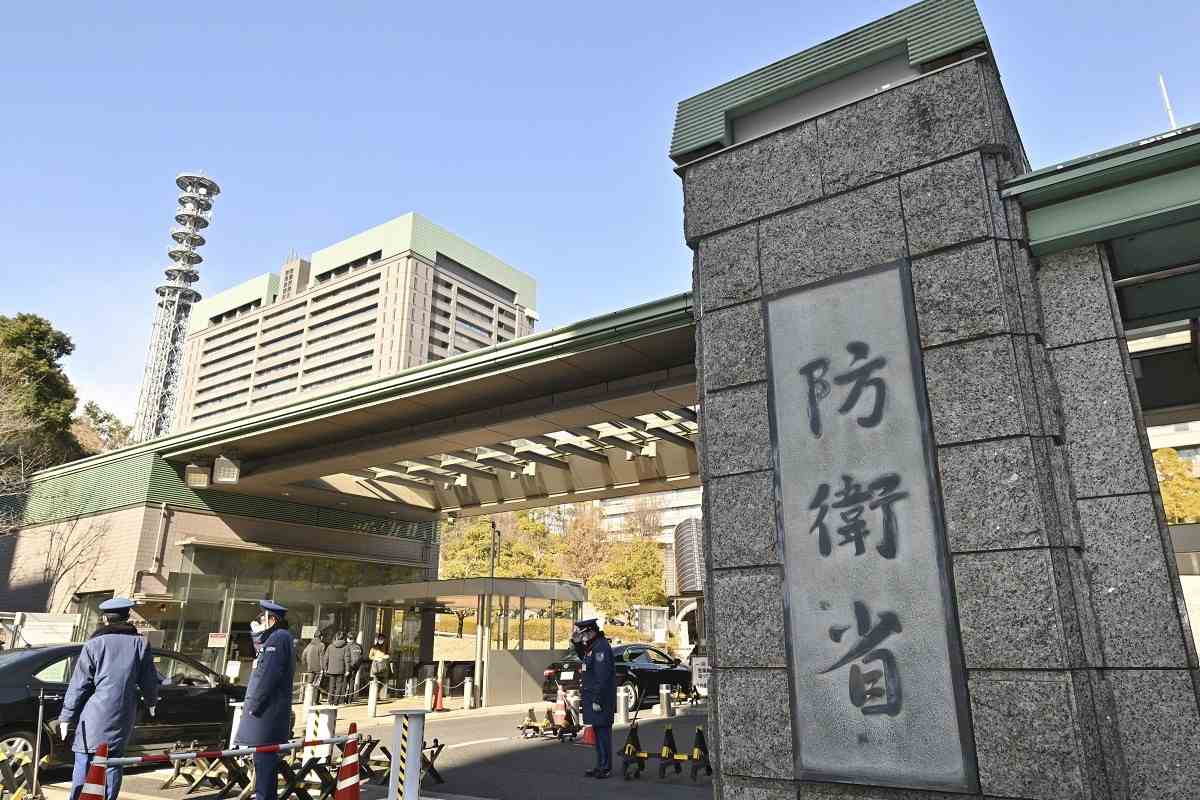
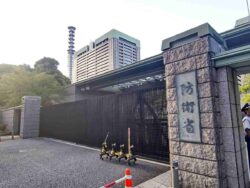
The main gate of the Defense Ministry is seen in Shinjuku Ward, Tokyo.
15:44 JST, February 10, 2024
The government approved a bill to amend the Self-Defense Forces Law at a cabinet meeting on Friday and submitted it to the Diet the same day. The primary purpose of the bill is to establish a permanent “joint operations command” to coordinate the three Self-Defense Forces — Ground, Maritime and Air.
In light of overseas developments such as China’s military expansion in recent years, the government intends to strengthen the integrated operations of the SDF, including in new domains such as space and cyber.
Defense Minister Minoru Kihara said at a press conference Friday, “In response to the most serious and most complex security environment in the postwar era, we are going to take the necessary steps to ensure the smooth execution of the SDF’s missions.”
The command will be established within the Defense Ministry in Ichigaya, Tokyo, at the end of fiscal 2024, with an initial staff of 240 personnel.
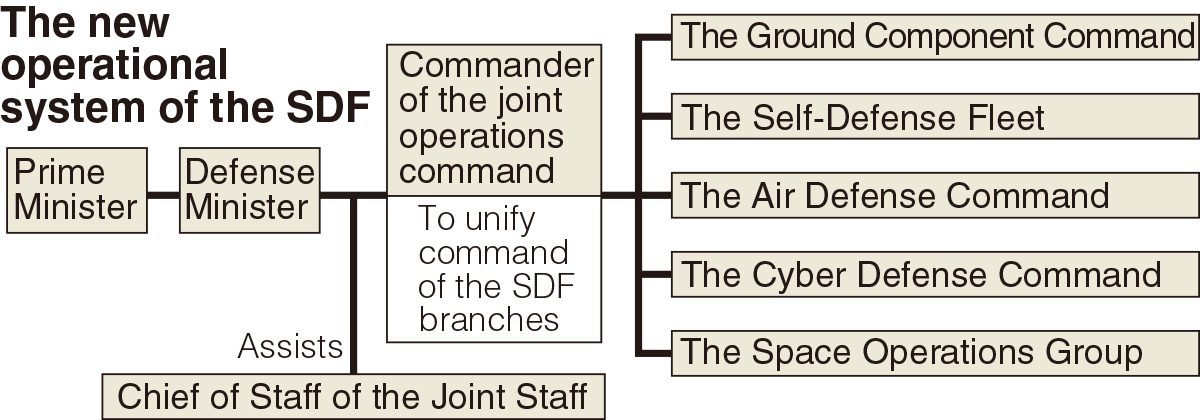
The top command post in the joint operations command will be held by a general of the same rank as the chiefs of staff of each of the Ground, Maritime and Air Self-Defense Forces, and will command the Ground Component Command, the Self-Defense Fleet, the Air Defense Command, the Cyber Defense Command, and the Space Operations Group.
To date, the SDF have adopted a policy of responding to situations as they arise by organizing temporary joint task forces.
However, given the risks of a major disaster — such as an earthquake occurring directly below the Tokyo metropolitan area — and concerns over a contingency in Taiwan, the government has decided to create a permanent post of command to analyze the situation and conduct joint drills in peacetime, thereby getting ready for taking an immediate responses to an emergency.
In terms of relations with the U.S. military, the chief of staff of the Joint Staff, the top official within the SDF currently serves as a counterpart to the chairman of the joint chiefs of Staff of the United States in the strategic sphere and to the commander of the U.S. Indo-Pacific Command in the area of joint operations.
With the creation of the new command, the new commander is expected to coordinate operations with the commander of the Indo-Pacific Command.
However, the U.S. Indo-Pacific Command is headquartered in Hawaii, and the area of its jurisdiction is not limited to the area surrounding Japan. Given the time difference between Japan and Hawaii, the U.S. government is considering granting command authority for such operations to U.S. forces stationed in Japan, which will require further coordination over what closer Japan-U.S. cooperation should look like in the future.
As the SDF has been criticized for having too many command posts, it is likely the existing organizations will be required to reorganize.



Most Read
Popular articles in the past 24 hours
-

McDonald's Japan Raises Prices; Big Mac to Cost ¥500, Double Chee...
-

Nepal Bus Crash Kills 19 People, Injures 25 Including One Japanes...
-

Japan’s Nikkei Stock Average Rises as AI-Related Stocks Shine; Co...
-

Aggression against Ukraine: Malignant Precedent Must Not Be Set t...
-

Joruri Bunraku Narrative Performed in Honor of Donald Keene by La...
-

Milano Cortina 2026: Gold Medal Olympic Figure Skaters Riku Miura...
-

Kanto's 1st Spring Wind Blows as Tokyo Sees Unseasonably High Tem...
-

How Keri Russell's Suede Coach Boots Ended up in My Closet
Popular articles in the past week
-

Producer Behind Pop Group XG Arrested for Cocaine Possession
-

Japan PM Takaichi’s Cabinet Resigns en Masse
-

Sanae Takaichi Elected Prime Minister of Japan; Keeps All Cabinet...
-

Japan's Govt to Submit Road Map for Growth Strategy in March, PM ...
-

Bus Carrying 40 Passengers Catches Fire on Chuo Expressway; All E...
-
Japan, U.S. Name 3 Inaugural Investment Projects; Reached Agreeme...
-

Riku-Ryu Pair Wins Gold Medal: Their Strong Bond Leads to Major C...
-

iPS Treatments Pass Key Milestone, but Broader Applications Far f...
Popular articles in the past month
-
Producer Behind Pop Group XG Arrested for Cocaine Possession
-
Japan PM Takaichi’s Cabinet Resigns en Masse
-

Japan Institute to Use Domestic Commercial Optical Lattice Clock ...
-

Man Infected with Measles Reportedly Dined at Restaurant in Tokyo...
-

Israeli Ambassador to Japan Speaks about Japan’s Role in the Reco...
-

Videos Plagiarized, Reposted with False Subtitles Claiming ‘Ryuky...
-

Man Infected with Measles May Have Come in Contact with Many Peop...
-

Prudential Life Insurance Plans to Fully Compensate for Damages C...
Top Articles in Politics
-
Japan PM Takaichi’s Cabinet Resigns en Masse
-
Sanae Takaichi Elected Prime Minister of Japan; Keeps All Cabinet Appointees from Previous Term
-
Japan’s Govt to Submit Road Map for Growth Strategy in March, PM Takaichi to Announce in Upcoming Policy Speech
-

LDP Wins Historic Landslide Victory
-

LDP Wins Landslide Victory, Secures Single-party Majority; Ruling Coalition with JIP Poised to Secure Over 300 seats (UPDATE 1)
JN ACCESS RANKING
-
Producer Behind Pop Group XG Arrested for Cocaine Possession
-
Japan PM Takaichi’s Cabinet Resigns en Masse
-
Man Infected with Measles Reportedly Dined at Restaurant in Tokyo Station
-
Israeli Ambassador to Japan Speaks about Japan’s Role in the Reconstruction of Gaza
-
Videos Plagiarized, Reposted with False Subtitles Claiming ‘Ryukyu Belongs to China’; Anti-China False Information Also Posted in Japan