
Old & New video
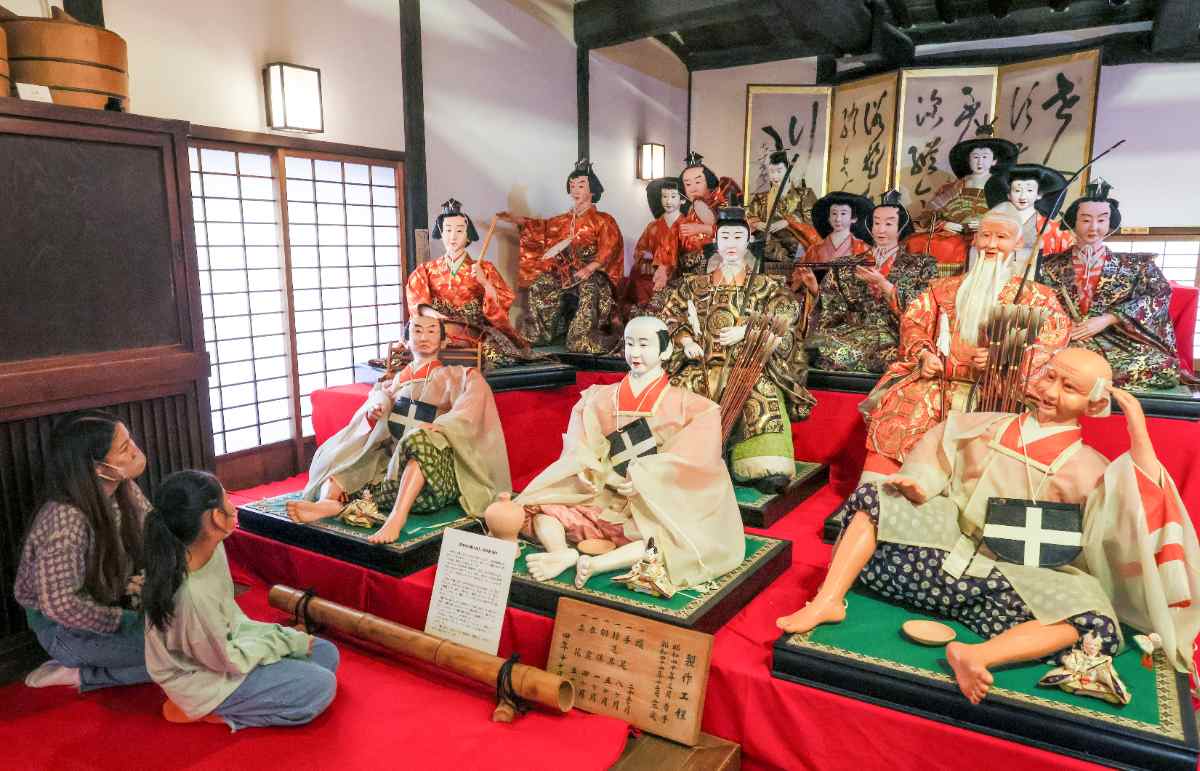
Fifteen life-size hina dolls are displayed in a building that served as an inn during the Edo period. From top to bottom: a pair of imperial court dolls (dairi bina) representing the Emperor and Empress, three court ladies (sannin kanjo) attending to the Empress, five musicians (gonin bayashi), guardians (zuishin) and three servants (shicho) handling miscellaneous tasks. The front-right servant appears to be relaxing after work, at Okabe-shuku Ohatago Kashibaya in Fujieda, Shizuoka Prefecture, on Feb. 15.
13:43 JST, March 1, 2026
FUJIEDA, Shizuoka — Every year around the time of the Doll Festival, there is a rare display of 15 life-size hina dolls in Okabe-shuku, a former post town on the Tokaido route. The route is one of the five major highways developed during the Edo period (1603-1867) starting from Nihombashi in Edo (present-day Tokyo). Okabe-shuku is now in Fujieda, Shizuoka Prefecture.
The size of the dolls makes them photogenic in the social media era, and they have become a topic of conversation in recent years.
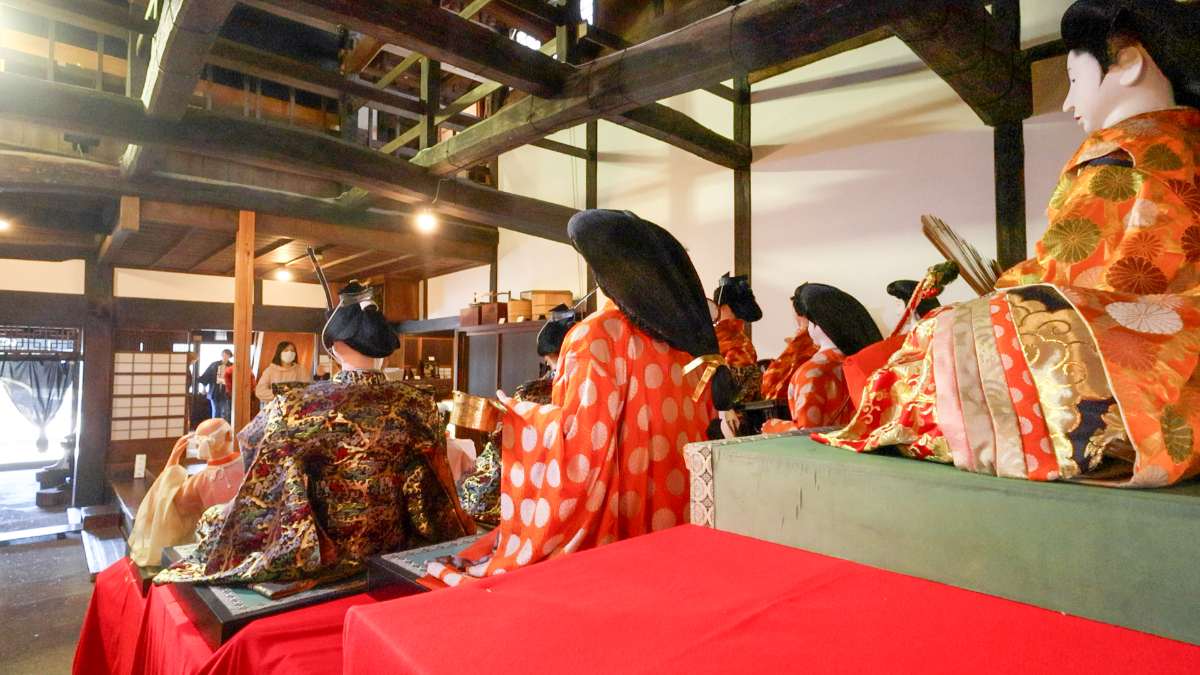
A rear view of the 15 life-size hina dolls. The costumes incorporate Nishijin-ori fabrics from Kyoto.
Hina dolls are displayed in homes on the March 3 festival for girls to pray for their happiness. A 15-doll set typically features, from top to bottom: one pair of imperial court dolls (dairi bina), three court ladies (sannin kanjo), five musicians (gonin bayashi), two guardians (zuishin) and three servants (shicho).
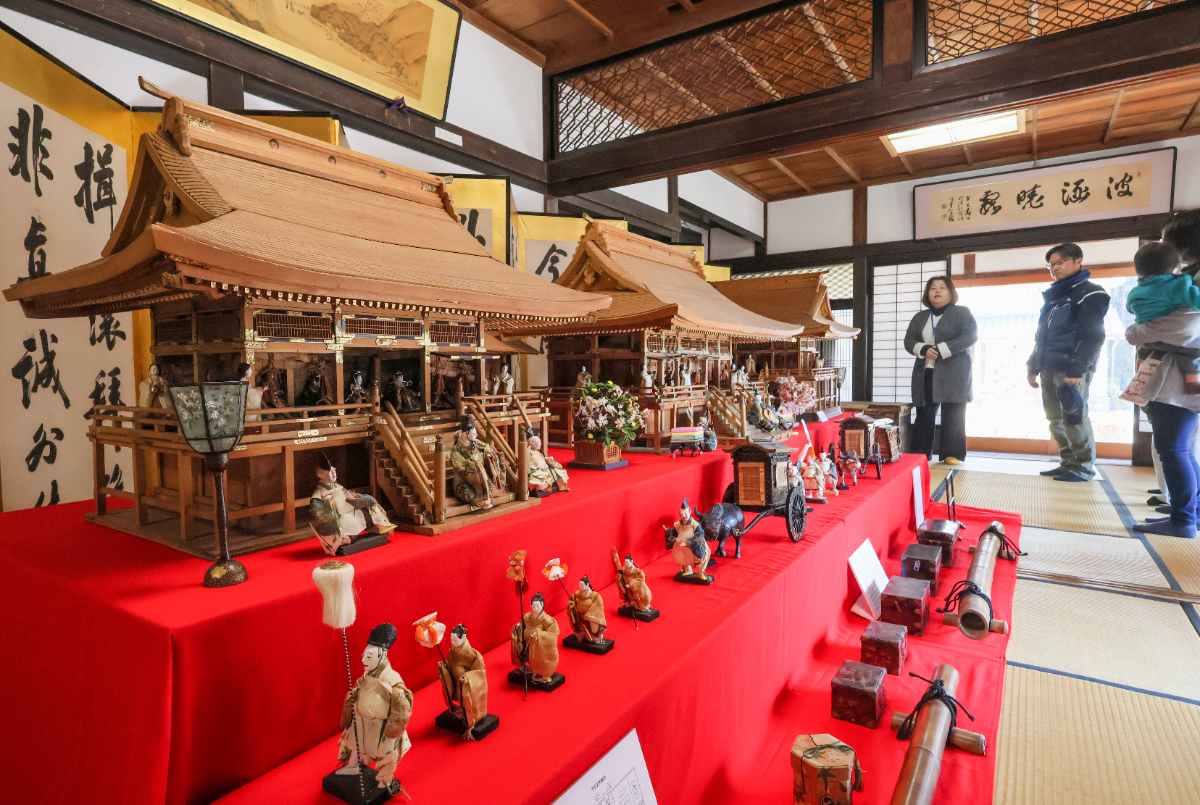
Hina dolls, from the “Goten-kazari” display, exhibited alongside the life-size dolls. This Kyoto-style display, passed down through the Yamauchi family, is located across from the exhibition hall. It features over 40 dolls placed in three buildings modeled after the Kyoto Imperial Palace’s halls. The wooden storage boxes bear the inscription “Ansei 3” (1856) and are designated as tangible cultural properties of Fujieda.
While standard dolls are typically 10 to 20 centimeters tall, the ones displayed here are about 10 times larger. The seated dolls measure 80 to 90 centimeters tall, and the attendants reach about 120 centimeters.
These dolls were crafted by the second-generation master dollmaker Yoshimitsu Yabuzaki (1901–1992) of Yoshimitsu Ningyoten, which has its workshop in the Okabe district. After retiring, he retrained and spent about five years creating them from 1965 to 1969. After seeing life-size kabuki puppets in Asakusa, Tokyo, he resolved to create life-size hina dolls to improve his own skills. Hina doll making is one of Shizuoka Prefecture’s local industries. The long-established Yoshimitsu Ningyoten, founded in 1896, operates a retail store in Shizuoka City.
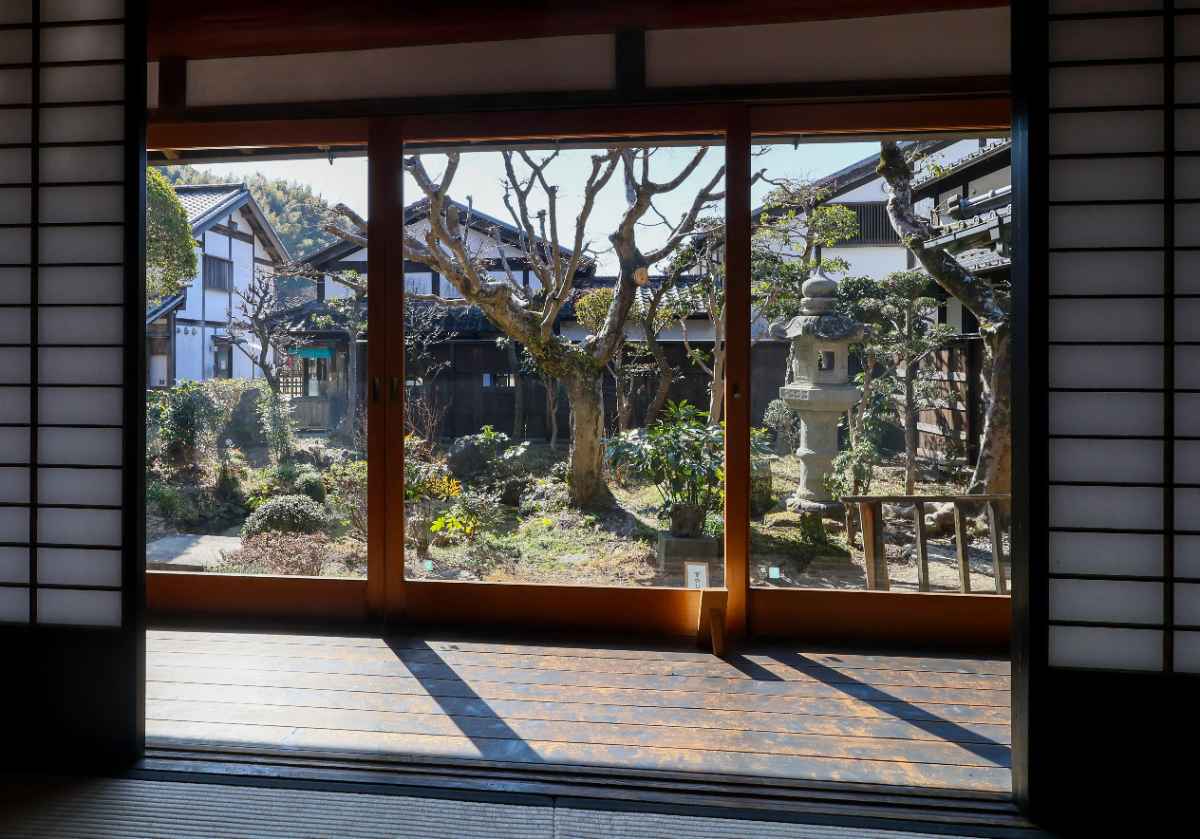
At the historical museum Okabe-shuku Ohatago Kashibaya, the garden also retains traces of the Edo period.
It is said that he made nearly 40 dolls, 15 of which were donated to the former Okabe Town, now part of Fujieda, where they began the exhibition in 2006. Each doll has distinct facial features, allowing visitors to observe in detail everything from solemn expressions to playful ones.
A female office worker in her 30s from Hekinan, Aichi Prefecture, who visited the exhibition with her relatives from Fujieda, said, “I was overwhelmed by their size and atmosphere.”
Meanwhile, the building housing these dolls is formally known as Okabe-shuku Ohatago Kashibaya, an inn founded in 1707. The current structure was built around 1836 and strongly retains the appearance of the Edo period. Designated as a National Registered Tangible Cultural Property and recognized as a component cultural asset of Japan Heritage, it is now open to the public as a historical museum conveying the atmosphere of that era.
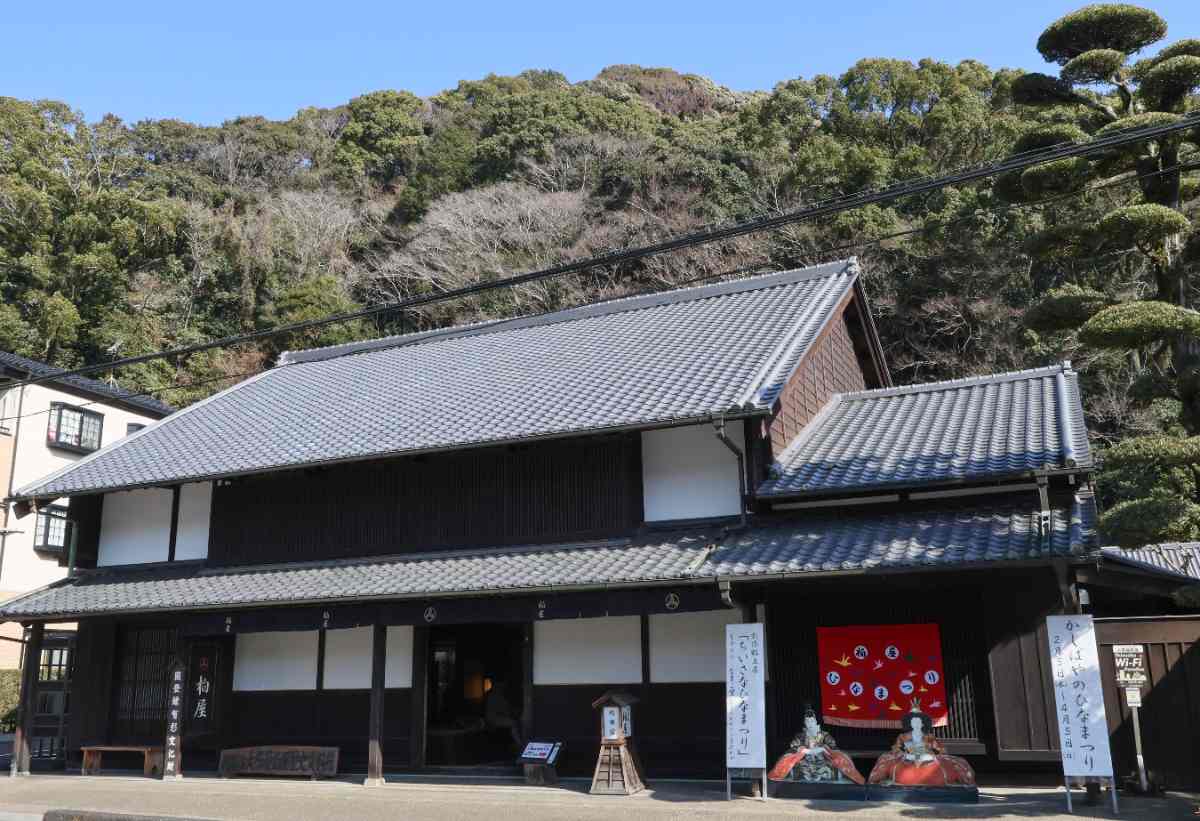
Exterior of Okabe-shuku Ohatago Kashibaya, which faces the former Tokaido highway
The museum is closed on Mondays. Admission for adults is ¥300, but it is free for junior high school students and younger. The life-size hina doll exhibition runs until April 5.


Most Read
Popular articles in the past 24 hours
-

Improvement of Japanese Language Schools Lags Rise in Foreigners
-

Japan's Test-Takers in Sapporo Offered Special Accommodation Arra...
-
Rental Lab Space in Tokyo Area More Than Doubles Since 2010, Offe...
-

Japanese Shipping Giants Halt Strait of Hormuz Transit as Iran Co...
-

U.S. Launches Attacks on Iran: Avoid Escalation of Conflict by An...
-
Parents of Japanese Teen Shot in U.S. Strive for Gun Control
-
Disinformation Spreads About Team Mirai, Ballot Readers; Online P...
-

Sawtooth Roof Factory Stands as Monument to Ashikaga Textile Hist...
Popular articles in the past week
-

Nepal Bus Crash Kills 19 People, Injures 25 Including One Japanes...
-
Milano Cortina 2026: Japanese Gold Medalist Figure Skater Miura S...
-
Tokyo Spends Big on Children, Wins Over Parents
-

McDonald's Japan Raises Prices; Big Mac to Cost ¥500, Double Chee...
-
‘Dry Bonsai’ Gives New Life to Withered Trees, Allows Free Artist...
-

Japan’s Miura, Kihara Announce Withdrawal from Figure Skating Wor...
-
Exhibition Featuring Yoshiharu Tsuge’s Manga World Underway in Ch...
-

Yokohama to Test Out Renewable-Powered Offshore Floating Data Cen...
Popular articles in the past month
-

Producer Behind Pop Group XG Arrested for Cocaine Possession
-

Japan PM Takaichi’s Cabinet Resigns en Masse
-

Man Infected with Measles Reportedly Dined at Restaurant in Tokyo...
-

Israeli Ambassador to Japan Speaks about Japan’s Role in the Reco...
-

Videos Plagiarized, Reposted with False Subtitles Claiming ‘Ryuky...
-

Man Infected with Measles May Have Come in Contact with Many Peop...
-

Prudential Life Insurance Plans to Fully Compensate for Damages C...
-

Woman with Measles Visited Hospital in Tokyo Multiple Times Befor...
Top Articles in JN Specialities
-
Exhibition Shows Keene’s Interactions with Showa-Era Writers in Tokyo, Features Newspaper Columns, Related Materials
-

The Japan News / Weekly Edition (2/20-2/26)
-

Step Back in Time at Historical Estate Renovated into a Commercial Complex in Tokyo
-
Senior Japanese Citizens Return to University to Gain Knowledge, Find New Career, Make Friends
-
“The Tale of Genji” Back-Translation Project Led to Touching Encounter with Keene; Poet Sisters Recount Memories of Scholar at Packed Talk Event in Tokyo
JN ACCESS RANKING
-
Producer Behind Pop Group XG Arrested for Cocaine Possession
-
Japan PM Takaichi’s Cabinet Resigns en Masse
-
Man Infected with Measles Reportedly Dined at Restaurant in Tokyo Station
-
Israeli Ambassador to Japan Speaks about Japan’s Role in the Reconstruction of Gaza
-
Videos Plagiarized, Reposted with False Subtitles Claiming ‘Ryukyu Belongs to China’; Anti-China False Information Also Posted in Japan