
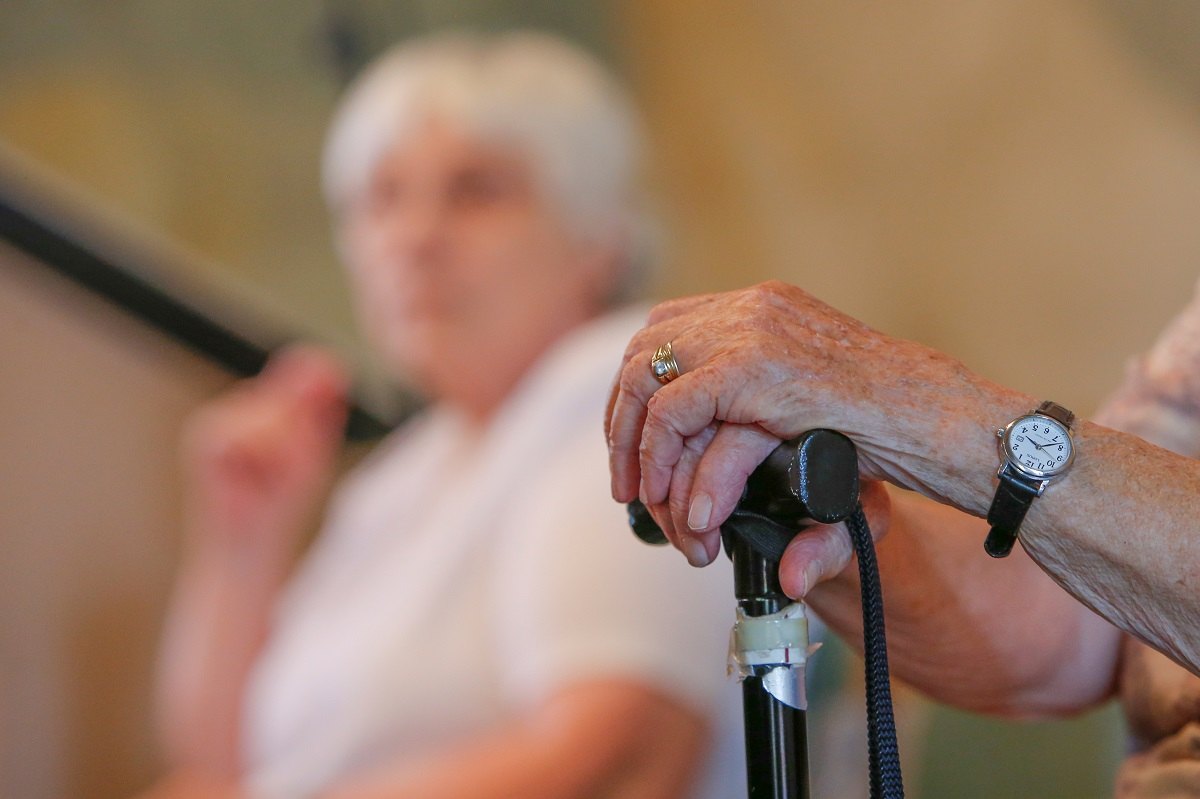
An image photo: Elderly people are seen in a home for the elderly in Dachau, Germany, June 28, 2017.
12:30 JST, May 15, 2024
A recent analysis found poor survival rates after bone fractures in older adults, with fewer than a third of men and half of women surviving five years after a fracture.
Published in JBMR Plus, the study looked at a cohort of 98,474 Ontario residents age 66 and older who suffered fractures to parts of the body associated with osteoporosis between January 2011 and March 2015. The patients were grouped into sets based on the fracture site and matched to patients with a similar demographic profile but no bone breaks during the study period.
The fracture cohort was mostly female (73 percent), and the median age at fracture was 80. In the year before the fracture, up to 45 percent of the women and 14 percent of the men had been treated for osteoporosis.
The analysis revealed that those within a year of a hip, vertebral or proximal non-hip, non-vertebral fracture were at the highest risk of death. The survival probability was lower for the oldest patients.
Hip fractures had the highest death risk: One year later, just 67.7 percent of men and 78.5 percent of women survived, compared with 92.2 percent of men with no fractures and 93.1 percent of women without fractures. Less than a third of men and half of women with fractures survived five years after a bone break. Survival rates were “marginally better” for those with vertebral fractures, the researchers write.
“Survival most dramatically declined within one month after most types of fracture, with a five-year survival being similar to or worse than some common cancers,” the paper’s lead author, Laval University department of medicine professor Jacques Brown, said in a news release.
The data suggests that intervening immediately after a fracture is best, the researchers write, though they also call for better prevention of falls and fractures. Those with severe fractures, men and those over age 85 are of special concern, the researchers write, but more data is needed to help clinicians target care. Clinicians might look to cardiovascular medicine for a model of how to monitor and intervene with at-risk patients, they suggest.







Most Read
Popular articles in the past 24 hours
-

Toronto Blue Jays’ Kazuma Okamoto Blasts 1st HR of Spring
-
20 Trapped in Tokyo Skytree Lift, Rescued 5½ Hours Later
-
Japan Seeks to Counter China's Expanding Influence in Pacific by ...
-
Japan's Diet Begins Debate on Takaichi's Budget Plans, ‘Proactive...
-
Japan Asks U.S. Not to Worsen Tariffs; Chief Cabinet Secretary Ki...
-

Exhibition Featuring Yoshiharu Tsuge’s Manga World Underway in Ch...
-

CARTOON OF THE DAY (February 24)
-

Japan's Shinjiro Koizumi Assures Pacific Islands of Growing Ties ...
Popular articles in the past week
-

Producer Behind Pop Group XG Arrested for Cocaine Possession
-

Sanae Takaichi Elected Prime Minister of Japan; Keeps All Cabinet...
-

Japan, U.S. Name 3 Inaugural Investment Projects; Reached Agreeme...
-

iPS Treatments Pass Key Milestone, but Broader Applications Far f...
-

Tokyo Skytree's Elevator Stops, Trapping 20 People; All Rescued (...
-

Director Naomi Kawase's New Film Explores Heart Transplants in Ja...
-

Japan’s Major Real Estate Firms Expanding Overseas Businesses to ...
-
Survey Shows False Election Info Perceived as True
Popular articles in the past month
-
Producer Behind Pop Group XG Arrested for Cocaine Possession
-

Japan PM Takaichi’s Cabinet Resigns en Masse
-

Japan Institute to Use Domestic Commercial Optical Lattice Clock ...
-

Man Infected with Measles Reportedly Dined at Restaurant in Tokyo...
-

Israeli Ambassador to Japan Speaks about Japan’s Role in the Reco...
-

Videos Plagiarized, Reposted with False Subtitles Claiming ‘Ryuky...
-

Man Infected with Measles May Have Come in Contact with Many Peop...
-

Prudential Life Insurance Plans to Fully Compensate for Damages C...
Top Articles in News Services
-
Survey Shows False Election Info Perceived as True
-
Hong Kong Ex-Publisher Jimmy Lai’s Sentence Raises International Outcry as China Defends It
-

Japan’s Nikkei Stock Average Touches 58,000 as Yen, Jgbs Rally on Election Fallout (UPDATE 1)
-
Japan’s Nikkei Stock Average Falls as US-Iran Tensions Unsettle Investors (UPDATE 1)
-

Trump Names Former Federal Reserve Governor Warsh as the Next Fed Chair, Replacing Powell
JN ACCESS RANKING
-
Producer Behind Pop Group XG Arrested for Cocaine Possession
-
Japan PM Takaichi’s Cabinet Resigns en Masse
-
Man Infected with Measles Reportedly Dined at Restaurant in Tokyo Station
-
Israeli Ambassador to Japan Speaks about Japan’s Role in the Reconstruction of Gaza
-
Videos Plagiarized, Reposted with False Subtitles Claiming ‘Ryukyu Belongs to China’; Anti-China False Information Also Posted in Japan