
Philippines Warns of Deadly Storm Surges As Massive Typhoon Fung-wong Nears Super Typhoon Strength
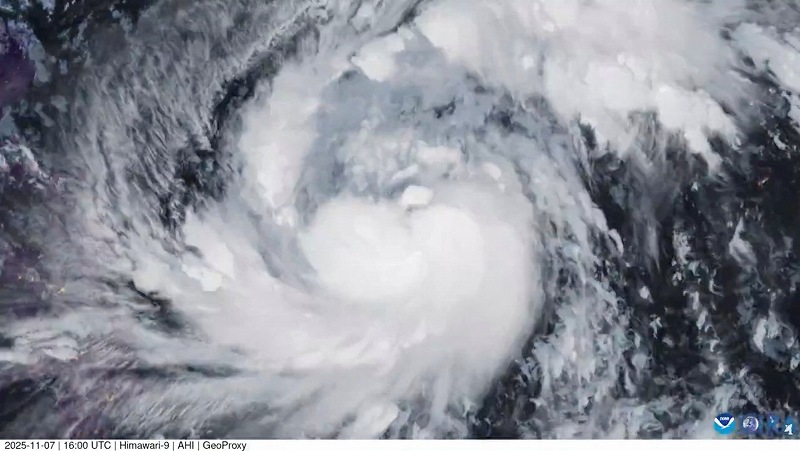
A satellite image shows Storm Fung-Wong, which has intensified into a typhoon, according to the Cooperative Institute for Research in the Atmosphere, over the Philippine Sea on Friiday in this screengrab from video.
15:06 JST, November 8, 2025
MANILA – The Philippines’ weather bureau warned of life-threatening storm surges of up to five meters and destructive winds as Typhoon Fung-wong churns toward the country’s eastern coast, where it is forecast to intensify into a super typhoon before making landfall on Sunday night.
The typhoon’s massive circulation, spanning 1,500 kilometers (932 miles), is already lashing parts of eastern Philippines with heavy rains and winds, PAGASA weather forecaster Benison Estareja said in a briefing.
“It can cover almost the entire country,” Estareja said.
Fung-wong, locally named Uwan, is currently packing maximum sustained winds of 140 kph and gusts of up to 170 kph, and could intensify to 185 kph as it nears land, Estareja said, powerful enough to destroy homes, topple trees and structures.
Up to 200 mm of rainfall is expected in eastern Philippine provinces, particularly in the Bicol region, as well as parts of Samar, raising the risk of widespread flooding and landslides, while northern and central Luzon could see 100-200 mm rainfall during its passage.
PAGASA urged residents in low-lying and coastal areas to evacuate to higher ground and halt all marine activities, warning of destructive storm surges that could inundate coastal communities, and warned of violent winds.
Several local governments have suspended classes for Monday, and the Philippines’ flag carrier has canceled some flights, ahead of Fung-wong’s expected landfall.
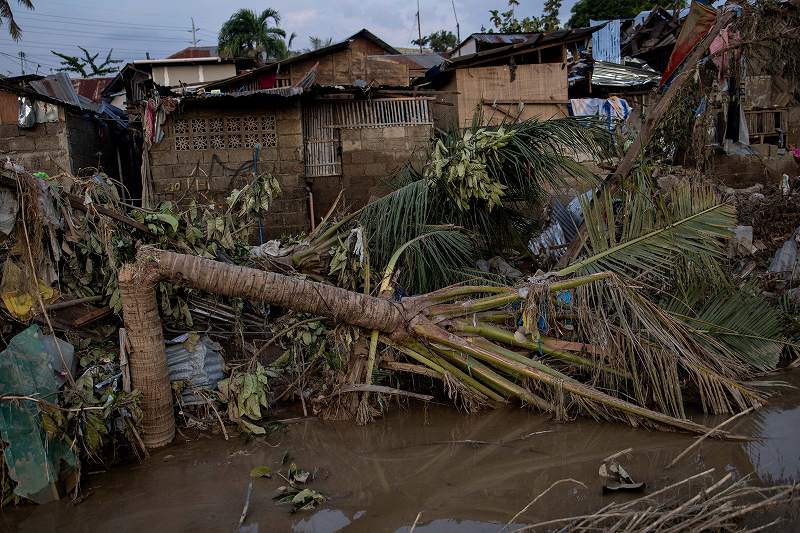
Fallen trees in a community where houses were swept away by flooding caused by Typhoon Kalmaegi, in Talisay, Cebu, Philippines, Thursday.
The warning comes just days after Typhoon Kalmaegi left a trail of destruction across the region, ripping through coastal communities, toppling trees, and shredding roofs and windows.
Kalmaegi killed 204 people in the Philippines and five in Vietnam, displaced hundreds of thousands, and knocked out power across wide areas.
Vietnam’s disaster agency reported damage to nearly 2,800 homes, and said about 500,000 people remain without electricity. In the Philippines, raging floods destroyed homes and clogged streets with debris.
Vietnam and the Philippines are highly vulnerable to tropical storms and typhoons due to their locations along the Pacific typhoon belt, regularly experiencing damage and casualties during peak storm seasons.
In Thailand, Kalmaegi’s lingering impact caused heavy rain and localized flooding in parts of the northeast and central regions.
Scientists have warned that storms such as Kalmaegi are becoming more powerful as global temperatures rise.


Related Tags




Most Read
Popular articles in the past 24 hours
-

Record Snowfall in Japan Causes Serious Agricultural Damage in To...
-

Japan Traditional Puppet Performance Held at Onsen Resort in Shiz...
-

Strait of Hormuz Closure Shakes Markets; Prolonged Closure Could ...
-

U.S. Urges Citizens to Immediately Depart over A Dozen Middle Eas...
-

2 of Japan's Opposition Parties Submit Bill to Revise Political F...
-

Iran Situation: Japan Must Exert Diplomatic Efforts without Merel...
-

Chiba Police to Arrest Japanese National in Midair; Man Accused o...
-

Japanese Firms Ban Business Trips, Cancel Vacation Tours Amid Mid...
Popular articles in the past week
-

Milano Cortina 2026: Japanese Gold Medalist Figure Skater Miura S...
-

Tokyo Spends Big on Children, Wins Over Parents
-

Japan’s Miura, Kihara Announce Withdrawal from Figure Skating Wor...
-

Exhibition Featuring Yoshiharu Tsuge’s Manga World Underway in Ch...
-

Yokohama to Test Out Renewable-Powered Offshore Floating Data Cen...
-

BOJ Keeping Eye on Economy and Takaichi's ‘Proactive Fiscal Polic...
-

Tokyo Measles Patient Traveled to Fukuoka Aboard JAL Planes; Susp...
-

Japan Seeks to Counter China's Expanding Influence in Pacific by ...
Popular articles in the past month
-

Producer Behind Pop Group XG Arrested for Cocaine Possession
-

Japan PM Takaichi’s Cabinet Resigns en Masse
-

Man Infected with Measles Reportedly Dined at Restaurant in Tokyo...
-

Israeli Ambassador to Japan Speaks about Japan’s Role in the Reco...
-

Videos Plagiarized, Reposted with False Subtitles Claiming ‘Ryuky...
-

Prudential Life Insurance Plans to Fully Compensate for Damages C...
-

Woman with Measles Visited Hospital in Tokyo Multiple Times Befor...
-

iPS Treatments Pass Key Milestone, but Broader Applications Far f...
Top Articles in News Services
-

Survey Shows False Election Info Perceived as True
-
Hong Kong Ex-Publisher Jimmy Lai’s Sentence Raises International Outcry as China Defends It
-

Japan’s Nikkei Stock Average Falls as US-Iran Tensions Unsettle Investors (UPDATE 1)
-
Japan’s Nikkei Stock Average Touches 58,000 as Yen, Jgbs Rally on Election Fallout (UPDATE 1)
-
Japan’s Nikkei Stock Average Rises on Tech Rally and Takaichi’s Spending Hopes (UPDATE 1)
JN ACCESS RANKING
-
Producer Behind Pop Group XG Arrested for Cocaine Possession
-
Japan PM Takaichi’s Cabinet Resigns en Masse
-
Man Infected with Measles Reportedly Dined at Restaurant in Tokyo Station
-
Israeli Ambassador to Japan Speaks about Japan’s Role in the Reconstruction of Gaza
-
Videos Plagiarized, Reposted with False Subtitles Claiming ‘Ryukyu Belongs to China’; Anti-China False Information Also Posted in Japan