To use this site, please disable the ad blocking feature and reload the page.
This website uses cookies to collect information about your visit for purposes such as showing you personalized ads and content, and analyzing our website traffic. By clicking “Accept all,” you will allow the use of these cookies.
Users accessing this site from EEA countries and UK are unable to view this site without your consent. We apologize for any inconvenience caused.
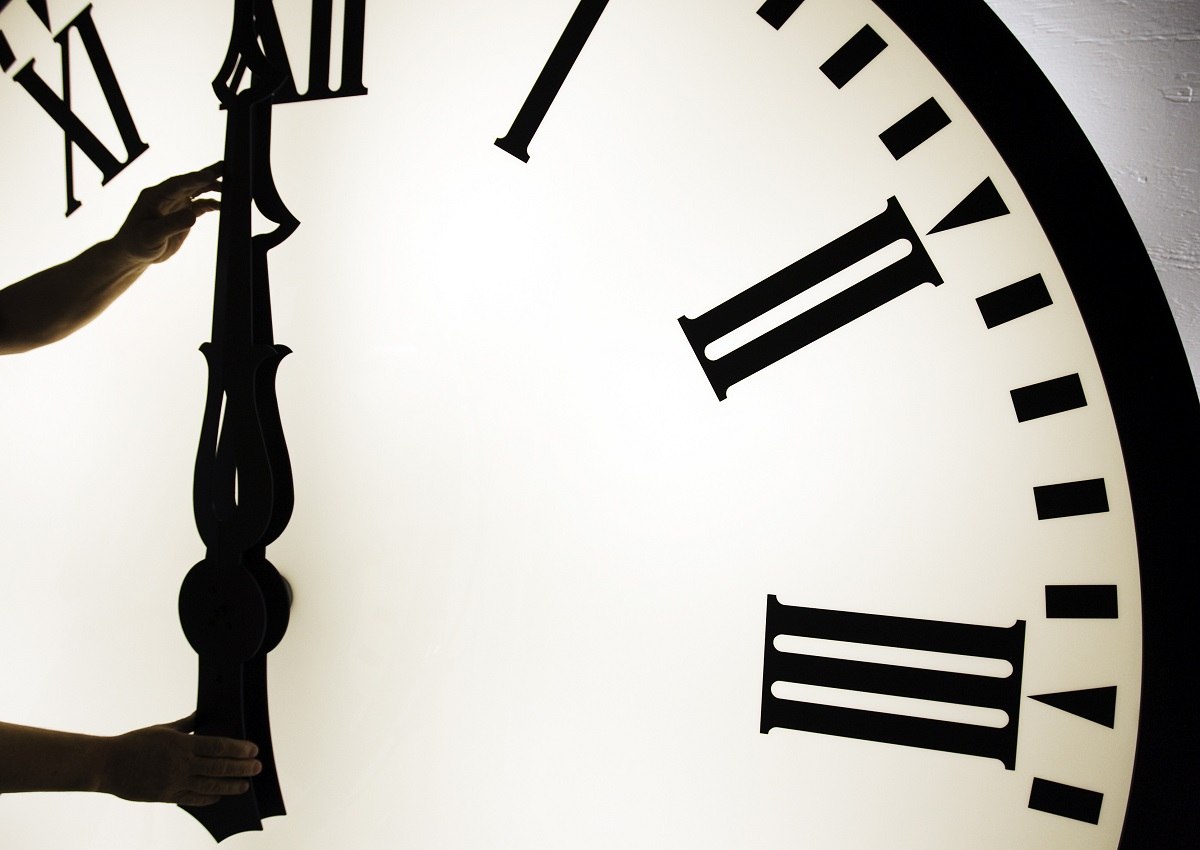
REUTERS/Brian Snyder Scott Gow adjusts a tower clock on test at the Electric Time Company in Medfield, Massachusetts March 6, 2009.
Reuters
17:34 JST, March 10, 2024
WASHINGTON (Reuters) – A group of 12 bipartisan senators said on Friday they are making a new legislative effort to make daylight saving time permanent and end the twice-annual changing of clocks.
In March 2022, the U.S. Senate passed legislation that would have made daylight saving time permanent starting in 2023.
But Congress could not come to agreement and the bill was never voted on in the House of Representatives.
Since then, there has been little movement. However, on Friday, senators led by Democrat Ed Markey and Republican Marco Rubio reintroduced legislation, just ahead of the resumption of daylight saving time at 2 a.m. on Sunday. A companion measure was again introduced in the House by Representative Vern Buchanan.
“The antiquated biannual ritual of toggling between times isn’t just an inconvenience – it also has very real impacts on our economy, our energy consumption, and our health,” Markey said.
Rubio said: “We’re ‘springing forward’ but should have never ‘fallen back.'”
Not putting back the clocks in autumn would enable children to play outdoors later and reduce seasonal depression, according to supporters. But critics say it would force many children to go to school in the dark.
President Joe Biden has never taken a position on the issue. Some lawmakers say they support ending clock-switching but are unsure whether to stick with daylight or standard time.
Since 2015, about 30 states have introduced legislation to end the twice-yearly changing of clocks, with some states proposing to do it only if neighboring states do the same.
Daylight saving time has been in place in nearly all of the United States since the 1960s after being first tried in 1918.
Year-round daylight savings time was used during World War Two and adopted again in 1973 in a bid to reduce fuel use because of an energy crisis. But it was repealed a year later amid public complaints.
The bill would allow Arizona and Hawaii, which do not observe daylight saving time, to remain on standard time, as well as American Samoa, Guam, the Northern Mariana Islands, Puerto Rico and the U.S. Virgin Islands.