To use this site, please disable the ad blocking feature and reload the page.
This website uses cookies to collect information about your visit for purposes such as showing you personalized ads and content, and analyzing our website traffic. By clicking “Accept all,” you will allow the use of these cookies.
Users accessing this site from EEA countries and UK are unable to view this site without your consent. We apologize for any inconvenience caused.
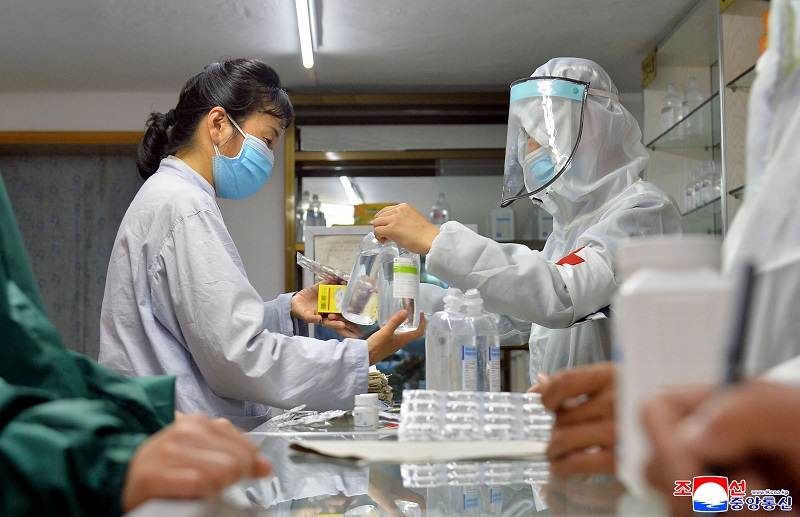
KCNA via REUTERS Army medics involved in medicine supply distribution work at a pharmacy amid concerns of coronavirus disease (COVID-19) spread in Pyongyang, North Korea May 22, 2022 in this photo released May 23, 2022 by the country’s Korean Central News Agency.
Reuters
10:25 JST, June 2, 2022
SEOUL (Reuters) – The World Health Organization has cast doubts on North Korea’s claims of progress in the fight against a COVID-19 outbreak, saying it believes the situation is getting worse, not better, amid an absence of independent data.
North Korean state media has said the COVID wave has abated, after daily numbers of people with fever topped 390,000 about two weeks ago.
Pyongyang has never directly confirmed how many people have tested positive for the virus but experts suspect underreporting in the figures released through government-controlled media, making it difficult to assess the scale of the situation.
“We assume the situation is getting worse, not better,” WHO emergencies chief Michael Ryan said during a video briefing Wednesday.
He said the WHO did not have access to any privileged information beyond the numbers publicly reported by state media.
“We have real issues in getting access to the raw data and to the actual situation on the ground,” Ryan said, adding that the WHO is working with neighbours like South Korea and China to try to get a better picture.
The WHO has offered assistance on multiple occasions, including vaccines and supplies, he said.
North Korea reported 96,610 more people showing fever amid its nationwide lockdown aimed at containing the impoverished country’s first confirmed COVID-19 outbreak, state news agency KCNA said on Thursday.
The media, however, did not mention whether there were any new deaths.
KCNA said provinces were “intensifying” their anti-epidemic campaigns, including enforcing some lockdowns and coastal blockades, increasing production of drugs and medical supplies, and carrying out disinfection work.
Key work such as farming continued, however.
North Korean Premier Kim Tok Hun inspected a pair of pharmaceutical factories, amid a push to put the country’s drug industry on a “on a new higher level,” including meeting international standards, KCNA reported.
“Sufficient production and supply of medicines serve as a prerequisite to protecting the people’s lives and health in the current rigorous anti-epidemic campaign,” he said.