
The Treated Discharge from Japan’s Ruined Fukushima Nuclear Plant Is Safe, IAEA Chief Says on Visit
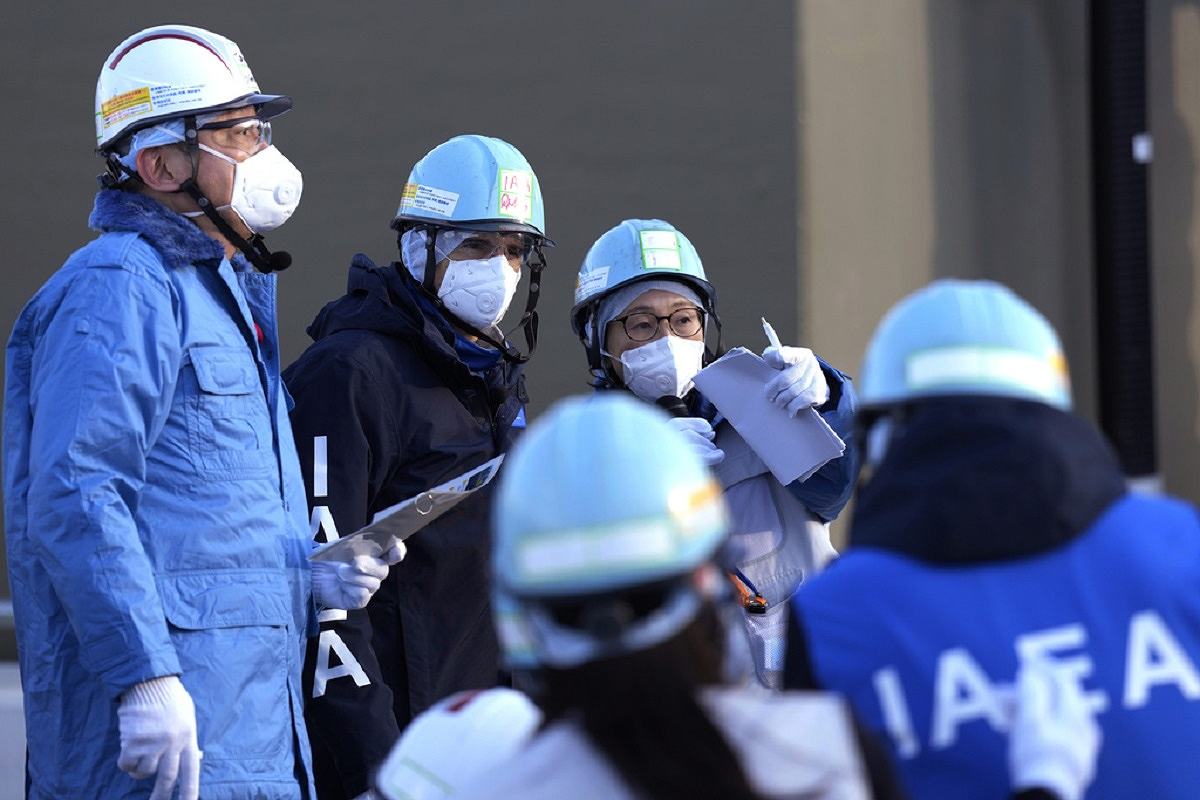
International Atomic Energy Agency Director General Rafael Mariano Grossi, second left, is guided at a facility for sampling treated and diluted radioactive water at the Fukushima Daiichi nuclear power plant, operated by Tokyo Electric Power Company Holdings (TEPCO), in Futaba town, northeastern Japan, Wednesday, March 13, 2024.
11:05 JST, March 14, 2024
FUTABA, Japan (AP) — The head of the U.N. atomic agency observed firsthand the Fukushima Daiichi nuclear power plant’s ongoing radioactive wastewater discharges for the first time since the contentious program began months ago and called it an “encouraging start.”
International Atomic Energy Agency Director-General Rafael Grossi watched treated radioactive water being mixed with massive amounts of seawater and examined a water sampling station. He was escorted by utility Tokyo Electric Power Company Holdings president Tomoaki Kobayakawa.
The discharges have been opposed by fishing groups and neighboring countries including China, which banned all imports of Japanese seafood immediately after the release began.
An 2011 earthquake and tsunami damaged the Fukushima plant’s power supply and reactor cooling functions, triggering meltdowns of three reactors and causing large amounts of radioactive wastewater to accumulate. After more than a decade of cleanup work, the plant began discharging the water after treating it and diluting it with seawater on Aug. 24, starting a process that’s expected to take decades.
Grossi last visited the plant in July after issuing an IAEA review predicting only negligible impact from the discharges. An IAEA comprehensive report later concluded that the discharges meet international safety standards.
Grossi said an IAEA office and a laboratory at the plant have been carrying out their own, independent evaluations of the discharges, and results had been in line with what they expected.
We never say ‘this is done’ or ‘this is okay’ because there is a long way to go, he said. “I would say it’s a very positive and encouraging start.”
Grossi also met with local officials and representatives from fishing and business groups and reassured them that the discharges are being carried out “with no impact to the environment, water, fish and sediment.”
There is no scientific reason to impose any restriction on products coming from us, Grossi said.
He later told reporters that he is aware of “observations made by China” and noted that “I have an ongoing and very constructive dialogue with China regarding the operation here.”
He asserted that “the authority and the impartiality of what the IAEA does cannot be put into question,” adding that he was “very confident that the dialogue with China and with other countries will be constructive and we will be able to provide all the assurances as required.”
China’s ban on Japanese seafood mostly hit scallop exporters in Hokkaido. Tokyo has earmarked a fund of more than 100 billion yen ($680 million) that includes compensation and other support, including measures to help find other export destinations.
Despite earlier fears that the water discharge would further hurt Fukushima’s hard-hit fishing industry, it has not damaged its reputation domestically.
Grossi stressed the importance of “transparency, technical accuracy and wide open, honest dialogue and consultation.”
Prime Minister Fumio Kishida’s government has reversed earlier plans for a nuclear phaseout and is accelerating the use of nuclear power in response to rising fuel costs related to Russia’s full-scale invasion of Ukraine and pressure to meet decarbonization goals.
On Thursday, Grossi will hold talks with Japanese Foreign Minister Yoko Kamikawa and is expected to discuss further cooperation between the IAEA and Japan in non-proliferation, use of nuclear energy and support to protect Ukraine’s nuclear power plant seized by Russian military.






Most Read
Popular articles in the past 24 hours
-
Hawaii Museum on Tsunami Including Japan's 2011 Disaster at Risk ...
-

Japan Train Company to Increase Fares, Including in Tokyo Metropo...
-
Japan Govt to Tighten Requirements to Receive Permanent Residency...
-

Tail of ANA Plane Struck Runway During Landing in Houston; No Inj...
-

Samurai Japan Holds First Practice in Miami; Team Will Play again...
-

Iran Targets Busiest International Airport as Top UN Body Demands...
-

Japan to Face Venezuela in World Baseball Classic Quarterfinals
-

Medical Care at Home and Disasters: Ensure Systems to Provide Con...
Popular articles in the past week
-

Japan Figure Skating Legend Yuzuru Hanyu Is Proud Disaster Surviv...
-

Nippon Life Insurance's U.S. Arm Sues OpenAI Over Legal Assistanc...
-

Ibaraki Pref.'s 1st Foreign Bus Driver Hired in Tsukuba
-
Govt to Utilize ODA for Ensuring Economic Security; Securing Ener...
-
Massive Sewer Pipe Found Jutting Out of Highway in Osaka
-
Amid Strait of Hormuz Blockade, Shipping Companies Scramble to Ge...
-

Beckoning Cats Get Makeover to Fit Modern Lifestyles with Sleek D...
-
Japan Govt Survey Finds Just 10% of Workers Want Working Hours to...
Popular articles in the past month
-

Producer Behind Pop Group XG Arrested for Cocaine Possession
-

Japan PM Takaichi’s Cabinet Resigns en Masse
-

Man Infected with Measles Reportedly Dined at Restaurant in Tokyo...
-

Videos Plagiarized, Reposted with False Subtitles Claiming ‘Ryuky...
-

iPS Treatments Pass Key Milestone, but Broader Applications Far f...
-

Sanae Takaichi Elected Prime Minister of Japan; Keeps All Cabinet...
-
Japan Figure Skating Legend Yuzuru Hanyu Is Proud Disaster Surviv...
-

Nepal Bus Crash Kills 19 People, Injures 25 Including One Japanes...
Top Articles in News Services
-
Survey Shows False Election Info Perceived as True
-

Japan’s Nikkei Stock Average Falls as US-Iran Tensions Unsettle Investors (UPDATE 1)
-
Japan’s Nikkei Stock Average Rises on Tech Rally and Takaichi’s Spending Hopes (UPDATE 1)
-
Japan to Ban Use of Power Banks on Airplanes
-

North Korea Unveils Image of Kim Jong Un’s Teenage Daughter Firing Rifle
JN ACCESS RANKING
-
Producer Behind Pop Group XG Arrested for Cocaine Possession
-
Japan PM Takaichi’s Cabinet Resigns en Masse
-
Man Infected with Measles Reportedly Dined at Restaurant in Tokyo Station
-
Videos Plagiarized, Reposted with False Subtitles Claiming ‘Ryukyu Belongs to China’; Anti-China False Information Also Posted in Japan
-
iPS Treatments Pass Key Milestone, but Broader Applications Far from Guaranteed