
China’s Economy Grew 6.3% in the Second Quarter, Lower than Expected as Momentum Slows
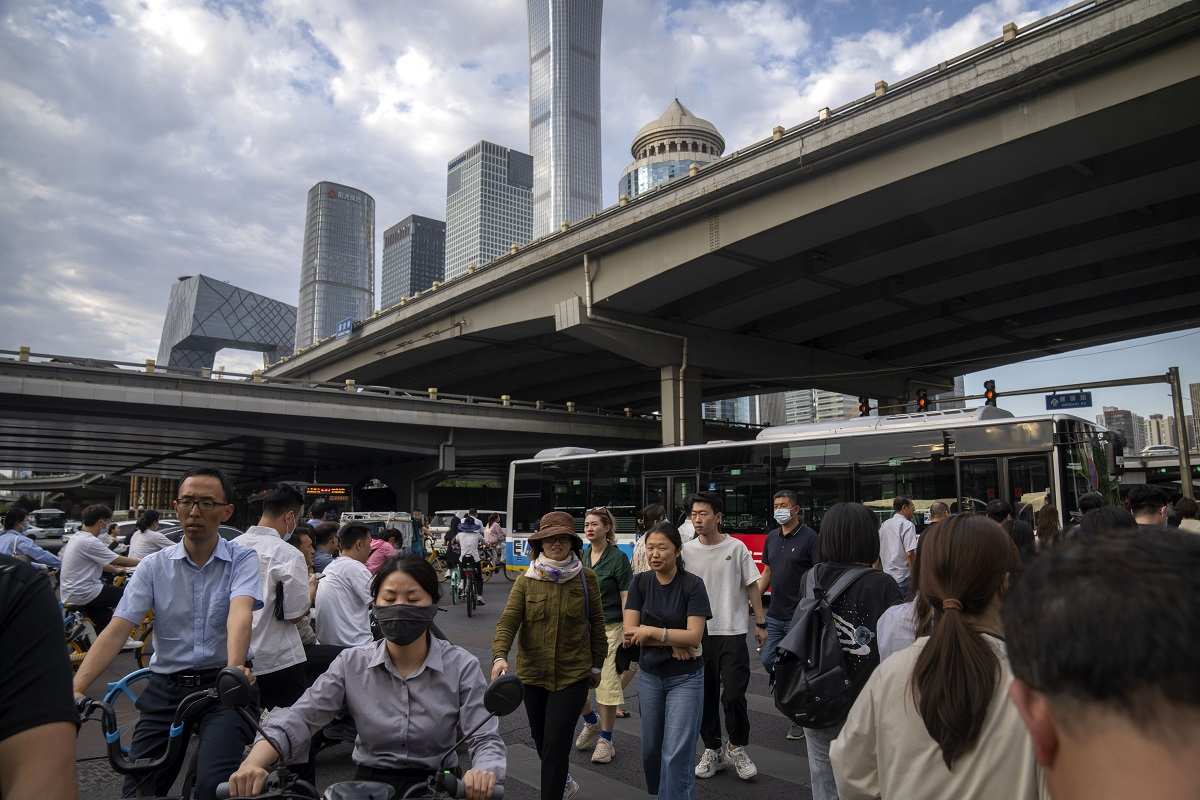
Commuters walk across an intersection during the evening rush hour in the central business district in Beijing, on June 13, 2023.
12:29 JST, July 17, 2023
HONG KONG (AP) — China’s economy grew at a 6.3% annual pace in the April-June quarter, much lower than analysts had forecast given the slow pace of growth the year before.
The world’s second-largest economy is expected to slow further in coming months given slack consumer demand in China and weaker demand for Chinese exports in other economies as their post-pandemic recoveries lose momentum.
The 6.3% growth in China’s gross domestic product from April to June outpaced a 4.5% rate of growth in the previous quarter, according to government data released Monday.
In quarterly terms, the economy grew 0.8% compared to the first three months of the year.
The still robust growth is largely due to the economy growing just 0.4% a year earlier amid strict lockdowns in Shanghai and other cities during major outbreaks of COVID-19.
Analysts had forecasted growth for the quarter that ended in June to exceed 7%.
China’s GDP in the first quarter beat expectations and grew by 4.5% as consumers flocked to shopping malls and restaurants after nearly three years of “zero-COVID” restrictions were removed in late 2022.
Earlier this year, China’s government set this year’s economic growth target at “around 5%,” a conservative goal that will only be met if GDP grows faster in the months ahead.
Data released earlier showed exports declined 12.4% in June from a year earlier as global demand faltered after central banks in U.S. and Europe raised interest rates to curb inflation.
Retail sales, an indicator of consumer demand, in June rose 3.1% from the same period in 2022.
Industrial production output, which measures activity in the manufacturing, mining and utilities sectors, beat analyst’s expectations, rising by 4.4% in June compared to the same month a year earlier.
China’s policymakers are not having to fight inflation, but may end up having to contend with its opposite, deflation, or falling prices due to weak demand. In recent months, the authorities have tried to spur lending and spending, with mixed success.
Fixed-asset investment — spending on infrastructure and other projects to drive growth — rose by a still tepid 3.8% for the first half of 2023 compared to the same period of 2022.






Most Read
Popular articles in the past 24 hours
-

Hawaii Museum on Tsunami Including Japan's 2011 Disaster at Risk ...
-

Japan Train Company to Increase Fares, Including in Tokyo Metropo...
-

Tail of ANA Plane Struck Runway During Landing in Houston; No Inj...
-

Samurai Japan Holds First Practice in Miami; Team Will Play again...
-

Iran Targets Busiest International Airport as Top UN Body Demands...
-

Japan to Face Venezuela in World Baseball Classic Quarterfinals
-

North Korean Leader Kim and His Daughter Try out New Pistols at S...
-

Japan Govt to Tighten Requirements to Receive Permanent Residency...
Popular articles in the past week
-

Japan Figure Skating Legend Yuzuru Hanyu Is Proud Disaster Surviv...
-

Nippon Life Insurance's U.S. Arm Sues OpenAI Over Legal Assistanc...
-

Ibaraki Pref.'s 1st Foreign Bus Driver Hired in Tsukuba
-
Govt to Utilize ODA for Ensuring Economic Security; Securing Ener...
-
Massive Sewer Pipe Found Jutting Out of Highway in Osaka
-

Amid Strait of Hormuz Blockade, Shipping Companies Scramble to Ge...
-

Beckoning Cats Get Makeover to Fit Modern Lifestyles with Sleek D...
-
Japan Govt Survey Finds Just 10% of Workers Want Working Hours to...
Popular articles in the past month
-

Producer Behind Pop Group XG Arrested for Cocaine Possession
-

Japan PM Takaichi’s Cabinet Resigns en Masse
-

Man Infected with Measles Reportedly Dined at Restaurant in Tokyo...
-

Videos Plagiarized, Reposted with False Subtitles Claiming ‘Ryuky...
-

iPS Treatments Pass Key Milestone, but Broader Applications Far f...
-

Sanae Takaichi Elected Prime Minister of Japan; Keeps All Cabinet...
-

Nepal Bus Crash Kills 19 People, Injures 25 Including One Japanes...
-
South Korea Tightens Rules on Foreigners Buying Homes in Seoul Me...
Top Articles in News Services
-
Survey Shows False Election Info Perceived as True
-

Japan’s Nikkei Stock Average Falls as US-Iran Tensions Unsettle Investors (UPDATE 1)
-
Japan’s Nikkei Stock Average Rises on Tech Rally and Takaichi’s Spending Hopes (UPDATE 1)
-

Japan to Ban Use of Power Banks on Airplanes
-

North Korea Unveils Image of Kim Jong Un’s Teenage Daughter Firing Rifle
JN ACCESS RANKING
-
Producer Behind Pop Group XG Arrested for Cocaine Possession
-
Japan PM Takaichi’s Cabinet Resigns en Masse
-
Man Infected with Measles Reportedly Dined at Restaurant in Tokyo Station
-
Videos Plagiarized, Reposted with False Subtitles Claiming ‘Ryukyu Belongs to China’; Anti-China False Information Also Posted in Japan
-
iPS Treatments Pass Key Milestone, but Broader Applications Far from Guaranteed