
Stay Cool with Japanized Chilled Chinese Noodles; Savor Sweet and Sour Flavors of Hiyashi Chuka, Homecooking Staple
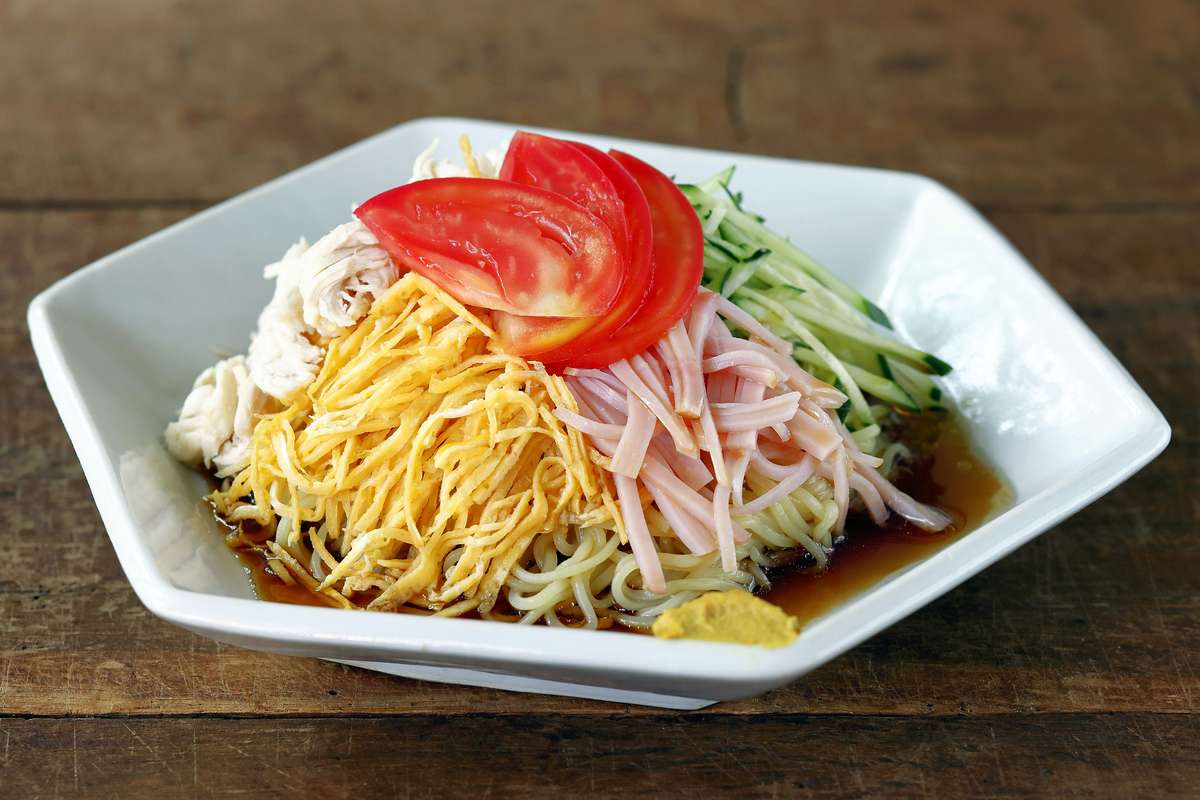
Hiyashi Chuka
12:30 JST, August 31, 2025
Ryuta Kijima, a cooking expert, presented hiyashi chuka, a Japanized version of a classic home-cooked chilled Chinese noodle dish perfect for summer.
The sweet and sour soup and carefully prepared toppings combine well in this classic recipe.
The dish is an old childhood favorite of Kijima’s.
He remembers in the summer going to a nearby Chinese restaurant with his family on the weekend, where the adults ordered beer and gyoza dumplings while Kijima ate the chilled Chinese noodles.
“Because both my grandmother and mother were cooking researchers, they probably wanted to dine out occasionally,” he said.
From his memory, the flavors of the dish, featuring a thick sweet-sour soup and sweet thin omelet slices, were great for a child’s palate.
Kijima showcased his own recipe saying, “Although you can use various kinds of soup, such as sesame, this time, I made a classic soy sauce soup.”
Adding soy sauce, sugar, vinegar and water after poaching the chicken creates a rich flavor.
“Once you learn how to make this kind of soup, you can apply the same technique to glass noodle salads,” Kijima said.
The toppings include boiled chicken, kinshi tamago (shredded omelet), ham and cucumber. “When making this at home, the best part is being able to add as many toppings as you want,” Kijima highlighted.
The key is carefully preparing each element of the dish one by one.
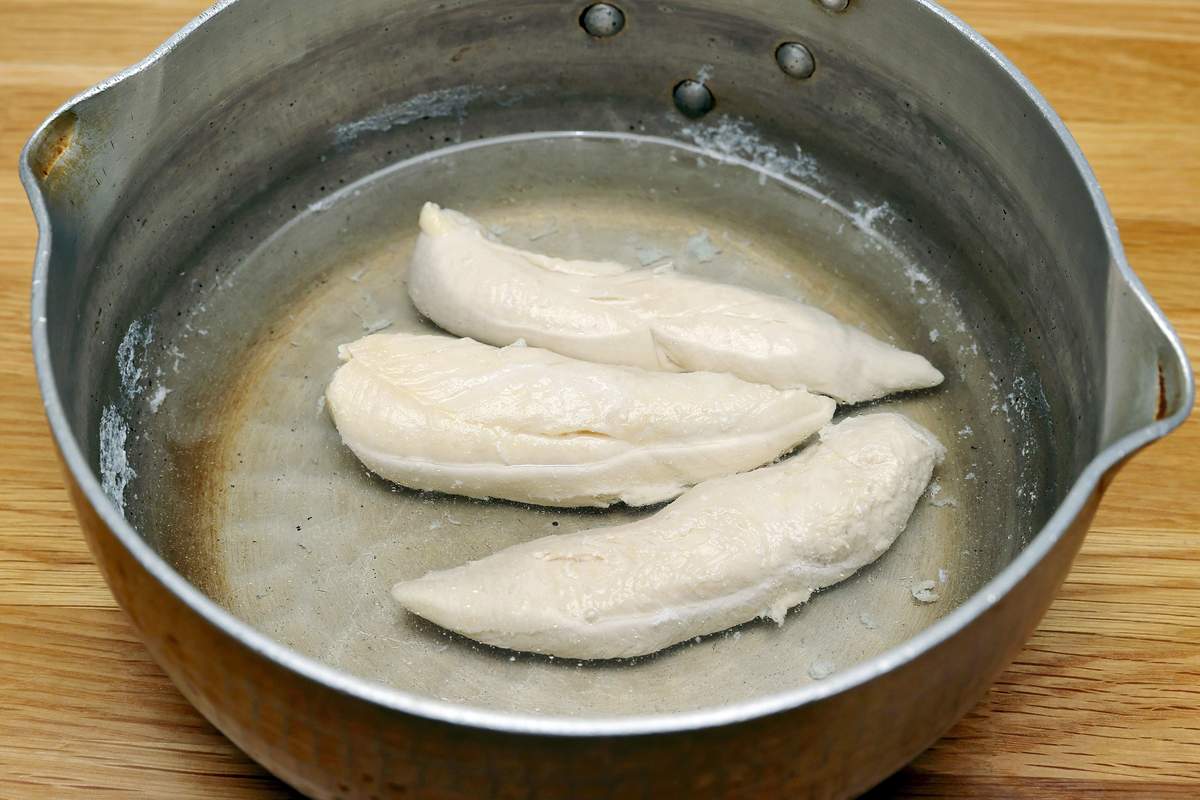
First, making the boiled chicken. After letting the tenderloins rest until they reach room temperature from refrigerator, place in a pot with water and let boil.
Allow the temperature to rise gradually and, once boiling, poach for only a few seconds before leaving to cook in the residual heat to achieve a succulent finish.
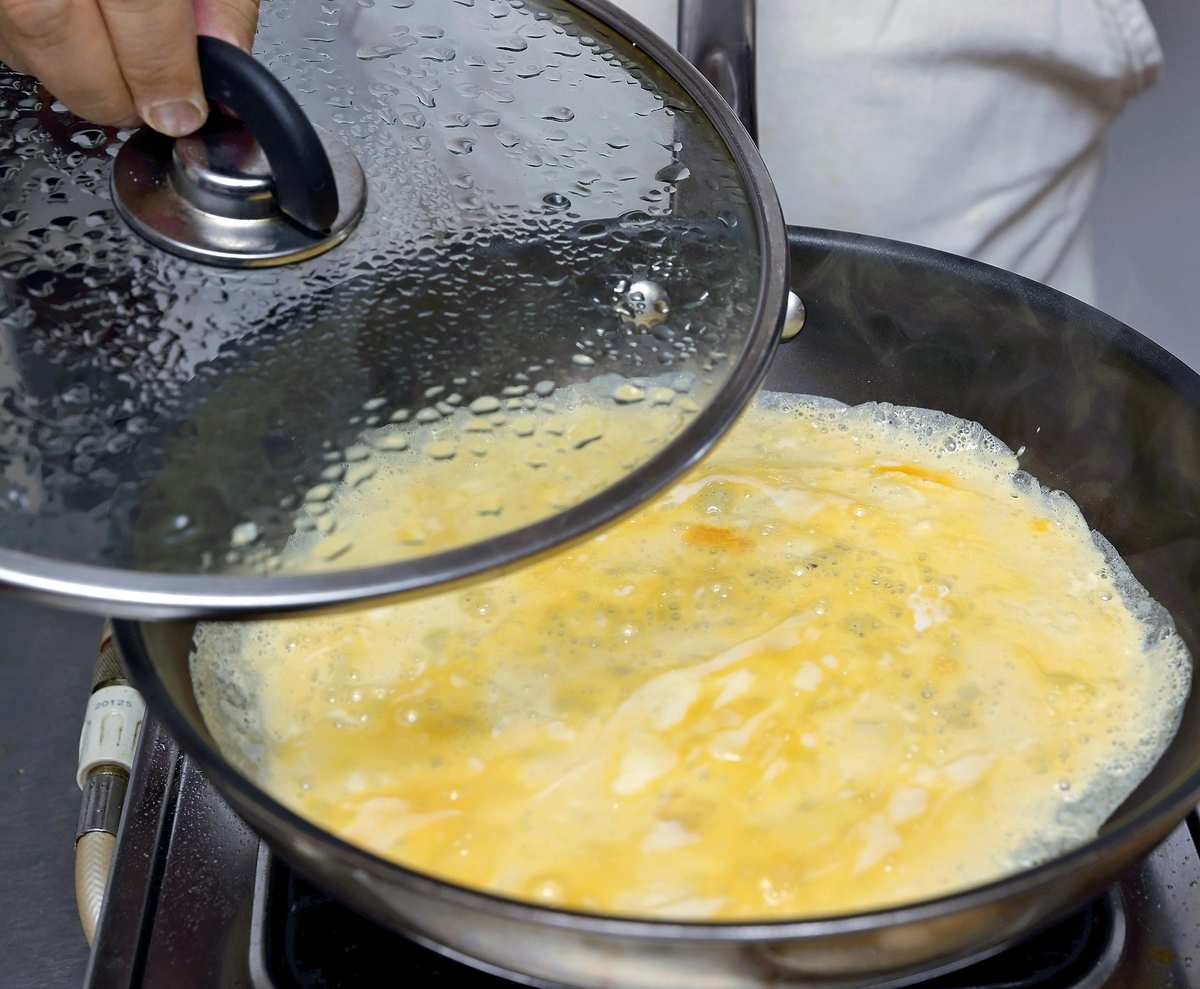
For the egg, Kijima’s tip is to not flip it over, as this can cause it to break. Spread the egg mixture over the entire frying pan, cook in residual heat, and then remove to julienne into thin strips called kinshi tamago.
Rinse the cucumber after thinly slicing, in order to retain crispiness.
The various toppings give the dish a beautiful appearance. The combination of the sweet kinshi tamago strips, soft chicken fillet pieces and salty ham pieces create the singular taste of hiyashi chuka.
Kijima advised, “You can use anything you happen to have at home for the toppings. Enjoy it this summer.”
Hiyashi Chuka
Ingredients (serves 2):
- 2 portions of thin Chinese noodles
- 3-4 chicken tenderloins (about 200 grams in total)
- 1 egg
- ½ cucumber
- ½ tomato
- 3 slices of ham
- Japanese mustard paste to taste
-
The Yomiuri Shimbun
Boil the chicken tenderloins. -
The Yomiuri Shimbun
Remove egg from heat, cover with lid, and allow residual heat to cook through. -
The Yomiuri Shimbun
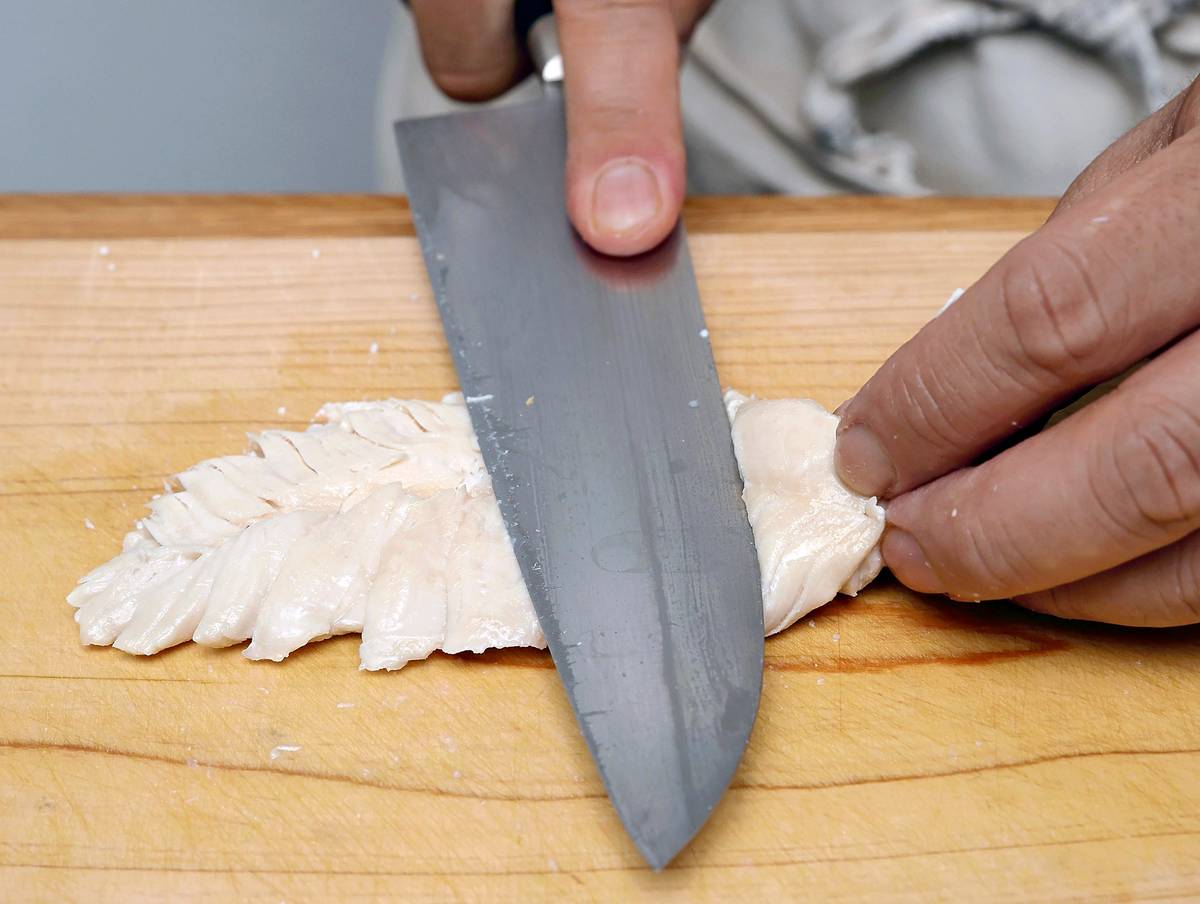
Pound the chicken with the flat side of a kitchen knife. -
The Yomiuri Shimbun
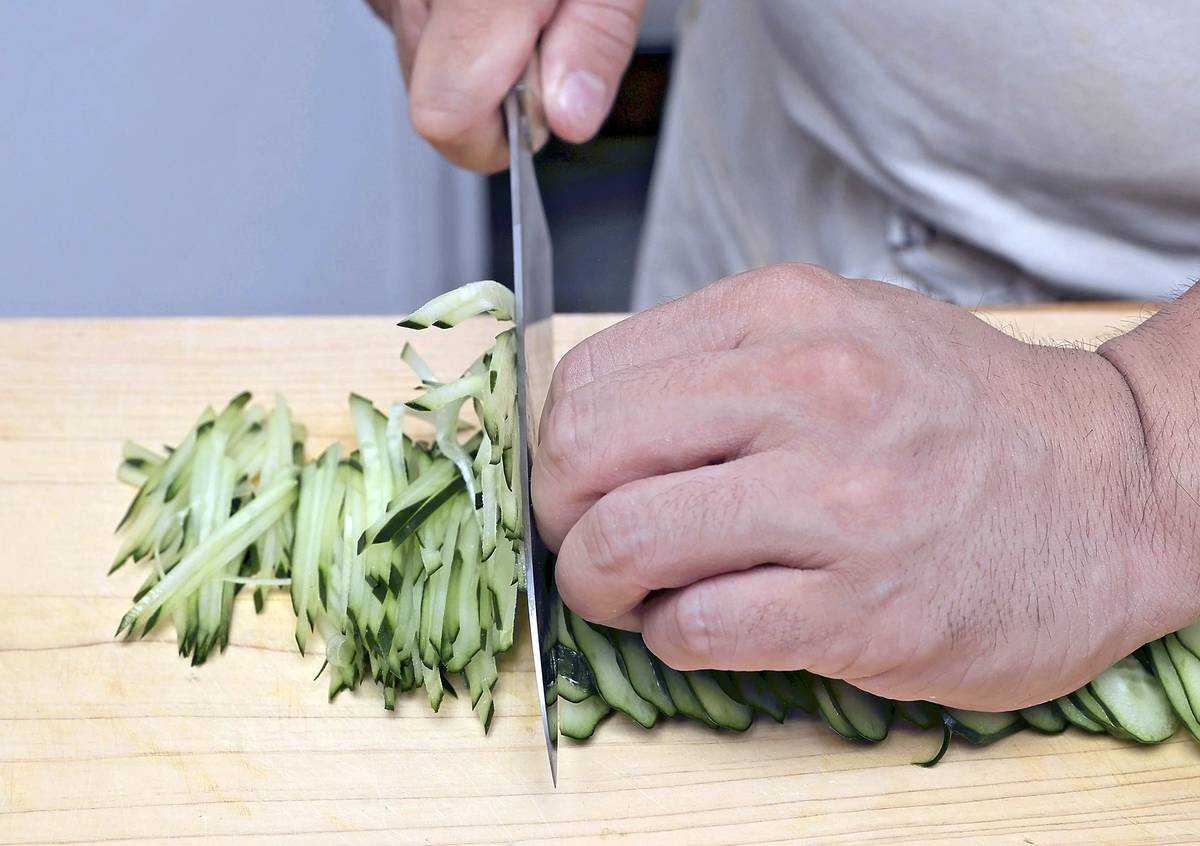
Julienne the cucumber.
Directions:
1. Make the boiled chicken for the topping. First bring the chicken tenderloins to room temperature and remove any stringy parts. Put the tenderloins into a pan with 2 tablespoons of sake and ½ teaspoon of salt. Add water until the chicken is fully submerged, and heat. Once boiling, cover with a lid and simmer for a few seconds. Turn off heat and leave to cool.
2. To make the soup, mix 4 tablespoons of soy sauce, 4 tablespoons of vinegar, 2 tablespoons of sugar, 1 tablespoon of sesame oil and 4 tablespoons of water used to boil the chicken. Then, cool in a refrigerator.
3. Next is the kinshi tamago. Beat an egg and mix with ½ teaspoon of sugar and a pinch of salt. Put ½ teaspoon of oil into a 26-centimeter-diameter frying pan and heat. Pour the egg mixture into the pan all at once and spread it evenly. Once the mixture covers the pan, slide under the edges of the circle with chopsticks or a spatula. Remove from heat, cover with a lid and leave for 1 minute to cook in residual heat. Remove from the pan and julienne into long, 2-3-millimeter-wide strips after the egg’s surface has dried.
4. Pound the chicken from Step 1 with the flat side of a kitchen knife, then shred into thin strips.
5. Julienne cucumber into 3-millimeter-wide matchsticks, soak in iced water and drain. Julienne the ham the same as the cucumber. Slice the tomato into 3-millimeter-wide pieces.
6. Cook noodles according to package instructions and then rinse in ice water. Drain and place on a plate. Pour the soup over the noodles and arrange toppings. Garnish with a serving of Japanese mustard paste in a corner of the plate.


Related Tags



Most Read
Popular articles in the past 24 hours
-

Japan Train Company to Increase Fares, Including in Tokyo Metropo...
-

Japan Govt to Tighten Requirements to Receive Permanent Residency...
-

Tail of ANA Plane Struck Runway During Landing in Houston; No Inj...
-

Samurai Japan Holds First Practice in Miami; Team Will Play again...
-

Medical Care at Home and Disasters: Ensure Systems to Provide Con...
-

Iran Targets Busiest International Airport as Top UN Body Demands...
-

Japan to Face Venezuela in World Baseball Classic Quarterfinals
-

North Korean Leader Kim and His Daughter Try out New Pistols at S...
Popular articles in the past week
-

Japan Figure Skating Legend Yuzuru Hanyu Is Proud Disaster Surviv...
-

Nippon Life Insurance's U.S. Arm Sues OpenAI Over Legal Assistanc...
-

Ibaraki Pref.'s 1st Foreign Bus Driver Hired in Tsukuba
-

Govt to Utilize ODA for Ensuring Economic Security; Securing Ener...
-

Massive Sewer Pipe Found Jutting Out of Highway in Osaka
-

Beckoning Cats Get Makeover to Fit Modern Lifestyles with Sleek D...
-
Japan Govt Survey Finds Just 10% of Workers Want Working Hours to...
-
Japan's 2nd Round of U.S. Investments May Be Worth Over $100 Bill...
Popular articles in the past month
-

Producer Behind Pop Group XG Arrested for Cocaine Possession
-

Japan PM Takaichi’s Cabinet Resigns en Masse
-

Man Infected with Measles Reportedly Dined at Restaurant in Tokyo...
-

Videos Plagiarized, Reposted with False Subtitles Claiming ‘Ryuky...
-

iPS Treatments Pass Key Milestone, but Broader Applications Far f...
-
Japan Figure Skating Legend Yuzuru Hanyu Is Proud Disaster Surviv...
-

Sanae Takaichi Elected Prime Minister of Japan; Keeps All Cabinet...
-

Nepal Bus Crash Kills 19 People, Injures 25 Including One Japanes...
Top Articles in Features
-

Tokyo’s New Record-Breaking Fountain Named ‘Tokyo Aqua Symphony’
-

High-Hydration Bread on the Rise, Seeing Increase in Specialty Shops, Recipe Searches
-
Japanese Students Use Traditional Pickle to Create Novel Wagashi Confectionery
-

Heirs to Kyoto Talent: Craftsman Works to Keep Tradition of ‘Kinran’ Brocade Alive Through Initiatives, New Creations
-

My Spendthrift Mother Constantly Asks Me for Money
JN ACCESS RANKING
-
Producer Behind Pop Group XG Arrested for Cocaine Possession
-
Japan PM Takaichi’s Cabinet Resigns en Masse
-
Man Infected with Measles Reportedly Dined at Restaurant in Tokyo Station
-
Videos Plagiarized, Reposted with False Subtitles Claiming ‘Ryukyu Belongs to China’; Anti-China False Information Also Posted in Japan
-
iPS Treatments Pass Key Milestone, but Broader Applications Far from Guaranteed