To use this site, please disable the ad blocking feature and reload the page.
This website uses cookies to collect information about your visit for purposes such as showing you personalized ads and content, and analyzing our website traffic. By clicking “Accept all,” you will allow the use of these cookies.
Users accessing this site from EEA countries and UK are unable to view this site without your consent. We apologize for any inconvenience caused.
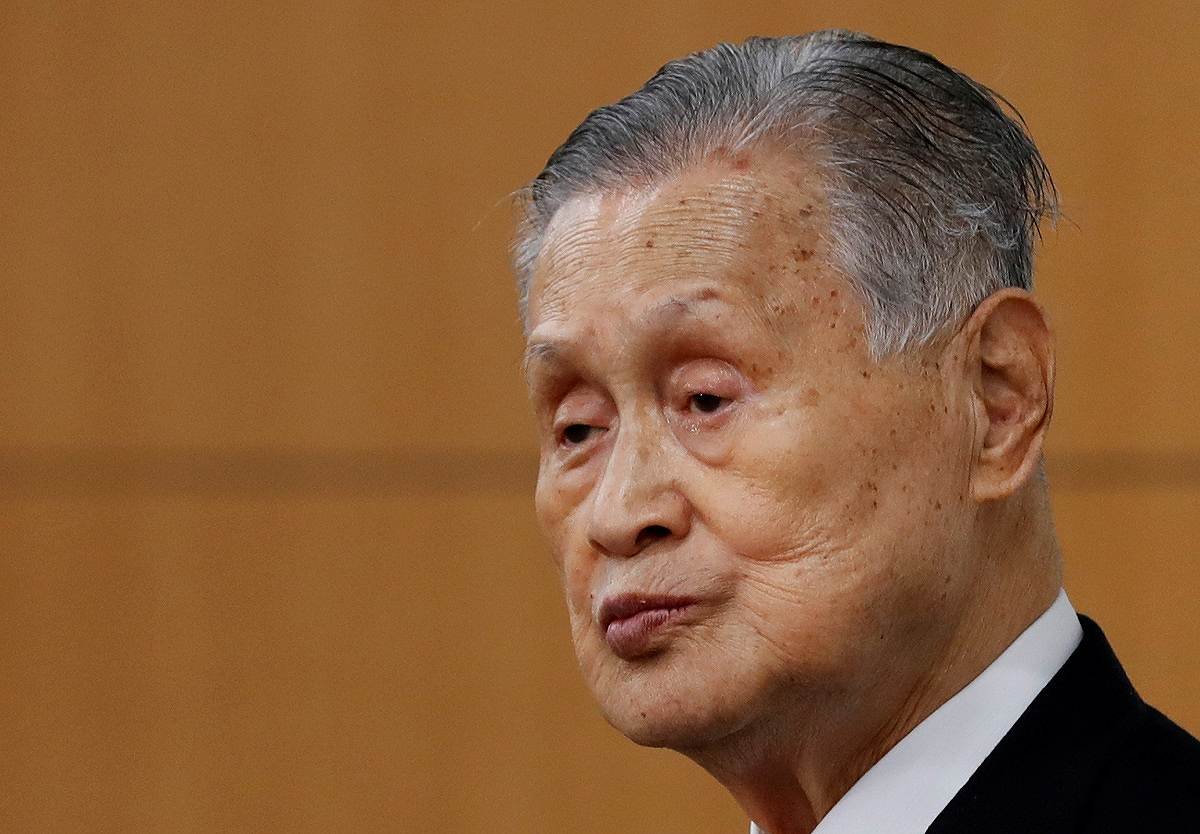
REUTERS/Kim Kyung-Hoon/Pool/File Photo Tokyo 2020 president Yoshiro Mori listens a question from a journalist at a news conference in Tokyo, Japan, February 4, 2021.
The Yomiuri Shimbun
13:42 JST, February 6, 2021
Certain remarks ought not to be made by a person in a position to lead an extravaganza that draws the whole world’s attention.
At a meeting of the Japanese Olympic Committee, Yoshiro Mori, president of the Tokyo Organizing Committee of the Olympic and Paralympic Games said: “A meeting of an executive board with many women takes so much time. Women have a strong sense of competition.”
This extremely thoughtless remark can only be taken as discrimination against women. It runs against the Olympic Charter, which stipulates gender equality. It was inevitable for Mori to apologize and retract the remark.
The JOC and other sports organizations have been seeking to increase the percentage of female executive board members and others to 40%. It is significant to promote the involvement of women in the sports community and to increase compliance, including the prevention of sexual harassment.
Mori’s comment was made at an open JOC meeting in which one item on the agenda was increasing the number of women executive board members in connection with the JOC’s executive member election.
It is probably true that Japan is lagging behind in the participation of women. The World Economic Forum, a Switzerland-based private research organization, compiled a gender-gap index that rates countries on the involvement of women in such fields as politics and the economy. Out of 153 countries, Japan ranked 121st.
To remedy this shameful situation, both the public and private sectors are making efforts to promote the participation of women in decision-making. Mori’s remark certainly flew in the face of such a movement. The organizing committee and the Tokyo metropolitan government said they have received floods of complaints and protests.
The discriminatory remark was also reported by overseas media. Relevant Games officials must give careful explanations to prevent any misunderstanding that Mori’s remark is an opinion that represents Japan.
Following Mori’s apology, the International Olympic Committee said it considers the issue closed. The IOC probably wants to settle the situation quickly and to speed up preparation for the Games.
Mori has rejected the idea of resigning from the post, but he lacks proper awareness as the head of the organization that runs the Games. He bears grave responsibility for the fact that his gaffe has stirred up confusion with just 5½ months remaining until the opening of the Olympics. Perphaps he should think again about what must be done in light of the effects of his remark.
With the increase in the number of novel coronavirus infections, more and more people have become skeptical about holding the Games at all. Japan is at a crucial stage in containing the virus and establishing an environment that will enable overseas athletes to enter Japan with peace of mind.
The central government, the Tokyo metropolitan government and the organizing committee, among other entities, will have to work very closely to map out precise plans to realize a safe Games. It is important to put the highest priority on efforts to contain the pandemic and dispel anxiety.